


Margins
2009
First Published
3.47
Average Rating
192
Number of Pages

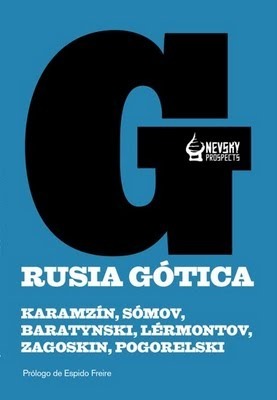
Adoradores del diablo, hombres lobo, locura y magia. A principios del siglo diecinueve, muchos escritores rusos comenzaron a interesarse por los cuentos tradicionales de su país, y a escribir historias que reflejaban el trasfondo de locura e inestabilidad del carácter ruso. Fueron los instigadores de la tradición de escritura gótica que ha florecido en oposición a la literatura realista a lo largo de los pasados doscientos años. Rusia gótica ofrece algunos ejemplos de la tradición del relato gótico ruso, escritos por los autores más cautivadores de este importante periodo de la literatura eslava. Rebeldes, satíricos, filosóficos, o simplemente interesados en hacer temblar al lector, esta colección ofrece una mirada fascinante a la trastienda de la literatura rusa.
Avg Rating
3.47
Number of Ratings
58
5 STARS
12%
4 STARS
31%
3 STARS
48%
2 STARS
9%
1 STARS
0%
goodreads

Authors

Antony Pogorelsky
Antony Pogorelsky
Author · 5 books

Russian: Антоний Погорельский Real name: Алексей Алексеевич Перовский Antony Pogorelsky was a Russian prose writer. His remarkable set of stories Dvoinik (The Double, or My Evenings in Little Russia) (1828) was closely related to the German fantastic tradition (Serapion Brothers by Hoffman) and anticipated the famous Evenings on a Farm Near Dikanka by Nikolai Gogol and Russian Nights by Vladimir Odoevsky. In 1829 Pogorelsky published the book that brought him real fame: it was the fairy tale Black Hen, or Living Underground written for his nephew, the first book about childhood in Russian literature. His novel Monastyrka, a “moral-descriptive novel” combining both sentimental and romantic elements was very well accepted by public and critics.

Yevgeny Baratynsky
Yevgeny Baratynsky
Author · 2 books

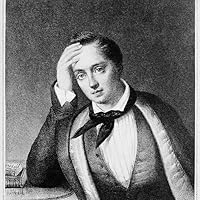
Yevgeny Abramovich Baratynsky (Russian: Евгений Абрамович Баратынский; 2 March 1800 in Saint Petersburg – 11 July 1844 in Naples) was lauded by Alexander Pushkin as the finest Russian elegiac poet. After a long period when his reputation was on the wane, Baratynsky was rediscovered by Anna Akhmatova and Joseph Brodsky as a supreme poet of thought. Of noble ancestry, Baratynsky was educated at the Page Corps at St. Petersburg, from which he was expelled at the age of 15 after stealing a snuffbox and five hundred roubles from the bureau of his accessory's uncle. After three years in the countryside and deep emotional turmoil, he entered the army as a private. In 1820 the young poet made his acquaintance with Anton Delvig, who rallied his falling spirits and introduced him to the literary press. Soon Baratynsky was transferred to Finland, where he remained six years. His first long poem, Eda, written during this period, established his reputation. In January 1826, he married the daughter of the Major-General Gregory G. Engelhardt. Through the interest of friends he obtained leave from the tsar to retire from the army, and settled in 1827 in Muranovo near Moscow (now a literary museum). There he completed his longest work, The Gipsy, a poem written in the style of Pushkin. Baratynsky's family life seemed to be happy, but a profound melancholy remained the background of his mind and of his poetry. He published several books of verse that were highly valued by Pushkin and other perceptive critics, but met with the comparatively cool reception of the public, and violent ridicule on the part of the young journalists of the "plebeian party". As the time went by, Baratynsky's mood progressed from pessimism to hopelessness, and elegy became his preferred form of expression. He died in 1844 at Naples, where he had gone in pursuit of a milder climate.

Nikolay Karamzin
Nikolay Karamzin
Author · 13 books

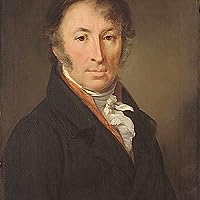
Father of Nikolay Mikhaylovich Karamzin ( Николай Михайлович Карамзин ) served as an officer in the Russian army. He was sent to Moscow to study under Swiss-German teacher Johann Matthias Schaden; he later moved to Saint Petersburg, where he made the acquaintance of Dmitriev, a Russian poet of some merit, and occupied himself with translating essays by foreign writers into his native language. After residing for some time in Saint Petersburg he went to Simbirsk, where he lived in retirement until induced to revisit Moscow. There, finding himself in the midst of the society of learned men, he again took to literary work. In 1789, he resolved to travel, and visited Germany, France, Switzerland and England. On his return he published his Letters of a Russian Traveller, which met with great success. These letters, modelled after Irish-born Poet, Laurence Sterne´s, (1713 – 1768), Sentimental Journey, were first printed in the Moscow Journal, which he edited, but were later collected and issued in six volumes (1797-1801). In the same periodical Karamzin also published translations from French and some original stories, including Poor Liza and Natalia the Boyar's Daughter (both 1792). These stories introduced Russian readers to sentimentalism, and Karamzin was hailed as "a Russian Sterne". In 1794, Karamzin abandoned his literary journal and published a miscellany in two volumes entitled Aglaia, in which appeared, among other stories, The Island of Bornholm and Ilya Muromets, the latter a story based on the adventures of the well-known hero of many a Russian legend. From 1797 to 1799 he issued another miscellany or poetical almanac, The Aonides, in conjunction with Derzhavin and Dmitriev. In 1798 he compiled The Pantheon, a collection of pieces from the works of the most celebrated authors ancient and modern, translated into Russian. Many of his lighter productions were subsequently printed by him in a volume entitled My Trifles. Admired by Alexander Pushkin and Vladimir Nabokov, the style of his writings is elegant and flowing, modelled on the easy sentences of the French prose writers rather than the long periodical paragraphs of the old Slavonic school. In 1802 and 1803 Karamzin edited the journal the European Messenger (Vestnik Evropy). It was not until after the publication of this work that he realized where his strength lay, and commenced his 12 volume History of the Russian State. In order to accomplish the task, he secluded himself for two years at Simbirsk, the Volga river town where Vladimir Ilych Ulyanov, a.k.a. Lenin, (1870 - 1924), was born. This town was known then, after Lenin, for some 60 years as Ulianovsk, while Saint Petersburg became Leningrad till around 1990. When emperor Alexander learned the cause of his retirement, Karamzin was invited to Tver, where he read to the emperor the first eight volumes of his history. He was a strong supporter of the anti-Polish policies of the Russian Empire, and expressed hope that there would be no Poland under any shape or name In 1816 he removed to St Petersburg, where he spent the happiest days of his life, enjoying the favour of Alexander I and submitting to him the sheets of his great work, which the emperor read over with him in the gardens of the palace of Tsarskoye Selo. He did not, however, live to carry his work further than the eleventh volume, terminating it at the accession of Michael Romanov in 1613. He died on the 22nd of May (old style) 1826, in the Taurida palace. A monument was erected to his memory at Simbirsk in 1845.

548 Market St PMB 65688, San Francisco California 94104-5401 USA
© 2026 Paratext Inc. All rights reserved