Margins
Margins
Sign in
Margins
Subscribe to our newsletter
548 Market St PMB 65688, San Francisco California 94104-5401 USA
hello@margins.app
·
+1 (650) 223-5283
Privacy Policy
·
Terms of Use
© 2026 Paratext Inc. All rights reserved
🤡 Russia
🤡
Russia
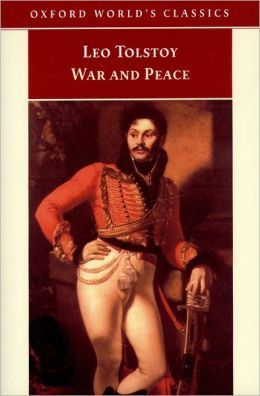
War and Peace
1867
Leo Tolstoy
In Russia's struggle with Napoleon, Tolstoy saw a tragedy that involved all mankind. War and Peace broadly focuses on Napoleon’s invasion of Russia in 1812 and follows three of the most well-known characters in literature: Pierre Bezukhov, the illegitimate son of a count who is fighting for his inheritance and yearning for spiritual fulfillment; Prince Andrei Bolkonsky, who leaves his family behind to fight in the war against Napoleon; and Natasha Rostov, the beautiful young daughter of a nobleman who intrigues both men. As Napoleon’s army invades, Tolstoy brilliantly follows characters from diverse backgrounds—peasants and nobility, civilians and soldiers—as they struggle with the problems unique to their era, their history, and their culture. And as the novel progresses, these characters transcend their specificity, becoming some of the most moving—and human—figures in world literature. Tolstoy gave his personal approval to this translation, published here in a new single volume edition, which includes an introduction by Henry Gifford, and Tolstoy's important essay `Some Words about War and Peace'.
Anna Karenina
1878
Leo Tolstoy
Acclaimed by many as the world's greatest novel, Anna Karenina provides a vast panorama of contemporary life in Russia and of humanity in general. In it Tolstoy uses his intense imaginative insight to create some of the most memorable characters in all of literature. Anna is a sophisticated woman who abandons her empty existence as the wife of Karenin and turns to Count Vronsky to fulfil her passionate nature - with tragic consequences. Levin is a reflection of Tolstoy himself, often expressing the author's own views and convictions. Throughout, Tolstoy points no moral, merely inviting us not to judge but to watch. As Rosemary Edmonds comments, 'He leaves the shifting patterns of the kaleidoscope to bring home the meaning of the brooding words following the title, 'Vengeance is mine, and I will repay.
The Death of Ivan Ilych
1886
Leo Tolstoy
Hailed as one of the world's supreme masterpieces on the subject of death and dying, The Death of Ivan Ilyich is the story of a worldly careerist, a high court judge who has never given the inevitability of his dying so much as a passing thought. But one day, death announces itself to him, and to his shocked surprise, he is brought face to face with his own mortality. How, Tolstoy asks, does an unreflective man confront his one and only moment of truth? This short novel was an artistic culmination of a profound spiritual crisis in Tolstoy's life, a nine-year period following the publication of Anna Karenina during which he wrote not a word of fiction. A thoroughly absorbing, and, at times, terrifying glimpse into the abyss of death, it is also a strong testament to the possibility of finding spiritual salvation.
The Kreutzer Sonata
1889
Leo Tolstoy
When Marshal of the Nobility Pozdnyshev suspects his wife of having an affair with her music partner, his jealousy consumes him and drives him to murder. Controversial upon publication in 1890, The Kreutzer Sonata illuminates Tolstoy’s then-feverish Christian ideals, his conflicts with lust and the hypocrisies of nineteenth-century marriage, and his thinking on the role of art and music in society. In her Introduction, Doris Lessing shows how relevant The Kreutzer Sonata is to our understanding of Tolstoy the artist, as well as to feminism and literature. This Modern Library Paperback Classic also contains Tolstoy’s Sequel to the Kruetzer Sonata .
Resurrection
1899
Leo Tolstoy
Resurrection (1899) is the last of Tolstoy's major novels. It tells the story of a nobleman's attempt to redeem the suffering his youthful philandering inflicted on a peasant girl who ends up a prisoner in Siberia. Tolstoy's vision of redemption, achieved through loving forgiveness and his condemnation of violence, dominate the novel. An intimate, psychological tale of guilt, anger, and forgiveness, Resurrection is at the same time a panoramic description of social life in Russia at the end of the nineteenth century, reflecting its author's outrage at the social injustices of the world in which he lived. This edition, which updates a classic translation, has explanatory notes, and a substantial introduction based on the most recent scholarship in the field.