Margins
Margins
Sign in
Margins
Subscribe to our newsletter
548 Market St PMB 65688, San Francisco California 94104-5401 USA
hello@margins.app
·
+1 (650) 223-5283
Privacy Policy
·
Terms of Use
© 2026 Paratext Inc. All rights reserved
🇷🇺
Russian Classics
The Death of Ivan Ilych and Other Stories
1886
Leo Tolstoy
"No one pitied him as he would have liked to be pitied." As Ivan Ilyich lies dying he begins to re-evaluate his life, searching for meaning that will make sense of his sufferings. In
The Death of Ivan Ilyich
and the other works in this volume, Tolstoy conjures characters who, tested to the limit, reveal glorious and unexpected reserves of courage or baseness of a near inhuman kind. Two vivid parables and
The Forged Coupon
, a tale of criminality, explore class relations after the emancipation of the serfs in 1861 and the connection between an ethical life and worldly issues. In
Master and Workman
Tolstoy creates one of his most gripping dramas about human relationships put to the test in an extreme situation.
The Death of Ivan Ilyich
is an existential masterpiece, a biting satire that recounts with extraordinary power the final illness and death of a bourgeois lawyer. In his Introduction Andrew Kahn explores Tolstoy's moral concerns and the stylistic features of these late stories, sensitively translated by Nicolas Pasternak Slater.
White Nights
1848
Fyodor Dostoevsky
White Nights is a short story by Fyodor Dostoevsky that was published in 1848. Set in St. Petersburg, it is the story of a young man fighting his inner restlessness. A light and tender narrative, it delves into the torment and guilt of unrequited love. Both protagonists suffer from a deep sense of alienation that initially brings them together. A blend of romanticism and realism, the story appeals gently to the senses and feelings.
Anna Karenina
1878
Leo Tolstoy
Acclaimed by many as the world's greatest novel, Anna Karenina provides a vast panorama of contemporary life in Russia and of humanity in general. In it Tolstoy uses his intense imaginative insight to create some of the most memorable characters in all of literature. Anna is a sophisticated woman who abandons her empty existence as the wife of Karenin and turns to Count Vronsky to fulfil her passionate nature - with tragic consequences. Levin is a reflection of Tolstoy himself, often expressing the author's own views and convictions. Throughout, Tolstoy points no moral, merely inviting us not to judge but to watch. As Rosemary Edmonds comments, 'He leaves the shifting patterns of the kaleidoscope to bring home the meaning of the brooding words following the title, 'Vengeance is mine, and I will repay.
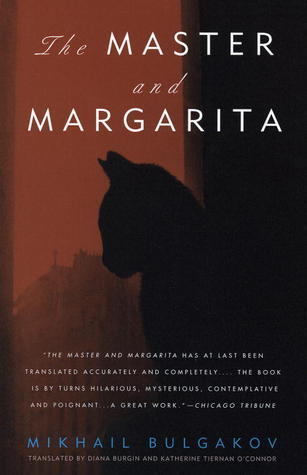
The Master and Margarita
1967
Mikhail Bulgakov
The first complete, annotated English Translation of Mikhail Bulgakov's comic masterpiece. An audacious revision of the stories of Faust and Pontius Pilate, The Master and Margarita is recognized as one of the essential classics of modern Russian literature. The novel's vision of Soviet life in the 1930s is so ferociously accurate that it could not be published during its author's lifetime and appeared only in a censored edition in the 1960s. Its truths are so enduring that its language has become part of the common Russian speech. One hot spring, the devil arrives in Moscow, accompanied by a retinue that includes a beautiful naked witch and an immense talking black cat with a fondness for chess and vodka. The visitors quickly wreak havoc in a city that refuses to believe in either God or Satan. But they also bring peace to two unhappy Muscovites: one is the Master, a writer pilloried for daring to write a novel about Christ and Pontius Pilate; the other is Margarita, who loves the Master so deeply that she is willing literally to go to hell for him. What ensues is a novel of inexhaustible energy, humor, and philosophical depth, a work whose nuances emerge for the first time in Diana Burgin's and Katherine Tiernan O'Connor's splendid English version.
The Brothers Karamazov
1880
Fyodor Dostoevsky
The Brothers Karamazov is a murder mystery, a courtroom drama, and an exploration of erotic rivalry in a series of triangular love affairs involving the “wicked and sentimental” Fyodor Pavlovich Karamazov and his three sons―the impulsive and sensual Dmitri; the coldly rational Ivan; and the healthy, red-cheeked young novice Alyosha. Through the gripping events of their story, Dostoevsky portrays the whole of Russian life, is social and spiritual striving, in what was both the golden age and a tragic turning point in Russian culture. This award-winning translation by Richard Pevear and Larissa Volokhonsky remains true to the verbal inventiveness of Dostoevsky’s prose, preserving the multiple voices, the humor, and the surprising modernity of the original. It is an achievement worthy of Dostoevsky’s last and greatest novel.
Crime and Punishment
1866
Fyodor Dostoevsky
Raskolnikov, a destitute and desperate former student, wanders through the slums of St Petersburg and commits a random murder without remorse or regret. He imagines himself to be a great man, a Napoleon: acting for a higher purpose beyond conventional moral law. But as he embarks on a dangerous game of cat and mouse with a suspicious police investigator, Raskolnikov is pursued by the growing voice of his conscience and finds the noose of his own guilt tightening around his neck. Only Sonya, a downtrodden sex worker, can offer the chance of redemption.
The Idiot
1869
Fyodor Dostoevsky
Returning to Russia from a sanitarium in Switzerland, the Christ-like epileptic Prince Myshkin finds himself enmeshed in a tangle of love, torn between two women—the notorious kept woman Nastasya and the pure Aglaia—both involved, in turn, with the corrupt, money-hungry Ganya. In the end, Myshkin’s honesty, goodness, and integrity are shown to be unequal to the moral emptiness of those around him. In her revision of the Garnett translation, Anna Brailovsky has corrected inaccuracies wrought by Garnett’s drastic anglicization of the novel, restoring as much as possible the syntactical structure of the original story.
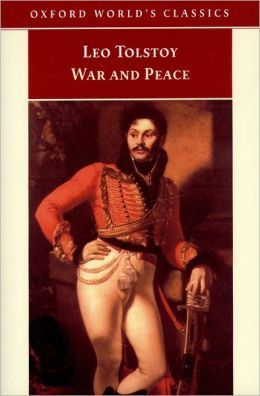
War and Peace
1867
Leo Tolstoy
In Russia's struggle with Napoleon, Tolstoy saw a tragedy that involved all mankind. War and Peace broadly focuses on Napoleon’s invasion of Russia in 1812 and follows three of the most well-known characters in literature: Pierre Bezukhov, the illegitimate son of a count who is fighting for his inheritance and yearning for spiritual fulfillment; Prince Andrei Bolkonsky, who leaves his family behind to fight in the war against Napoleon; and Natasha Rostov, the beautiful young daughter of a nobleman who intrigues both men. As Napoleon’s army invades, Tolstoy brilliantly follows characters from diverse backgrounds—peasants and nobility, civilians and soldiers—as they struggle with the problems unique to their era, their history, and their culture. And as the novel progresses, these characters transcend their specificity, becoming some of the most moving—and human—figures in world literature. Tolstoy gave his personal approval to this translation, published here in a new single volume edition, which includes an introduction by Henry Gifford, and Tolstoy's important essay `Some Words about War and Peace'.
🇷🇺 Russian Classics