Margins
Margins
Sign in
Margins
Subscribe to our newsletter
548 Market St PMB 65688, San Francisco California 94104-5401 USA
hello@margins.app
·
+1 (650) 223-5283
Privacy Policy
·
Terms of Use
© 2026 Paratext Inc. All rights reserved
📚
Russian Lit
Anna Karenina
1878
Leo Tolstoy
Acclaimed by many as the world's greatest novel, Anna Karenina provides a vast panorama of contemporary life in Russia and of humanity in general. In it Tolstoy uses his intense imaginative insight to create some of the most memorable characters in all of literature. Anna is a sophisticated woman who abandons her empty existence as the wife of Karenin and turns to Count Vronsky to fulfil her passionate nature - with tragic consequences. Levin is a reflection of Tolstoy himself, often expressing the author's own views and convictions. Throughout, Tolstoy points no moral, merely inviting us not to judge but to watch. As Rosemary Edmonds comments, 'He leaves the shifting patterns of the kaleidoscope to bring home the meaning of the brooding words following the title, 'Vengeance is mine, and I will repay.
Mother
2016
Maxim Gorky
1907. Maxim Gorky, pseudonym of Alexei Maksimovich Peshkov, Soviet novelist, playwright and essayist, who was a founder of social realism. Although known principally as a writer, he was closely associated with the tumultuous revolutionary period of his own country. The Mother, one of his best-known works, is the story of the radicalization of an uneducated woman that was later taken as a model for the Socialist Realist novel, and his autobiographical masterpiece Childhood.
The Blind Musician
1886
Vladimir Korolenko
In this sketch, called by Korolenko "a psychological study," the author has attempted to analyze the inner life of the blind. He has undertaken to lay before the reader not only the psychological processes in the mind of the blind, but their suffering from the lack of sight as well, uncomplicated by any untoward circumstances. To accomplish this he has placed his hero in most favorable, nay, almost exceptional conditions. The subjects for this study are a blind girl, whom the author had known as a child; a boy, a pupil of his, who was gradually losing his sight; and a professional musician, blind from his birth, intellectually gifted, scholarly, and refined.
The Lady with the Little Dog
1888
Anton Chekhov
Anton Chekhov (1860-1904) may have suffered an untimely death, but he squeezed the most out of his 44 years of life. Chekhov was a Russian physician, dramatist and author who is considered to be one of the greatest writers in history, particularly in the genre of short stories. Chekhov’s major innovation near the end of the 19th century was in what became known as “stream-of-consciousness” writing, in which he eschewed common traditional story structure and simply wrote as though he was thinking aloud. Renowned writers like James Joyce and William Faulkner would eventually run with this theme, producing classics in the same vein. Chekhov was one of Russia’s most famous and popular writers in his time, producing well-received works like The Lady with the Dog and The Bishop. This edition of Chekhov’s short story, The Lady with the Dog, is specially formatted with a Table of Contents and is illustrated with over a dozen pictures of Chekhov.
The Eternal Husband
1870
Fyodor Dostoevsky
The most monstrous monster is the monster with noble feelings. This remarkably edgy and suspenseful tale shows that, despite being better known for his voluminous and sprawling novels, Fyodor Dostoevsky was a master of the more tightly-focused form of the novella. The Eternal Husband may, in fact, constitute his most classically-shaped composition, with his most devilish plot: a man answers a late-night knock on the door to find himself in a tense and puzzling confrontation with the husband of a former lover—but it isn’t clear if the husband knows about the affair. What follows is one of the most beautiful and piercing considerations ever written about the dualities of love: a dazzling psychological duel between the two men over knowledge they may or may not share, bringing them both to a shattering conclusion. The Art of The Novella Series Too short to be a novel, too long to be a short story, the novella is generally unrecognized by academics and publishers. Nonetheless, it is a form beloved and practiced by literature’s greatest writers. In the Art Of The Novella series, Melville House celebrates this renegade art form and its practitioners with titles that are, in many instances, presented in book form for the first time.
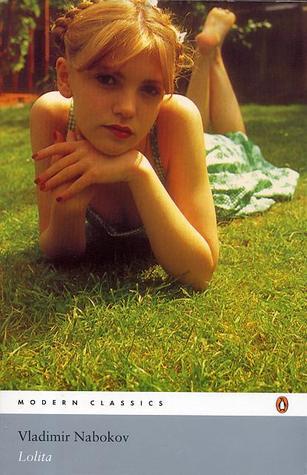
Lolita
1955
Vladimir Nabokov
Librarian's note: Alternate cover edition of ISBN 9780141182537. Humbert Humbert - scholar, aesthete and romantic - has fallen completely and utterly in love with Dolores Haze, his landlady's gum-snapping, silky skinned twelve-year-old daughter. Reluctantly agreeing to marry Mrs Haze just to be close to Lolita, Humbert suffers greatly in the pursuit of romance; but when Lo herself starts looking for attention elsewhere, he will carry her off on a desperate cross-country misadventure, all in the name of Love. Hilarious, flamboyant, heart-breaking and full of ingenious word play, Lolita is an immaculate, unforgettable masterpiece of obsession, delusion and lust.
White Nights
1848
Fyodor Dostoevsky
White Nights is a short story by Fyodor Dostoevsky that was published in 1848. Set in St. Petersburg, it is the story of a young man fighting his inner restlessness. A light and tender narrative, it delves into the torment and guilt of unrequited love. Both protagonists suffer from a deep sense of alienation that initially brings them together. A blend of romanticism and realism, the story appeals gently to the senses and feelings.
📚 Russian Lit