


Margins
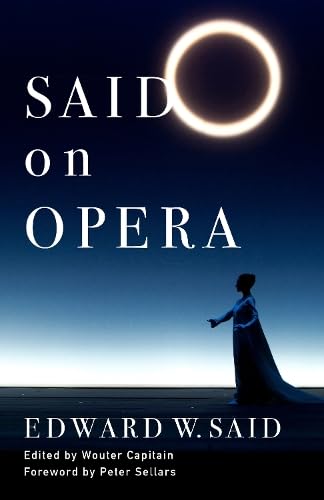
Said on Opera book cover
Said on Opera
2024
First Published
3.91
Average Rating
160
Number of Pages

One of the late twentieth century’s most celebrated and influential public intellectuals, Edward W. Said was also a critic of astonishing range. This book presents his insightful and elegant analyses of four major operas―originally delivered as the Empson Lectures at Cambridge University in 1997―showcasing the power of Said’s critical acumen to unsettle canonical interpretations. In close readings of Mozart’s Così fan tutte, Beethoven’s Fidelio, Berlioz’s Les Troyens, and Wagner’s Die Meistersinger von Nürnberg, Said explores how each opera engages with the social and political questions of their own eras―and how they might speak to the present. He pays careful attention to the works’ historical context as well as the possibilities they open for contemporary reinterpretations, examining the tension between opera’s cultural prestige and its potential for subversion. Said considers the representation of national identity, class, and exoticism, and he shows how cultural and literary studies can enrich understandings of operatic texts and performance. Lucid and gracefully written, Said on Opera enlivens well-known works with fresh insights and demonstrates the breadth of Said’s contributions to cultural criticism. This book features an introduction by the editor, Wouter Capitain, who situates these essays in the context of Said’s career, and a foreword by the acclaimed opera director Peter Sellars, who offers a masterful appreciation of Said’s achievements.
Avg Rating
3.91
Number of Ratings
11
5 STARS
27%
4 STARS
36%
3 STARS
36%
2 STARS
0%
1 STARS
0%
goodreads

Author

Edward W. Said
Edward W. Said
Author · 32 books

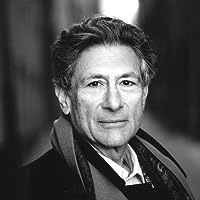
(Arabic Profile إدوارد سعيد) Edward Wadie Said was a professor of literature at Columbia University, a public intellectual, and a founder of the academic field of postcolonial studies. A Palestinian American born in Mandatory Palestine, he was a citizen of the United States by way of his father, a U.S. Army veteran. Educated in the Western canon, at British and American schools, Said applied his education and bi-cultural perspective to illuminating the gaps of cultural and political understanding between the Western world and the Eastern world, especially about the Israeli-Palestinian conflict in the Middle East; his principal influences were Antonio Gramsci, Frantz Fanon, Aimé Césaire, Michel Foucault, and Theodor Adorno. As a cultural critic, Said is known for the book Orientalism (1978), a critique of the cultural representations that are the bases of Orientalism—how the Western world perceives the Orient. Said’s model of textual analysis transformed the academic discourse of researchers in literary theory, literary criticism, and Middle-Eastern studies—how academics examine, describe, and define the cultures being studied. As a foundational text, Orientalism was controversial among the scholars of Oriental Studies, philosophy, and literature. As a public intellectual, Said was a controversial member of the Palestinian National Council, because he publicly criticized Israel and the Arab countries, especially the political and cultural policies of Muslim régimes who acted against the national interests of their peoples. Said advocated the establishment of a Palestinian state to ensure equal political and human rights for the Palestinians in Israel, including the right of return to the homeland. He defined his oppositional relation with the status quo as the remit of the public intellectual who has “to sift, to judge, to criticize, to choose, so that choice and agency return to the individual” man and woman. In 1999, with his friend Daniel Barenboim, Said co-founded the West–Eastern Divan Orchestra, based in Seville, which comprises young Israeli, Palestinian, and Arab musicians. Besides being an academic, Said also was an accomplished pianist, and, with Barenboim, co-authored the book Parallels and Paradoxes: Explorations in Music and Society (2002), a compilation of their conversations about music. Edward Said died of leukemia on 25 September 2003.

548 Market St PMB 65688, San Francisco California 94104-5401 USA
© 2025 Paratext Inc. All rights reserved