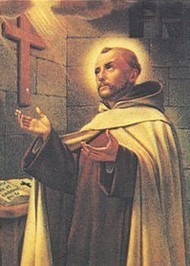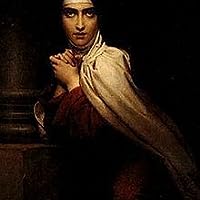



San Juan de la Cruz y santa Teresa de Jesús La fuerte presencia de lo religioso y la terrible represión que ejerció la Inquisición fueron notas dominantes de la cultura española del siglo XVI. Un claro ejemplo son los dos grandes místicos: san Juan de la Cruz (1542-1591) y santa Teresa de Jesús (1515-1582). Ambos nacieron en la provincia de Ávila –Teresa de Jesús en una adinerada familia judía– y juntos emprendieron la reforma de la Orden de los Carmelitas. La jerarquía eclesiástica consideró una amenaza su espíritu innovador, por lo que sufrieron continuas persecuciones y Juan de la Cruz fue encarcelado más de una vez. San Juan de la Cruz y santa Teresa de Jesús La mística, que refleja la más profunda unión con lo divino, acude a las formas de la lírica amorosa para expresar lo inefable. San Juan es por ello uno de los mejores poetas de amor de todos los tiempos. En Cántico espiritual, el apasionado diálogo entre el alma y su esposo nos recuerda al Cantar de los Cantares, de la Biblia. La noche oscura del alma plasma, por el contrario, una absoluta desolación. La poesía de Teresa de Jesús es más autobiográfica: describe sus propios éxtasis y experiencias religiosas.
Authors


Saint Teresa of Jesús, also called Saint Teresa of Ávila, was a prominent Spanish mystic, Carmelite nun, and writer of the Counter Reformation. She was a reformer of the Carmelite Order and is considered to be, along with John of the Cross, a founder of the Discalced Carmelites. In 1970 she was named a Doctor of the Church by Pope Paul VI. Teresa Sánchez de Cepeda Dávila y Ahumada Borned in Ávila, Spain, on March 28, 1515, St. Teresa was the daughter of a Toledo merchant and his second wife, who died when Teresa was 15, one of ten children. Shortly after this event, Teresa was entrusted to the care of the Augustinian nuns. After reading the letters of St. Jerome, Teresa resolved to enter a religious life. In 1535, she joined the Carmelite Order. She spent a number of relatively average years in the convent, punctuated by a severe illness that left her legs paralyzed for three years, but then experienced a vision of "the sorely wounded Christ" that changed her life forever. From this point forward, Teresa moved into a period of increasingly ecstatic experiences in which she came to focus more and more sharply on Christ's passion. With these visions as her impetus, she set herself to the reformation of her order, beginning with her attempt to master herself and her adherence to the rule. Gathering a group of supporters, Teresa endeavored to create a more primitive type of Carmelite. From 1560 until her death, Teresa struggled to establish and broaden the movement of Discalced or shoeless Carmelites. During the mid-1560s, she wrote the Way of Perfection and the Meditations on the Canticle. In 1567, she met St. John of the Cross, who she enlisted to extend her reform into the male side of the Carmelite Order. Teresa died in 1582. St. Teresa left to posterity many new convents, which she continued founding up to the year of her death. She also left a significant legacy of writings, which represent important benchmarks in the history of Christian mysticism. These works include the Way of Perfection and the Interior Castle. She also left an autobiography, the Life of St. Teresa of Ávila.