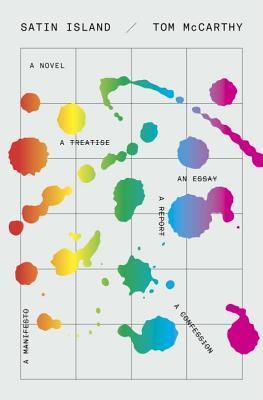
From the author of Remainder (the major feature-film adaption of which will be released in 2015) and C (short-listed for the Booker Prize), and winner of the Windham Campbell Prize, a novel that promises to give us the first and last word on the world—modern, postmodern, whatever world you think you are living in. When we first meet U., our narrator, he is waiting out a delay in the Turin airport. Clicking through corridors of trivia on his laptop he stumbles on information about the Shroud of Turin—and is struck by the degree to which our access to the truth is always mediated by a set of veils or screens, with any world built on those truths inherently unstable. A "corporate ethnographer," U. is tasked with writing the "Great Report," an ell-encompassing document that would sum up our era. Yet at every turn, he feels himself overwhelmed by the ubiquity of data, lost in buffer zones, wandering through crowds of apparitions. Madison, the woman he is seeing, is increasingly elusive, much like the particulars in the case of the recent parachutist's death with which U. is obsessed. Add to that his longstanding obsession with South Pacific cargo cults and his developing, inexplicable interest in oil spills. As he begins to wonder if the Great Report might remain a shapeless, oozing plasma, his senses are startled awake by a dream of an apocalyptic cityscape. In Satin Island, Tom McCarthy captures—as only he can—the way we experience our world, our efforts to find meaning (or just to stay awake) and discern the narratives we think of as our lives.
Author

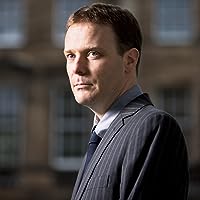
Tom McCarthy — “English fiction’s new laureate of disappointment” (Time Out, September 2007) — is a writer and artist. He was born in 1969 and lives in a tower-block in London. Tom grew up in Greenwich, south London, and studied English at New College, Oxford. After a couple of years in Prague in the early 1990s, he lived in Amsterdam as literary editor of the local Time Out, and later worked in British television as well as co-editing Mute magazine. His debut novel Remainder was first published in November 2005 by Paris-based art press Metronome. After becoming a cult hit championed first by British webzines (it was 3:AM Magazine’s Book of the Year for 2005) and then by the literary press, Remainder was republished by Alma Books in the UK (2006) and Vintage in the US (2007). A French version is to be followed by editions in Japanese, Korean, Greek, Spanish and Croatian. A work of literary criticism, Tintin and the Secret of Literature, was released by Granta Books in June 2006. It also came out in France and an American edition is in the offing. Tom’s second novel, Men in Space came out in 2007. He has published numerous stories, essays and articles on literature, philosophy and art in publications including The Observer, The Times Literary Supplement and Contemporary Magazine, as well as in anthologies such as London from Punk to Blair (Reaktion Books), Theology and the Political (Duke University Press) and The Milgram Experiment (Jan van Eyck Press). His story, “Kool Thing, Or Why I Want to Fuck Patty Hearst” appeared in The Empty Page: Fiction Inspired By Sonic Youth (Serpent’s Tail) in 2008. His ongoing project the International Necronautical Society, a semi-fictitious avant-garde network that surfaces through publications, proclamations, denunciations and live events, has been described by Untitled Magazine as ‘the most comprehensive total art work we have seen in years’ and by Art Monthly as ‘a platform for fantastically mobile thinking’. In 2003 the INS broke into the BBC website and inserted propaganda into its source-code. The following year, they set up a broadcasting unit at the ICA from which more than forty ‘agents’ generated non-stop poem-codes which were transmitted over FM radio in London and by internet to collaborating radio stations around the world. Tom has also tutored and lectured at various institutions including the Architectural Association, Central Saint Martins School of Art, the Royal College of Art, Goldsmiths College and Southern California Institute of Architecture. He recently taught a course on ‘Catastrophe’ with Marko Daniel at the London Consortium.