Margins
Margins
Sign in
Margins
Subscribe to our newsletter
548 Market St PMB 65688, San Francisco California 94104-5401 USA
hello@margins.app
·
+1 (650) 223-5283
Privacy Policy
·
Terms of Use
© 2026 Paratext Inc. All rights reserved
📚
Satire
Auto da Barca do Inferno
1517
Gil Vicente
Trata-se de uma alegoria dramática: duas são as barcas em que os personagens podem subir - a do Inferno, munida do Diabo; e a da Glória, encabeçada pelo Anjo. Em cena, é realizado o auto do julgamento das almas, e a maior parte delas segue na primeira barca. Entre os "réus", um agiota, um sapateiro rico, um tolo, uma alcoviteira, um usurário, quatro cavaleiros e um frade corrupto, além de outros representantes da humanidade. Muito mais do que uma sátira da sociedade lisboeta em princípios do século 16, mais do que uma farsa ou um auto de moralidade (embora também o seja), "Auto da Barca do Inferno" é um bem-humorado arrazoado dos vícios que corroem o mundo e uma crítica – infelizmente ainda válida – à organização da sociedade dos homens. Gil Vicente é considerado o primeiro dramaturgo da língua portuguesa.
Falar Verdade a Mentir
1845
Almeida Garrett
Falar Verdade a Mentir, comédia escrita por Almeida Garrett, é um dos textos sugeridos como leitura orientada, pelo Programa de Língua Portuguesa para o 8.° ano de escolaridade. Com a edição didáctica deste texto, que inclui uma apresentação crítica e propostas de actividades, pretende-se proporcionar um mais amplo leque de opções no âmbito do estudo do texto dramático. Dirigido a professores e alunos, integra textos orientados, em particular para cada um destes destinatários.
Memorial do Convento
1982
José Saramago
From the recipient of the 1998 Nobel Prize in Literature, a “brilliant...enchanting novel” (New York Times Book Review) of romance, deceit, religion, and magic set in eighteenth-century Portugal at the height of the Inquisition. National bestseller. Translated by Giovanni Pontiero. When King and Church exercise absolute power what happens to the dreams of ordinary people? In early eighteenth century Lisbon, Baltasar, a soldier who has lost a hand in battle, falls in love with Blimunda, a young girl with strange visionary powers. From the day that he follows her home from the auto-da-fé where her mother is condemned and sent into exile, the two are bound body and soul by a love of unassailable strength. A third party shares their supper that evening: Padre Bartolemeu Lourenço, whose fantasy is to invent a flying machine. As the inquisition rages and royalty and religion clash, they pursue his impossible, not to mention heretical, dream of flight.
Good Omens
The Nice and Accurate Prophecies of Agnes Nutter, Witch
Terry Pratchett, Neil Gaiman
According to the Nice and Accurate Prophecies of Agnes Nutter - the world's only totally reliable guide to the future - the world will end on a Saturday. Next Saturday, in fact. Just after tea... People have been predicting the end of the world almost from its very beginning, so it’s only natural to be sceptical when a new date is set for Judgement Day. This time though, the armies of Good and Evil really do appear to be massing. The four Bikers of the Apocalypse are hitting the road. But both the angels and demons – well, one fast-living demon and a somewhat fussy angel – would quite like the Rapture not to happen. And someone seems to have misplaced the Antichrist…
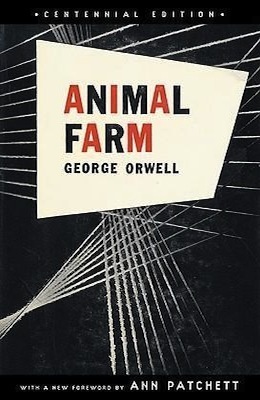
Animal Farm
1945
George Orwell
“All animals are equal, but some animals are more equal than others.” A farm is taken over by its overworked, mistreated animals. With flaming idealism and stirring slogans, they set out to create a paradise of progress, justice, and equality. Thus the stage is set for one of the most telling satiric fables ever penned—a razor-edged fairy tale for grown-ups that records the evolution from revolution against tyranny to a totalitarianism just as terrible. When Animal Farm was first published, Stalinist Russia was seen as its target. Today it is devastatingly clear that wherever and whenever freedom is attacked, under whatever banner, the cutting clarity and savage comedy of George Orwell’s masterpiece have a meaning and message still ferociously fresh.
The Importance of Being Earnest
1895
Oscar Wilde
Oscar Wilde's madcap farce about mistaken identities, secret engagements, and lovers entanglements still delights readers more than a century after its 1895 publication and premiere performance. The rapid-fire wit and eccentric characters of The Importance of Being Earnest have made it a mainstay of the high school curriculum for decades. Cecily Cardew and Gwendolen Fairfax are both in love with the same mythical suitor. Jack Worthing has wooed Gwendolen as Ernest while Algernon has also posed as Ernest to win the heart of Jack's ward, Cecily. When all four arrive at Jack's country home on the same weekend the "rivals" to fight for Ernest's undivided attention and the "Ernests" to claim their beloveds pandemonium breaks loose. Only a senile nursemaid and an old, discarded hand-bag can save the day! This Prestwick House Literary Touchstone Edition includes a glossary and reader's notes to help the modern reader appreciate Wilde's wry wit and elaborate plot twists.
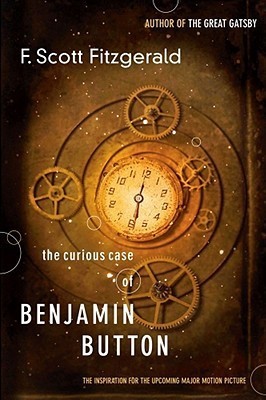
The Curious Case of Benjamin Button
1922
F. Scott Fitzgerald
Today, F. Scott Fitzgerald is known for his novels, but in his lifetime, his fame stemmed from his prolific achievement as one of America's most gifted story writers. "The Curious Case of Benjamin Button," a witty and fantastical satire about aging, is one of his most memorable stories. In 1860 Benjamin Button is born an old man and mysteriously begins aging backward. At the beginning of his life he is withered and worn, but as he continues to grow younger he embraces life—he goes to war, runs a business, falls in love, has children, goes to college and prep school, and, as his mind begins to devolve, he attends kindergarten and eventually returns to the care of his nurse. This strange and haunting story embodies the sharp social insight that has made Fitzgerald one of the great voices in the history of American literature.
📚 Satire