Margins
Margins
Sign in
Margins
Subscribe to our newsletter
548 Market St PMB 65688, San Francisco California 94104-5401 USA
hello@margins.app
·
+1 (650) 223-5283
Privacy Policy
·
Terms of Use
© 2026 Paratext Inc. All rights reserved
📚 school books
📚
school books
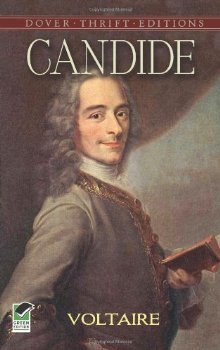
Candide
1759
Voltaire
Candide is the story of a gentle man who, though pummeled and slapped in every direction by fate, clings desperately to the belief that he lives in "the best of all possible worlds." On the surface a witty, bantering tale, this eighteenth-century classic is actually a savage, satiric thrust at the philosophical optimism that proclaims that all disaster and human suffering is part of a benevolent cosmic plan. Fast, funny, often outrageous, the French philosopher's immortal narrative takes Candide around the world to discover that—contrary to the teachings of his distinguished tutor Dr. Pangloss—all is not always for the best. Alive with wit, brilliance, and graceful storytelling, Candide has become Voltaire's most celebrated work.
The Great Gatsby
1925
F. Scott Fitzgerald
The Great Gatsby, F. Scott Fitzgerald's third book, stands as the supreme achievement of his career. This exemplary novel of the Jazz Age has been acclaimed by generations of readers. The story of the fabulously wealthy Jay Gatsby and his love for the beautiful Daisy Buchanan, of lavish parties on Long Island at a time when The New York Times noted "gin was the national drink and sex the national obsession," it is an exquisitely crafted tale of America in the 1920s. The Great Gatsby is one of the great classics of twentieth\-century literature. (from the back cover)
The Sorrows of Young Werther
1774
Ellen Palmer
This is Goethe's first novel, published in 1774. Written in diary form, it tells the tale of an unhappy, passionate young man hopelessly in love with Charlotte, the wife of a friend - a man who he alternately admires and detests. 'The Sorrows of Young Werther' became an important part of the 'Sturm und Drang movement, and greatly influenced later 'Romanticism'. The work is semi-autobiographical - in 1772, two years before the novel was published, Goethe had passed through a similar tempestuous period, when he lost his heart to Charlotte Buff, who was at that time engaged to his friend Johann Christian Kestner.
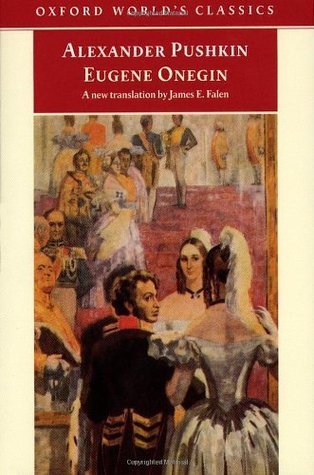
Eugene Onegin
1825
Alexander Pushkin
Eugene Onegin is the master work of the poet whom Russians regard as the fountainhead of their literature. Set in 1820s Russia, Pushkin's verse novel follows the fates of three men and three women. Engaging, full of suspense, and varied in tone, it also portrays a large cast of other characters and offers the reader many literary, philosophical, and autobiographical digressions, often in a highly satirical vein. Eugene Onegin was Pushkin's own favourite work, and this new translation conveys the literal sense and the poetic music of the original.