Margins
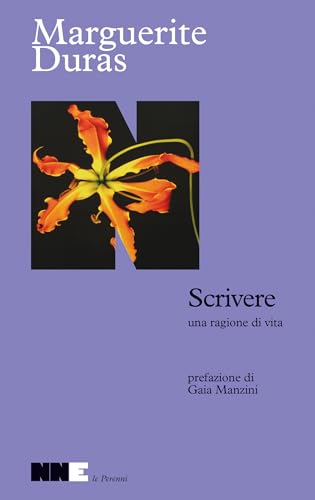
Scrivere book cover
Scrivere
Una ragione di vita
2025
First Published
3.60
Average Rating
109
Number of Pages
Scrivere è urlare senza fare rumore, è solitudine, scrivere è soprattutto il dubbio. Mossa da questi pensieri, Marguerite Duras decide di ripercorrere le tracce dell'atto creativo, un atto che per lei è sempre stato ragione di vita. Dalla casa di Neauphle, il suo rifugio consacrato alla scrittura, fino a un atelier d'artista a Parigi, passando per un albergo che si affaccia su Piazza Navona e un piccolo cimitero nel paesino normanno di Vauville, l'autrice francese esplora i luoghi del proprio là dove la scrittura cerca la solitudine, e la solitudine a poco a poco si popola di storie, di personaggi, di significati. I cinque testi qui raccolti compongono così un ritratto cangiante e frammentato, che rivela il nucleo della poetica di la passione per la parola, la meditazione sulla morte e, soprattutto, il desiderio di una purezza anelata, eppure così difficile da afferrare, perché la scrittura è emozione carnale, imprevedibilità. Intimo e militante, Scrivere è il testamento letterario di Duras. Un libro di culto, l'indagine artistica di un'autrice che fino all'ultimo interroga le ragioni che l'hanno condotta verso la pagina. E che, in un dialogo incessante con la propria sensibilità e le proprie aspirazioni, scopre un luogo dell'anima, un'attitudine, la postura esistenziale che ha riempito di senso ogni suo gesto.

Avg Rating
3.60
Number of Ratings
10
5 STARS
0%
4 STARS
60%
3 STARS
40%
2 STARS
0%
1 STARS
0%
goodreads

Author

Marguerite Duras
Marguerite Duras
Author · 61 books

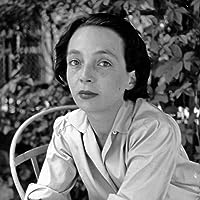
Marguerite Duras was born Marguerite Donnadieu on 4 April 1914, in Gia Định, Cochinchina, French Indochina (now Vietnam). Her parents, Marie (née Legrand, 1877-1956) and Henri Donnadieu (1872-1921), were teachers from France who likely had met at Gia Định High School. They had both had previous marriages. Marguerite had two older siblings: Pierre, the eldest, and Paul. Henri Donnadieu fell ill, returned to France, and then died in 1921. Between 1922 and 1924, the surviving family lived in France while her mother was on administrative leave. They then moved back to French Indochina when she was posted to Phnom Penh followed by Vĩnh Long and Sa Đéc. The family struggled financially and her mother made a bad investment in an isolated property and area of rice farmland in Prey Nob,[2] a story which was fictionalized in Un Barrage contre le Pacifique. In 1931, when she was 17, Duras and her family moved to France and she completed her baccalaureate. Duras returned to Saigon again with Paul and her mother in 1932 and completed her second baccalaureate, leaving Pierre in France. In 1933, Duras embarked alone for Paris to study law and mathematics. She soon abandoned this to concentrate on political science.[2] After completing her studies in 1938, she worked for the French government in the Ministry of the Colonies. In 1939, she married the writer Robert Antelme, whom she had met during her studies. During World War II, from 1942 to 1944, Duras worked for the Vichy government in an office that allocated paper quotas to publishers and in the process operated a de facto book-censorship system. She also became an active member of the PCF (the French Communist Party) and a member of the French Resistance as a part of a small group that also included François Mitterrand, who later became President of France and remained a lifelong friend of Duras. In 1943, when publishing her first novel, she began to use the surname Duras, after the town that her father came from, Duras. In 1950, her mother returned to France, wealthy from property investments and from the boarding school she had run. She is the author of a great many novels, plays, films, interviews, and short narratives, including her best-selling, apparently autobiographical work L'Amant (1984), translated into English as The Lover. This text won the Goncourt prize in 1984. The story of her adolescence also appears in three other forms: The Sea Wall, Eden Cinema and The North China Lover. A film version of The Lover, produced by Claude Berri, was released to great success in 1992. Other major works include Moderato Cantabile, also made into a film of the same name, Le Ravissement de Lol V. Stein, and her film India Song. She also wrote the screenplay for the 1959 French film Hiroshima mon amour, which was directed by Alain Resnais. Duras' early novels were fairly conventional in form (their 'romanticism' was criticised by fellow writer Raymond Queneau); however, with Moderato Cantabile she became more experimental, paring down her texts to give ever-increasing importance to what was not said. She was associated with the Nouveau roman French literary movement, although did not definitively belong to any group. Her films are also experimental in form, most eschewing synch sound, using voice over to allude to, rather than tell, a story over images whose relation to what is said may be more-or-less tangential. Marguerite's adult life was somewhat difficult, despite her success as a writer, and she was known for her periods of alcoholism. She died in Paris, aged 82 from throat cancer and is interred in the Cimetière du Montparnasse. Her tomb is marked simply 'MD'. From wikipedia

548 Market St PMB 65688, San Francisco California 94104-5401 USA
© 2026 Paratext Inc. All rights reserved