Authors

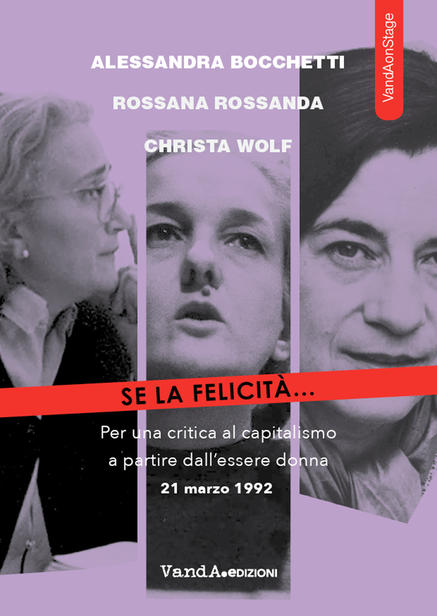
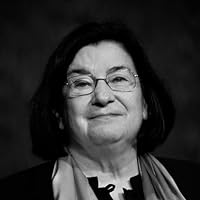
Novelist, short-story writer, essayist, critic, journalist, and film dramatist Christa Wolf was a citizen of East Germany and a committed socialist, and managed to keep a critical distance from the communist regime. Her best-known novels included “Der geteilte Himmel” (“Divided Heaven,” 1963), addressing the divisions of Germany, and “Kassandra” (“Cassandra,” 1983), which depicted the Trojan War. She won awards in East Germany and West Germany for her work, including the Thomas Mann Prize in 2010. The jury praised her life’s work for “critically questioning the hopes and errors of her time, and portraying them with deep moral seriousness and narrative power.” Christa Ihlenfeld was born March 18, 1929, in Landsberg an der Warthe, a part of Germany that is now in Poland. She moved to East Germany in 1945 and joined the Socialist Unity Party in 1949. She studied German literature in Jena and Leipzig and became a publisher and editor. In 1951, she married Gerhard Wolf, an essayist. They had two children. Christa Wolf died in December 2011. (Bloomberg News)

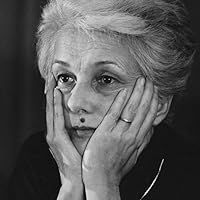
Rossanda was born in Pula (Croatia), then part of Italy. She studied in Milan and was a pupil of philosopher Antonio Banfi. At a very young age, she took part in the Italian resistance and, after the end of World War II, she entered the Italian Communist Party (PCI). After a short period, secretary Palmiro Togliatti named her responsible of culture in the party. She was elected for the first time in the Italian Chamber of Deputies in 1963. In 1968 she published a small essay, entitled L'anno degli studenti ("The Year of the students"), in which she declared her support to the youth movement. Rossanda was part of a minority inside PCI that was against the Soviet Union, and, together with Luigi Pintor, Valentino Parlato and Lucio Magri founded the party and newspaper il manifesto. This caused her expulsion from the Communist Party after its XII National Congress held in Bologna. At the 1972 elections, Il Manifesto obtained only the 0,8% of the votes. It therefore merged with the Proletarian Unity Party, forming the Proletarian Unity Party for Communism. She later abandoned party politics but kept her role as director of il manifesto. Rossanda is currently is a member of the editorial board of Sin Permiso.