Authors


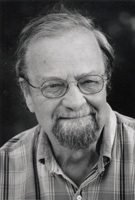
Donald Justice was an American poet and teacher of writing. He graduated from the University of Miami and went on to teach for many years at Iowa Writers' Workshop, the nation's first graduate program in creative writing. Some of his students there included Mark Strand, Charles Wright, Will Schmitz and Jorie Graham. He also taught at Syracuse University, the University of California at Irvine, Princeton University, the University of Virginia, and the University of Florida in Gainesville. Justice published thirteen collections of his poetry. The first collection, The Summer Anniversaries, was the winner of the Lamont Poetry Prize given by the Academy of American Poets in 1961; Selected Poems won the Pulitzer Prize for Poetry in 1980. He was awarded the Bollingen Prize in Poetry in 1991, and the Lannan Literary Award for Poetry in 1996. His honors also included grants from the Guggenheim Foundation, the Rockefeller Foundation, and the National Endowment for the Arts. He was a member of the American Academy of Arts and Letters, and a Chancellor of the Academy of American Poets from 1997 to 2003. His Collected Poems was nominated for the National Book Award in 2004. Justice was also a National Book Award Finalist in 1961, 1974, and 1995. Of Justice as teacher, his student and later colleague Marvin Bell said in a eulogy, “As a teacher, Don chose always to be on the side of the poem, defending it from half-baked attacks by students anxious to defend their own turf. While he had firm preferences in private, as a teacher Don defended all turfs. He had little use for poetic theory.” Of Justice's accomplishments as a poet, his former student, the poet and critic Tad Richards, noted that, "Donald Justice is likely to be remembered as a poet who gave his age a quiet but compelling insight into loss and distance, and who set a standard for craftsmanship, attention to detail, and subtleties of rhythm." Justice's work was the subject of the 1998 volume Certain Solitudes: On The Poetry of Donald Justice, which is a collection of essays edited by Dana Gioia and William Logan.


U.S. Poet Laureate, 2007-2008 Dušam Charles Simic was born in Belgrade, former Yugoslavia, on May 9, 1938. Simic’s childhood was complicated by the events of World War II. He moved to Paris with his mother when he was 15; a year later, they joined his father in New York and then moved to Oak Park, a suburb of Chicago, where he graduated from the same high school as Ernest Hemingway. Simic attended the University of Chicago, working nights in an office at the Chicago Sun Times, but was drafted into the U.S. Army in 1961 and served until 1963. Simic is the author of more than 30 poetry collections, including The World Doesn’t End: Prose Poems (1989), which received the Pulitzer Prize; Jackstraws (1999); Selected Poems: 1963-2003 (2004), which received the International Griffin Poetry Prize; and Scribbled in the Dark (2017). He is also an essayist, translator, editor, and professor emeritus of creative writing and literature at the University of New Hampshire, where he taught for over 30 years. Simic has received fellowships from the Guggenheim Foundation, the MacArthur Foundation, the Academy of American Poets, and the National Endowment for the Arts. His other honors and awards include the Frost Medal, the Wallace Stevens Award from the Academy of American Poets, and the PEN Translation Prize. He served as the 15th Poet Laureate Consultant in Poetry to the Library of Congress, and was elected as Chancellor of the Academy of American Poets in 2001. Simic has also been elected into the American Academy of Arts and Letters.

William De Witt Snodgrass, pseudonym S. S. Gardons, is an American poet and a 1960 Pulitzer Prize for Poetry winner. Snodgrass' first poems appeared in 1951, and throughout the 1950's he published in some of the most prestigious magazines: Botteghe Oscure, Partisan Review, The New Yorker, The Paris Review and The Hudson Review. However, in 1957, five sections from a sequence entitled Heart's Needle were included in Hall, Pack and Simpson's anthology, New Poets of England and America, and these were to mark a turning-point. When Lowell had been shown early versions of these poems, in 1953, he had disliked them, but now he was full of admiration. By the time Heart's Needle was published, in 1959, Snodgrass had already won the The Hudson Review Fellowship in Poetry and an Ingram Merrill Foundation Poetry Prize. However, his first book brought him more: a citation from the Poetry Society of America, a grant from the National Institute of Arts, and, most important of all, 1960's Pulitzer Prize in Poetry. It is often said that Heart's Needle inaugurated confessional verse. Snodgrass disliked the term. Still, it should be pointed out that the genre he was reviving here seemed revolutionary to most of his contemporaries, reared as they had been on the anti-expressionistic principles of the New Critics. Snodgrass' confessional work was to have a profound effect on many of his contemporaries, amongst them, most importantly, Robert Lowell.