Margins




548 Market St PMB 65688, San Francisco California 94104-5401 USA
© 2026 Paratext Inc. All rights reserved
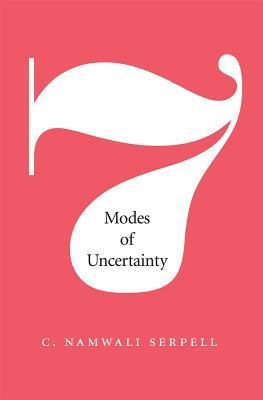
Literature is rife with uncertainty. Literature is good for us. These two ideas about reading literature are often taken for granted. But what is the relationship between literature's capacity to unsettle, perplex, and bewilder us, and literature's ethical value? To revive this question, C. Namwali Serpell proposes a return to William Empson's groundbreaking work, Seven Types of Ambiguity (1930), which contends that literary uncertainty is crucial to ethics because it pushes us beyond the limits of our own experience. Taking as case studies experimental novels by Thomas Pynchon, Toni Morrison, Bret Easton Ellis, Ian McEwan, Elliot Perlman, Tom McCarthy, and Jonathan Safran Foer, Serpell suggests that literary uncertainty emerges from the reader's shifting responses to structures of conflicting information. A number of these novels employ a structure of mutual exclusion, which presents opposed explanations for the same events. Some use a structure of multiplicity, which presents different perspectives regarding events or characters. The structure of repetition in other texts destabilizes the continuity of events and frustrates our ability to follow the story. To explain how these structures produce uncertainty, Serpell borrows from cognitive psychology the concept of affordance, which describes an object's or environment's potential uses. Moving through these narrative structures affords various ongoing modes of uncertainty, which in turn afford ethical experiences both positive and negative. At the crossroads of recent critical turns to literary form, reading practices, and ethics, Seven Modes of Uncertainty offers a new phenomenology of how we read uncertainty now.