Margins
Margins
Sign in
Margins
Subscribe to our newsletter
548 Market St PMB 65688, San Francisco California 94104-5401 USA
hello@margins.app
·
+1 (650) 223-5283
Privacy Policy
·
Terms of Use
© 2026 Paratext Inc. All rights reserved
📚 Shakespeare
📚
Shakespeare
Romeo and Juliet
1597
William Shakespeare
In Romeo and Juliet, Shakespeare creates a violent world, in which two young people fall in love. It is not simply that their families disapprove; the Montagues and the Capulets are engaged in a blood feud. In this death-filled setting, the movement from love at first sight to the lovers’ final union in death seems almost inevitable. And yet, this play set in an extraordinary world has become the quintessential story of young love. In part because of its exquisite language, it is easy to respond as if it were about all young lovers.
Macbeth
1623
William Shakespeare
One night on the heath, the brave and respected general Macbeth encounters three witches who foretell that he will become king of Scotland. At first sceptical, he’s urged on by the ruthless, single-minded ambitions of Lady Macbeth, who suffers none of her husband’s doubt. But seeing the prophecy through to the bloody end leads them both spiralling into paranoia, tyranny, madness, and murder. This shocking tragedy - a violent caution to those seeking power for its own sake - is, to this day, one of Shakespeare’s most popular and influential masterpieces.
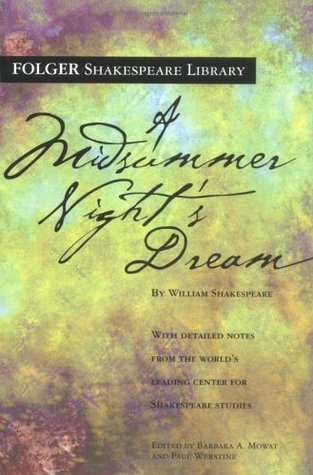
A Midsummer Night's Dream
1595
William Shakespeare
Shakespeare's intertwined love polygons begin to get complicated from the start—Demetrius and Lysander both want Hermia but she only has eyes for Lysander. Bad news is, Hermia's father wants Demetrius for a son-in-law. On the outside is Helena, whose unreturned love burns hot for Demetrius. Hermia and Lysander plan to flee from the city under cover of darkness but are pursued by an enraged Demetrius (who is himself pursued by an enraptured Helena). In the forest, unbeknownst to the mortals, Oberon and Titania (King and Queen of the faeries) are having a spat over a servant boy. The plot twists up when Oberon's head mischief-maker, Puck, runs loose with a flower which causes people to fall in love with the first thing they see upon waking. Throw in a group of labourers preparing a play for the Duke's wedding (one of whom is given a donkey's head and Titania for a lover by Puck) and the complications become fantastically funny.
Much Ado About Nothing
1598
William Shakespeare
In Much Ado About Nothing, Shakespeare includes two quite different stories of romantic love. Hero and Claudio fall in love almost at first sight, but an outsider, Don John, strikes out at their happiness. Beatrice and Benedick are kept apart by pride and mutual antagonism until others decide to play Cupid.
The Comedy of Errors
1594
William Shakespeare
Two sets of twins are separated at birth by a storm at sea: a pair of masters (both named Antipholus) and a pair of servants (both named Dromio). Years later, the Antipholus-and-Dromio pair raised in Syracuse happen to visit Ephesus, where the respective twins reside—providing the basis for ongoing incidents of mistaken identity, within a lively plot of quarrels, arrests, and a grand courtroom denouement. Based on a pair of comic dramas from ancient Rome, The Comedy of Errors presents a spectacle of pure farce in the spirit of utmost fun and—as the title suggests—hilarious confusion. One of Shakespeare's earliest dramatic efforts, the play abounds in his trademark conceits, puns, and other forms of fanciful wordplay. It also foreshadows his later and greatest comedies, offering students and scholars a valuable key to the playwright's development.