Margins
Margins
Sign in
Margins
Subscribe to our newsletter
548 Market St PMB 65688, San Francisco California 94104-5401 USA
hello@margins.app
·
+1 (650) 223-5283
Privacy Policy
·
Terms of Use
© 2026 Paratext Inc. All rights reserved
📚 Shakespeare
📚
Shakespeare
Twelfth Night
1601
William Shakespeare
Named for the twelfth night after Christmas, the end of the Christmas season, Twelfth Night plays with love and power. The Countess Olivia, a woman with her own household, attracts Duke (or Count) Orsino. Two other would-be suitors are her pretentious steward, Malvolio, and Sir Andrew Aguecheek. Onto this scene arrive the twins Viola and Sebastian; caught in a shipwreck, each thinks the other has drowned. Viola disguises herself as a male page and enters Orsino’s service. Orsino sends her as his envoy to Olivia—only to have Olivia fall in love with the messenger. The play complicates, then wonderfully untangles, these relationships.
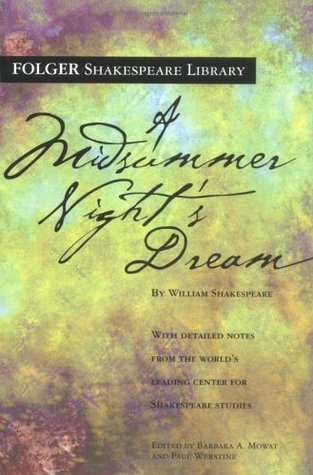
A Midsummer Night's Dream
1595
William Shakespeare
Shakespeare's intertwined love polygons begin to get complicated from the start—Demetrius and Lysander both want Hermia but she only has eyes for Lysander. Bad news is, Hermia's father wants Demetrius for a son-in-law. On the outside is Helena, whose unreturned love burns hot for Demetrius. Hermia and Lysander plan to flee from the city under cover of darkness but are pursued by an enraged Demetrius (who is himself pursued by an enraptured Helena). In the forest, unbeknownst to the mortals, Oberon and Titania (King and Queen of the faeries) are having a spat over a servant boy. The plot twists up when Oberon's head mischief-maker, Puck, runs loose with a flower which causes people to fall in love with the first thing they see upon waking. Throw in a group of labourers preparing a play for the Duke's wedding (one of whom is given a donkey's head and Titania for a lover by Puck) and the complications become fantastically funny.
The Merchant of Venice
1596
William Shakespeare
In this lively comedy of love and money in sixteenth-century Venice, Bassanio wants to impress the wealthy heiress Portia but lacks the necessary funds. He turns to his merchant friend, Antonio, who is forced to borrow from Shylock, a Jewish moneylender. When Antonio's business falters, repayment becomes impossible—and by the terms of the loan agreement, Shylock is able to demand a pound of Antonio's flesh. Portia cleverly intervenes, and all ends well (except of course for Shylock).
The Comedy of Errors
1594
William Shakespeare
Two sets of twins are separated at birth by a storm at sea: a pair of masters (both named Antipholus) and a pair of servants (both named Dromio). Years later, the Antipholus-and-Dromio pair raised in Syracuse happen to visit Ephesus, where the respective twins reside—providing the basis for ongoing incidents of mistaken identity, within a lively plot of quarrels, arrests, and a grand courtroom denouement. Based on a pair of comic dramas from ancient Rome, The Comedy of Errors presents a spectacle of pure farce in the spirit of utmost fun and—as the title suggests—hilarious confusion. One of Shakespeare's earliest dramatic efforts, the play abounds in his trademark conceits, puns, and other forms of fanciful wordplay. It also foreshadows his later and greatest comedies, offering students and scholars a valuable key to the playwright's development.