Margins
So Warmly We Met book cover
So Warmly We Met
2019
First Published
3.00
Average Rating
1
Number of Pages

So Warmly We Met So warmly we met and fondly we parted, That which was the sweeter ev'n I could not tell,— That first look of welcome her sunny eyes darted, Or that tear of passion, which bless'd our farewell. To meet was a heaven, and to part thus another,— Our joy and our sorrow seem'd rivals in bliss; Oh! Cupid's two eyes are not liker each other In smiles and in tears, than that moment to this. The first was like day-break,new,sudden,delicious,— The dawn of a pleasure scarce kindled up yet; The last like the farewell of daylight, more precious, More glowing and deep, as 'tis nearer its set. Our meeting, though happy, was tinged by a sorrow To think that such happiness could not remain; While our parting, though sad, gave a hope that to-morrow Would bring back the bless'd hour of meeting again.
Avg Rating
3.00
Number of Ratings
1
5 STARS
0%
4 STARS
0%
3 STARS
100%
2 STARS
0%
1 STARS
0%
goodreads

Author

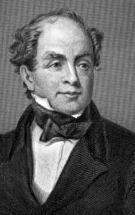
Thomas Moore
Thomas Moore
Author · 5 books

Thomas Moore, was an Irish writer, poet, and lyricist celebrated for his Irish Melodies. His setting of English-language verse to old Irish tunes marked the transition in popular Irish culture from Irish to English. Politically, Moore was recognised in England as a press, or "squib", writer for the aristocratic Whigs; in Ireland he was accounted a Catholic patriot. Married to a Protestant actress and hailed as "Anacreon Moore" after the classical Greek composer of drinking songs and erotic verse, Moore did not profess religious piety. Yet in the controversies that surrounded Catholic Emancipation, Moore was seen to defend the tradition of the Church in Ireland against both evangelising Protestants and uncompromising lay Catholics. Longer prose works reveal more radical sympathies. The Life and Death of Lord Edward Fitzgerald depicts the United Irish leader as a martyr in the cause of democratic reform. Complementing Maria Edgeworth's Castle Rackrent, Memoirs of Captain Rock is a saga, not of Anglo-Irish landowners, but of their exhausted tenants driven to the semi-insurrection of "Whiteboyism". Today Moore is remembered almost alone either for his Irish Melodies (typically "The Minstrel Boy" and "The Last Rose of Summer") or, less generously, for the role he is thought to have played in the loss of the memoirs of his friend Lord Byron.

548 Market St PMB 65688, San Francisco California 94104-5401 USA
© 2026 Paratext Inc. All rights reserved