



Soliloquies of a Hermit is a profound and deeply personal exploration of the human soul, written from the perspective of a self-described "priest in the cloud of God" who lives outside the traditional folds of the Church. Residing in a "hut between the hills," the narrator rejects the "easy road" of fixed beliefs to grapple with the "moods of God"—the shifting, often contradictory forces of love, hate, and cruelty that pass through human "clay" like mystic winds. The book presents a sharp contrast between the "common man," who is dominated by a single "getting mood" focused on work and material gain, and the "priest," who is vulnerable and broken by God, forced to experience the full spectrum of divine emotions. Through these meditations, the author argues that modern man has been corrupted by an "iron-eyed, restless, nail-making devil" of industry, losing the ability to find joy in the present moment. Instead, the hermit advocates for the beauty of the broken and the common, finding more of God in a worn-out chair or a shattered garden roller than in things that are "sound and whole".
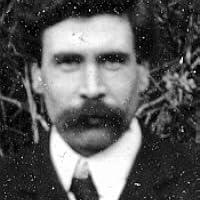
Author

Theodore Francis Powys, published as T. F. Powys, was born in Shirley, Derbyshire, the son of the Reverend Charles Francis Powys (1843–1923), vicar of Montacute, Somerset, for 32 years, and Mary Cowper Johnson, grand-daughter of Dr John Johnson, cousin and close friend of the poet William Cowper. He was one of eleven talented siblings, including the novelist John Cowper Powys (1872–1963) and the novelist and essayist Llewelyn Powys (1884–1939). A sensitive child, Powys was not happy in school and left when he was 15 to become an apprentice on a farm in Suffolk. Later he had his own farm in Suffolk, but he was not successful and returned to Dorset in 1901 with plans to be a writer. Then, in 1905, he married Violet Dodd. They had two sons and later adopted a daughter. From 1904 until 1940 Theodore Powys lived in East Chaldon but then moved to Mappowder because of the war. During the Spanish Civil War (1936–39), Powys was one of several UK writers who campaigned for aid to be sent to the Republican side. Powys was deeply, if unconventionally, religious; the Bible was a major influence, and he had a special affinity with writers of the 17th and 18th centuries, including John Bunyan, Miguel de Cervantes, Jeremy Taylor, Jonathan Swift, and Henry Fielding. Among more recent writers, he admired Thomas Hardy, Sigmund Freud, and Friedrich Nietzsche. He died on 27 November 1953 in Mappowder, Dorset, where he was buried. [from wikipedia, adapted]