Margins




548 Market St PMB 65688, San Francisco California 94104-5401 USA
© 2026 Paratext Inc. All rights reserved
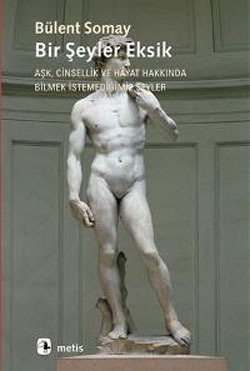
This is not a book on psychoanalysis. It does not advance arguments and quotations from psychoanalytic theory to prove a point (or multiple points). Instead, it tries to offer clues as to how psychoanalysis might help us in everyday life, in understanding and, with any luck, in changing our lives. That's why one of the punctuation marks it uses the most is the question mark. Because its main argument is that psychoanalysis is not a technique of providing ready-made answers and/or solutions, but a method of asking questions, hopefully, the right ones, in our never-ending pursuit of ‘Truth’, which seems to have been disappearing from our conceptual horizon in the last few decades. "These essays (aphorisms, theses, whatever you like) were written fifteen years ago in Turkish, and were published in Turkey in 2007. It was almost an idyllic, Arcadian time if considered from the point of view of today, that is, the nightmarish year 2020 when I am writing this. Trump was still your run-of-the-mill Reality TV star (who was also a millionaire), and could harm only his immediate environment. We only had to deal with the common cold and the flu, which, although deadly enough, could not even begin to compete with the Covid-19 pandemic. Turkey, Russia and India were ruled by populists with authoritarian tendencies even then; but their rule did not seem as eternal and as aggressively autocratic, bordering on fascism, as it is today. We could still say, ‘Capitalism will be capitalism!’ and make plans and organise for its downfall and aftermath, rather than focus all our strength just to survive, as we are doing today. I was teaching in a decent enough university then, but now I am living in voluntary exile, just because I signed a petition for peace! Since then, the book was reprinted eight times in Turkish, with no changes made whatsoever, which was a thorn in my side, since the world was rapidly changing, maybe faster than ever, especially in the last five years. In translation, which I did myself, these essays were updated, ‘upgraded’, expanded and sometimes entirely rewritten, to retain whatever relevance they had, and also to keep up and develop with the times, although they were not related to the ‘current affairs’ per se, but seemingly mostly ‘theoretical’." "What a joy! Bülent Somay’s new-old text, translated from the Turkish by Bülent himself, takes us into the impenetrable heart of obscure Lacanian psychoanalysis and comes out with clarity, wit and epithetical precision. Theory comes alive here; and along with the fun and games, something dark is brought into the light." – Stephen Frosh, author of Feelings, Psychoanalysis Outside the Clinic, Hauntings and Those Who Come After) "With clarity, wit and copious erudition, Bülent Somay brings his critical psychoanalytic eye to our most challenging human relations – the tribulations of sex, love and desire. Somay’s committed sexual politics informs this essential addition to our knowledge of the pleasures and perils of the bonds of desire. Something is Missing is not to be missed." – Lynne Segal, author of Radical Moments of Collective Joy.