Margins
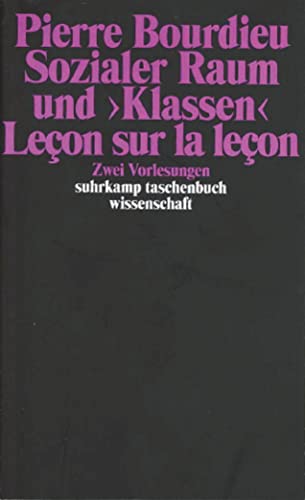
Sozialer Raum und "Klassen". Leçon sur la leçon book cover
Sozialer Raum und "Klassen". Leçon sur la leçon
1985
First Published
4.17
Average Rating
106
Number of Pages
Die Konstruktion einer angemessenen Theorie des sozialen Raumes setzt den Bruch mit einer Reihe marxistischer Theoreme zunächst mit einer substantialistischen‹ Konzeption der sozialen Gruppen; dann mit der intellektualistischen Illusion, die vom Wissenschaftler entworfenen Gruppen ließen sich im Realen identifizieren; drittens mit der ökonomistischen Reduktion des sozialen Raumes auf die ökonomischen Produktionsverhältnisse, das heißt der Unterschlagung der symbolischen Auseinandersetzung um die Repräsentation (in) der sozialen Welt. – Der Text ist die erweiterte Fung eines Vortrages, den Bourdieu zur Eröffnung der Suhrkamp Vorlesungen für Sozial- und Geisteswissenschaften im Februar 1984 in Frankfurt gehalten hat. Der zweite Text – Bourdieus Antrittsvorlesung am Collège de France vom April 1982 – ist das paradoxe Unternehmen, mit der Autorität des Vortragenden autoritativ vorzutragen, was es heißt, mit Autorität vorzutragen.

Avg Rating
4.17
Number of Ratings
6
5 STARS
17%
4 STARS
83%
3 STARS
0%
2 STARS
0%
1 STARS
0%
goodreads

Author

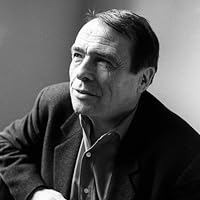
Pierre Bourdieu
Pierre Bourdieu
Author · 45 books

Bourdieu pioneered investigative frameworks and terminologies such as cultural, social, and symbolic capital, and the concepts of habitus, field or location, and symbolic violence to reveal the dynamics of power relations in social life. His work emphasized the role of practice and embodiment or forms in social dynamics and worldview construction, often in opposition to universalized Western philosophical traditions. He built upon the theories of Ludwig Wittgenstein, Maurice Merleau-Ponty, Edmund Husserl, Georges Canguilhem, Karl Marx, Gaston Bachelard, Max Weber, Émile Durkheim, Erwin Panofsky, and Marcel Mauss. A notable influence on Bourdieu was Blaise Pascal, after whom Bourdieu titled his Pascalian Meditations. Bourdieu rejected the idea of the intellectual "prophet", or the "total intellectual", as embodied by Sartre. His best known book is Distinction: A Social Critique of the Judgment of Taste, in which he argues that judgments of taste are related to social position. His argument is put forward by an original combination of social theory and data from surveys, photographs and interviews, in an attempt to reconcile difficulties such as how to understand the subject within objective structures. In the process, he tried to reconcile the influences of both external social structures and subjective experience on the individual (see structure and agency).

548 Market St PMB 65688, San Francisco California 94104-5401 USA
© 2026 Paratext Inc. All rights reserved