Margins
Sports and Entertainment book cover 1
Sports and Entertainment book cover 2
Sports and Entertainment book cover 3
Sports and Entertainment
Series · 14
books · 1996-2021

Books in series

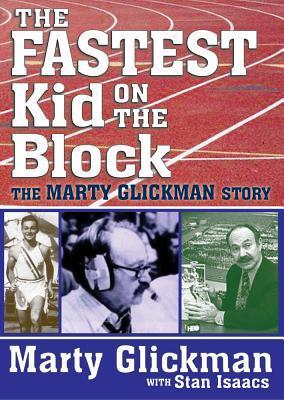
The Fastest Kid on the Block book cover
#5

The Fastest Kid on the Block

The Marty Glickman Story

1996

Marty Glickman began his career in the mid-1930s, just a few years after sports broadcasting began. Being in the industry during these early days, Glickman is uniquely able to provide a historical perspective on the profession as it has grown into a powerful force in sports. In this spirited autobiography he brings to life the most influential teams and personalities in the sports world. Some of the topics he covers in this Large Print edition include growing up in the Depression; high school and college athletics; jocks in broadcasting; originating basketball broadcasting; and recreating baseball games. Glickman discusses being the pioneer broadcaster on cable TV for Home Box Office (HBO), being an announcer coach for NBC and for the Madison Square Garden and Sports Channel cable networks, and coaching the first woman to do play-by-play on a professional football telecast. He also recounts associations and friendships with Bill Bradley, Bill Russell, Red Auerbach, and Allie Sherman. The Fastest Kid on the Block concludes with trenchant observations about Glickman's fellow sports broadcasters and personal tips on how to break into the competitive, wonderful world of sports broadcasting.
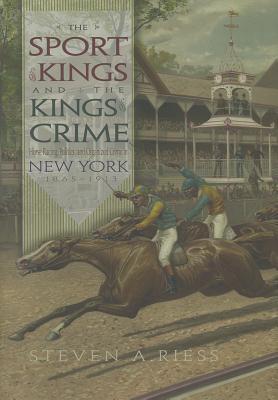
The Sport of Kings and the Kings of Crime book cover
#20

The Sport of Kings and the Kings of Crime

Horse Racing, Politics, and Organized Crime in New York 1865-1913

2011

Thoroughbred racing was one of the first major sports in early America. Horse racing thrived because it was a high-status sport that attracted the interest of both old and new money. It grew because spectators enjoyed the pageantry, the exciting races, and, most of all, the gambling. As the sport became a national industry, the New York metropolitan area, along with the resort towns of Saratoga Springs (New York) and Long Branch (New Jersey), remained at the center of horse racing with the most outstanding race courses, the largest purses, and the finest thoroughbreds. Riess narrates the history of horse racing, detailing how and why New York became the national capital of the sport from the mid-1860s until the early twentieth century. The sport’s survival depended upon the racetrack being the nexus between politicians and organized crime. The powerful alliance between urban machine politics and track owners enabled racing in New York to flourish. Gambling, the heart of racing’s appeal, made the sport morally suspect. Yet democratic politicians protected the sport, helping to establish the State Racing Commission, the first state agency to regulate sport in the United States. At the same time, racetracks became a key connection between the underworld and Tammany Hall, enabling illegal poolrooms and off-course bookies to operate. Organized crime worked in close cooperation with machine politicians and local police officers to protect these illegal operations. In The Sport of Kings and the Kings of Crime, Riess fills a long-neglected gap in sports history, offering a richly detailed and fascinating chronicle of thoroughbred racing’s heyday.

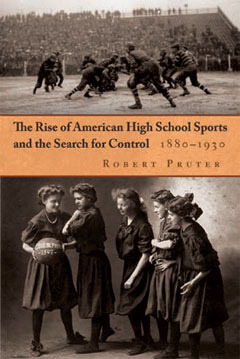
The Rise of American High School Sports and the Search for Control book cover
#22

The Rise of American High School Sports and the Search for Control

1880-1930

2013

Nearly half of all American high school students participate in sports teams. With a total of 7.6 million participants as of 2008, this makes the high school sports program in America the largest organized sports program in the world. Pruter’s work traces the history of high school sports from the student-led athletic clubs of the 1800s through to the establishment of educator control of high school sports under a national federation by the 1930s. Pruter’s research serves not only to highlight this rich history but also to provide new perspectives on how high school sports became the arena by which Americans fought for some of the most contentious issues in society, such as race, immigration and Americanization, gender roles, religious conflict, the role of the military in democracy, and the commercial exploitation of our youth.
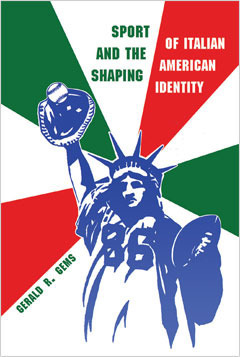
Sport and the Shaping of Italian-American Identity book cover
#23

Sport and the Shaping of Italian-American Identity

2013

This book represents an interdisciplinary analysis of the role of sport in the formation of an ethnic identity and the transition in that identity across four generations. It portrays the struggles, the triumphs, and the ambiguities of the assimilation process.
Black Baseball Entrepreneurs, 1902-1931 book cover
#25

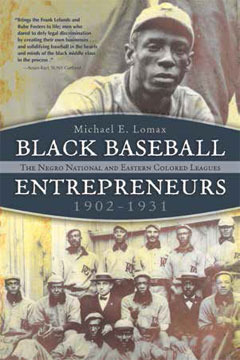
Black Baseball Entrepreneurs, 1902-1931

The Negro National and Eastern Colored Leagues

2014

As the companion volume to Black Baseball Entrepreneurs, 1860–1901: Operating by Any Means Necessary, Lomax’s new book continues to chronicle the history of black baseball in the United States. The first volume traced the development of baseball from an exercise in community building among African Americans in the pre–Civil War era into a commercialized amusement and a rare and lucrative opportunity for entrepreneurship within the black community. In this book, Lomax takes a closer look at the marketing and promotion of the Negro Leagues by black baseball magnates. He explores how race influenced black baseball’s institutional development and how it shaped the business relationship with white clubs and managers. Lomax explains how the decisions that black baseball magnates made to insulate themselves from outside influences may have distorted their perceptions and ultimately led to the Negro Leagues’ demise. The collapse of the Negro Leagues by 1931 was, Lomax argues, "a dream deferred in the overall African American pursuit for freedom and self-determination."
Dolph Schayes and the Rise of Professional Basketball book cover
#26

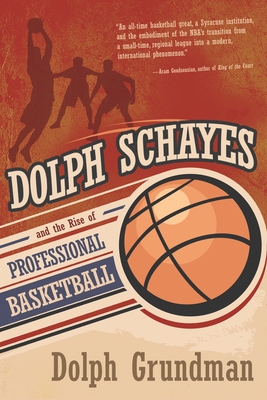
Dolph Schayes and the Rise of Professional Basketball

2014

Grundman presents readers with a portrait, the first of its kind, of Dolph Schayes – the star of the Syracuse Nationals basketball team during the 1950s and ‘60s. Schayes may not have one of the most recognizable names in basketball history, but his accomplishments are staggering – he was named one of the fifty greatest players of all time by the NBA and he held six NBA records (including one for career scoring) at his retirement. The text follows Schayes from his early days as the child of Jewish Romanian immigrants, through his illustrious basketball career, first at New York University (during New York’s “golden age of basketball”) then as part of the Syracuse Nationals. In writing about Schayes’ career, Grundman also reflects on many of the revolutionary changes that were happening in the professional basketball world at the same time; changes that affected not only Schayes and his contemporaries, but also the entire essence of the sport.
Leveling the Playing Field book cover
#29

Leveling the Playing Field

The Story of the Syracuse 8

2015

Leveling the Playing Field tells the story of the African American members of the 1969–70 Syracuse University football team who petitioned for racial equality on their team. The petition had four access to the same academic tutoring made available to their white teammates; better medical care for all team members; starting assignments based on merit rather than race; and a discernible effort to racially integrate the coaching staff, which had been all white since 1898. The players’ charges of racial disparity were fiercely contested by many of the white players on the team, and the debate spilled into the newspapers and drew protests from around the country. Mistakenly called the "Syracuse 8" by media reports in the 1970s, the nine players who signed the petition did not receive a response allowing or even acknowledging their demands. They boycotted the spring 1970 practice, and Coach Ben Schwartzwalder, a deeply beloved figure on campus and a Hall of Fame football coach nearing retirement, banned seven of the players from the team. As tensions escalated, white players staged a day-long walkout in support of the coaching staff, and an enhanced police presence was required at home games. Extensive interviews with each player offer a firsthand account of their decision to stand their ground while knowing it would jeopardize their professional football career. They discuss with candor the ways in which the boycott profoundly changed the course of their lives. In Leveling the Playing Field, Marc chronicles this contentious moment in Syracuse University’s history and tells the story through the eyes of the players who demanded change for themselves and for those who would follow them.
Invisible Seasons book cover
#30

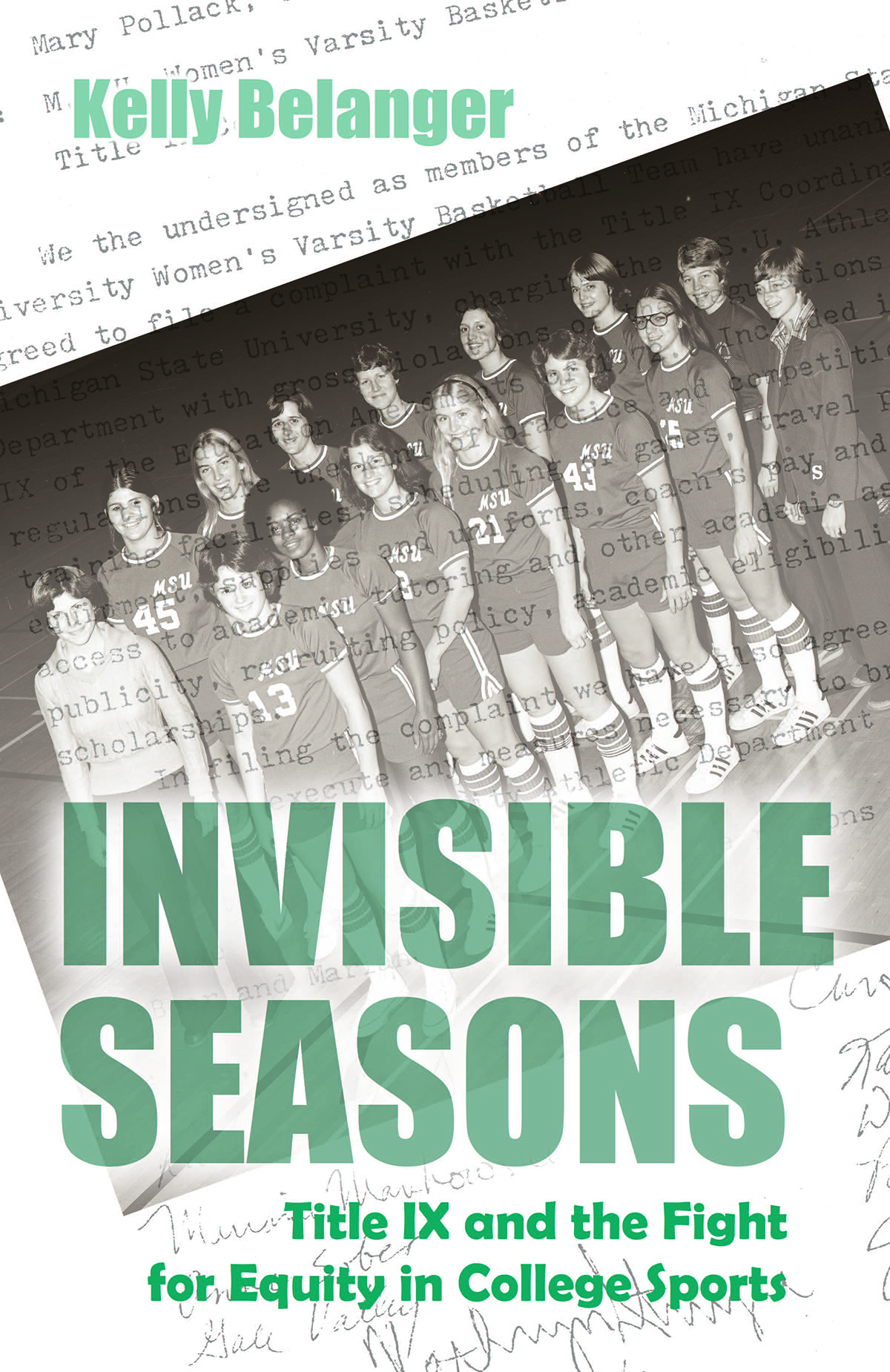
Invisible Seasons

Title IX and the Fight for Equity in College Sports

2017

In 1979, a group of women athletes at Michigan State University, their civil rights attorney, the institution s Title IX coordinator, and a close circle of college students used the law to confront a powerful institution their own university. By the mid-1970s, opposition from the NCAA had made intercollegiate athletics the most controversial part of Title IX, the 1972 federal law prohibiting discrimi nation in all federally funded education programs and activities. At the same time, some of the most motivated, highly skilled women athletes in colleges and universities could no longer tolerate the long-standing differences between men s and women s separate but obviously unequal sports programs. In "Invisible Seasons," Belanger recalls the remarkable story of how the MSU women athletes helped change the landscape of higher education athletics. They learned the hard way that even groundbreaking civil rights laws are not self-executing. This behind-the-scenes look at a university sports program challenges us all to think about what it really means to put equality into practice, especially in the money-driven world of college sports."
The War of the Wheels book cover
#31

The War of the Wheels

H. G. Wells and the Bicycle

2017

Amid apocalyptic invasions and time travel, one common machine continually appears in H. G. Wells' the bicycle. From his scientific romances and social comedies, to utopias, futurological speculations, and letters, Wells' texts abound with bicycles. In The War of the Wheels, Withers examines this mode of transportation as both something that played a significant role in Wells' personal life and as a literary device for creating elaborate characters and complex themes.Withers traces Wells' ambivalent relationship with the bicycle throughout his writing. While he celebrated it as a singular and astonishing piece of technology, and continued to do so long after his contemporaries abandoned their enthusiasm for the bicycle, he was not an unwavering promoter of this machine. Wells acknowledged the complex nature of cycling, its contribution to a growing dependence on and fetishization of technology, and its role in humanity's increasing sense of superiority. Moving into the twenty-first century, Withers reflects on how the works of H. G. Wells can serve as a valuable locus for thinking through many of our current issues and problems related to transportation, mobility, and sustainability.
Legends Never Die book cover
#32

Legends Never Die

Athletes and their Afterlives in Modern America

2017

With every touchdown, home run, and three-pointer, star athletes represent an American dream that only an elite group blessed with natural talent can achieve. However, Kimball concentrates on what happens once these modern warriors meet their untimely demise. As athletes die, legends rise in their place. The premature deaths of celebrated players not only capture and immortalize their physical superiority, but also jolt their fans with an unanticipated intensity. These athletes escape the inevitability of aging and decline of skill, with only the prime of their youth left to be remembered. But early mortality alone does not transform athletes into immortals. The living ultimately gain the power to construct the legacies of their fallen heroes. In Legends Never Die, Kimball explores the public myths and representations that surround a wide range of athletes, from Lou Gehrig and Joe DiMaggio to Dale Earnhardt and Bonnie McCarroll. Kimball delves deeper than just the cultural significance of sports and its players; he examines how each athlete's narrative is shaped by gender relations, religion, and politics in contemporary America. In looking at how Americans react to the tragic deaths of sports heroes, Kimball illuminates the important role sports play in US society and helps to explain why star athletes possess such cultural power. "
Fit for America book cover
#34

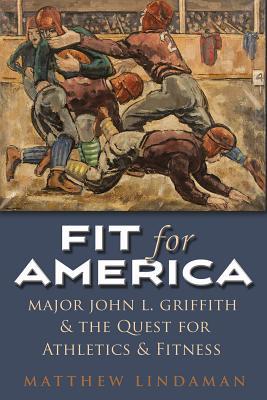
Fit for America

Major John L. Griffith and the Quest for Athletics and Fitness

2018

Fit for America is at once an intellectual biography of Major John L. Griffith, one of the preeminent intercollegiate athletics administrators of the twenti­eth century, and an in-depth look at how athletics shaped national military preparedness in a time of war and anticommunist sentiment. Lindaman traces Griffith’s forty-year career, one that spanned both world wars and included his appointment as the first Big Ten commissioner from 1922 until 1945. Griffith also served as NCAA president in the 1930s and later became the secretary-treasurer during World War II. Throughout his career, he worked tirelessly to advance the role and importance of collegiate sports on a regional and national level. In an era of heightened fears of com­munism, Griffith saw intercollegiate athletics as a way to prepare young men to become fit, disciplined military recruits. Griffith also founded his own publi­cation, the Athletic Journal, in 1922 in which he published opinion pieces and solicited the opinions of other leading coaches and administrators nationwide. Through these pages, Lindaman explores not only Griffith’s philosophy but also the emergence of a coaching and athletic administration network. Draw­ing on voluminous primary source material and the many writings Griffith left behind, Fit for America brings long-overdue attention to a figure who was in­strumental in shaping the world of American intercollegiate sports.
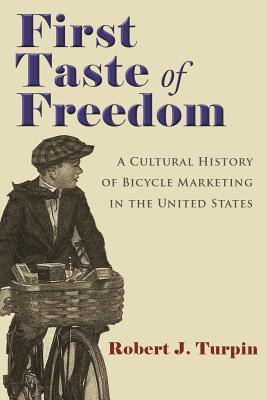
First Taste of Freedom book cover
#35

First Taste of Freedom

A Cultural History of Bicycle Marketing in the United States

2018

The bicycle has long been a part of American culture but few would describe it as an essential element of American identity in the same way that it is fundamental to European and Asian cultures. Instead, American culture has had a more turbulent relationship with the bicycle. First introduced in the United States in the 1830s, the bicycle reached its height of popularity in the 1890s as it evolved to become a popular form of locomotion for adults. Two decades later, ridership in the United States collapsed. As automobile consumption grew, bicycles were seen as backward and unbecoming—particularly for the white middle class. Turpin chronicles the story of how the bicycle’s image changed dramatically, shedding light on how American consumer patterns are shaped over time. Turpin identifies the creation and development of childhood consumerism as a key factor in the bicycle’s evolution. In an attempt to resurrect dwindling sales, sports marketers reimagined the bicycle as a child’s toy. By the 1950s, it had been firmly established as a symbol of boyhood adolescence, further accelerating the declining number of adult consumers. Tracing the ways in which cycling suffered such a loss in popularity among adults is fundamental to understanding why the United States would be considered a “car” culture from the 1950s to today. As a lens for viewing American history, the story of the bicycle deepens our understanding of our national culture and the forces that influence it.
Race across America book cover
#36

Race across America

Eddie Gardner and the Great Bunion Derbies

2019

2020 Peace Corps Writers Paul Cowan Award for the Best Book of Non-Fiction On April 23, 1929, the second annual Transcontinental Foot Race across America, known as the Bunion Derby, was in its twenty-fifth day. Eddie “the Sheik” Gardner, an African American runner from Seattle, was leading the race across the Free Bridge over the Mississippi River. Along with the signature outfit that earned him his nickname—a white towel tied around his head, white shorts, and a white shirt—Gardner wore an American flag, a reminder to all who saw him run through the Jim Crow South that he was an American and the leader of the greatest footrace in the world. Kastner traces Gardner’s remarkable journey from his birth in 1897 in Birmingham, Alabama, to his success in Seattle, Washington, as one of the top long-distance runners in the region, and finally to his participation in two transcontinental footraces where he risked his life, facing a barrage of harassment for having the audacity to compete with white runners. Kastner shows how Gardner’s participation became a way to protest the endemic racism he faced, heralding the future of nonviolent efforts that would be instrumental to the civil rights movement. Shining a bright light on his extraordinary athletic accomplishments and his heroism on the dusty roads of America in the 1920s, Kastner gives Gardner and other black bunioneers the attention they so richly deserve.
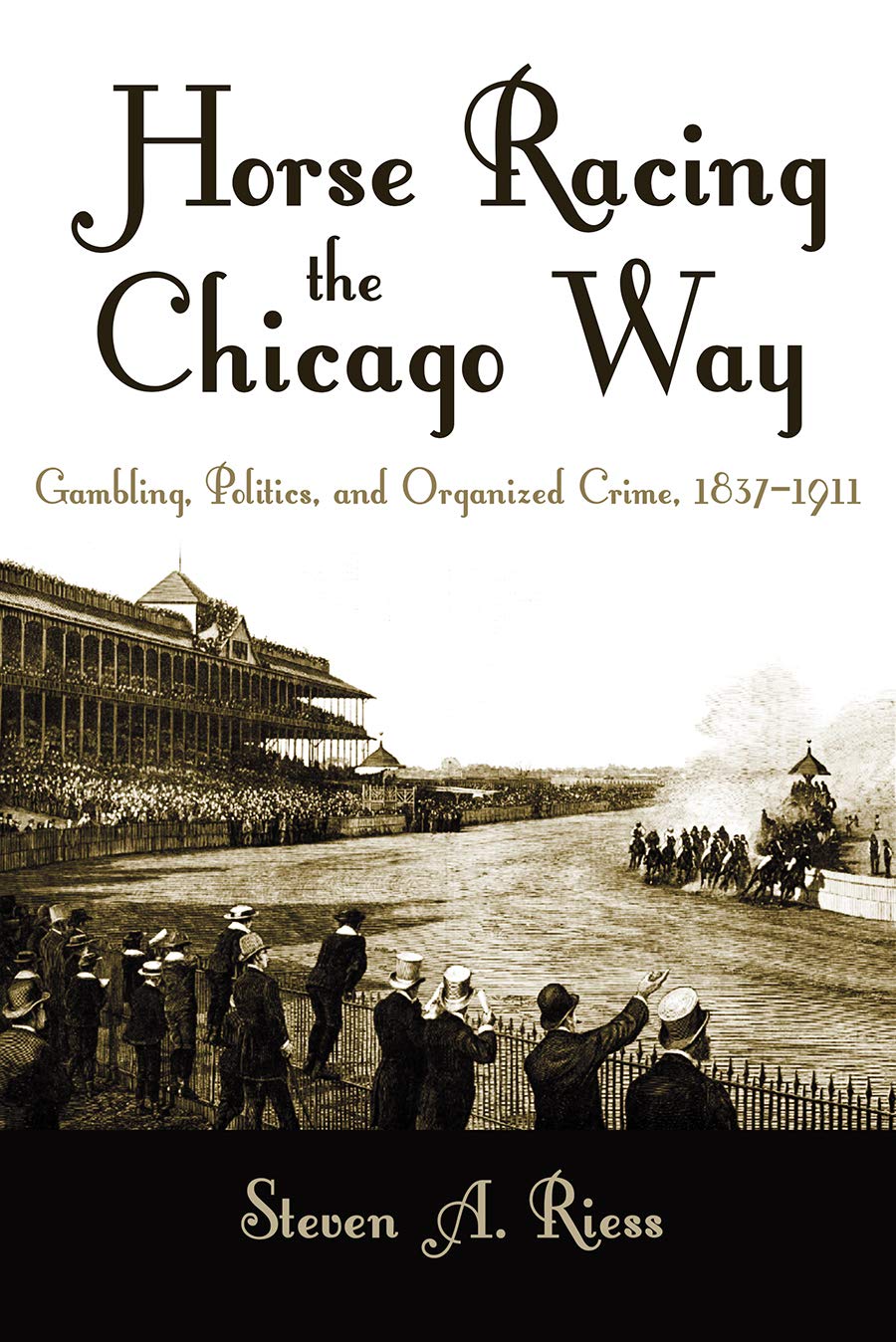
Horse Racing the Chicago Way book cover
#37

Horse Racing the Chicago Way

Gambling, Politics, and Organized Crime, 1837-1911

2021

Chicago may seem a surprising choice for studying thoroughbred racing, especially since it was originally a famous harness racing town and did not get heavily into thoroughbred racing until the 1880s. However, Chicago in the late nineteenth and early twentieth centuries was second only to New York as a center of both thoroughbred racing and off-track gambling. Horse Racing the Chicago Way shines a light on this fascinating, complicated history, exploring the role of political influence and class in the rise and fall of thoroughbred racing; the business of racing; the cultural and social significance of racing; and the impact widespread opposition to gambling in Illinois had on the sport. Riess also draws attention to the nexus that existed between horse racing, politics, and syndicate crime, as well as the emergence of neighborhood bookmaking, and the role of the national racing wire in Chicago. Taking readers from the grandstands of Chicago’s finest tracks to the underworld of crime syndicates and downtown poolrooms, Riess brings to life this understudied era of sports history.

Authors

Charles B. Kastner
Charles B. Kastner
Author · 3 books

I’ve been in love with the running for over forty years. The process of running on my own two feet has a primal, and, at times, spiritual appeal to me. I’ve competed in hundreds of races from ultra-marathons to five-kilometer runs. I’ve experienced the preverbal runner’s high, but nothing I’ve done comes close to the Herculean effort required by the men who ran in two long forgotten footraces across America, nicknamed the bunion derbies. These races took place in the twilight of the 1920’s when the nation was a buzz with Lindbergh’s solo flight across the Atlantic and all records seemed there to be broken. For the past fourteen years, I’ve studied and written about these epic footraces. My first book about the 1928 race—Bunion Derby: The 1928 Footrace Across America—was published in 2007. My second about the 1929 race—The 1929 Bunion Derby: Johnny Salo and the Great Footrace across America—will be published this spring. The runners who competed in these trans-America races pushed themselves to the point of physical and mental collapse. Those that persevered to run the 3,500-mile distance across America are a constant reminder to me of the untapped sources of human potential that rest within each of us. In my latest book, forty-three veterans from the first bunion derby return for a second try at trans-America racing. On March 31, 1929, these veterans joined thirty-four rookies in New York City for the start of the second and last Bunion Derby. Racing over mountains, and across deserts and prairies, the “bunioneers” pushed their bodies to the breaking point. The men averaged forty-six, gut-busting miles a day during seventy-eight days of non-stop racing that took them from New York City to Los Angeles in the waning months of the Roaring Twenties, just months before the Wall Street crash started the nation on its descent into the Great Depression. The forty-three veterans dominated the race, after having learned hard-won lessons of pace, diet, and training during the first race. Among this group, two brilliant runners, Johnny Salo of Passaic, New Jersey and Pete Gavuzzi of England, emerged to battle for the $25,000 first prize along the mostly unpaved roads of 1929 America, with each man pushing the other to go faster as the lead switched back and forth between them. Chasing them relentlessly, was Eddie “the Sheik” Gardner of Seattle, an African American who showed remarkable courage as he faced down the endemic racism he encountered on a daily basis. To pay the prize money, race Director Charley Pyle cobbled together a traveling vaudeville company, complete with dancing debutantes, an all-girl band wearing pilots’ outfits, and blackface comedians, all housed under the massive show tent that Charley hoped would pack in audiences. This is the story of, arguably, the greatest long distance footrace of all time. To see a video trailer of the book, view it on YOU TUBE at http://www.youtube.com/watch?v=b17pxI...

Steven A. Riess
Author · 5 books
A leading authority on the history of sports in modern America, Steven A. Riess is the former the Bernard Brommel Distinguished Research Professor in the Department of History at Northeastern Illinois University. A graduate of New York University, he earned his masters and doctorate degrees at the University of Chicago.
548 Market St PMB 65688, San Francisco California 94104-5401 USA
© 2026 Paratext Inc. All rights reserved