Margins
Margins
Sign in
Margins
Subscribe to our newsletter
548 Market St PMB 65688, San Francisco California 94104-5401 USA
hello@margins.app
·
+1 (650) 223-5283
Privacy Policy
·
Terms of Use
© 2026 Paratext Inc. All rights reserved
📚
Spring 26
The Divine Comedy
1320
Dante Alighieri
This Everyman’s Library edition–containing in one volume all three cantos, Inferno, Purgatorio, and Paradiso–includes an introduction by Nobel Prize—winning poet Eugenio Montale, a chronology, notes, and a bibliography. Also included are forty\-two drawings selected from Botticelli’s marvelous late\-fifteenth\-century series of illustrations. Translated in this edition by Allen Mandelbaum, The Divine Comedy begins in a shadowed forest on Good Friday in the year 1300\. It proceeds on a journey that, in its intense recreation of the depths and the heights of human experience, has become the key with which Western civilization has sought to unlock the mystery of its own identity. Mandelbaum’s astonishingly Dantean translation, which captures so much of the life of the original, renders whole for us the masterpiece of that genius whom our greatest poets have recognized as a central model for all poets.
Paradise Lost
1667
John Milton
John Milton's Paradise Lost is one of the greatest epic poems in the English language. It tells the story of the Fall of Man, a tale of immense drama and excitement, of rebellion and treachery, of innocence pitted against corruption, in which God and Satan fight a bitter battle for control of mankind's destiny. The struggle rages across three worlds - heaven, hell, and earth - as Satan and his band of rebel angels plot their revenge against God. At the center of the conflict are Adam and Eve, who are motivated by all too human temptations but whose ultimate downfall is unyielding love. Marked by Milton's characteristic erudition, Paradise Lost is a work epic both in scale and, notoriously, in ambition. For nearly 350 years, it has held generation upon generation of audiences in rapt attention, and its profound influence can be seen in almost every corner of Western culture.
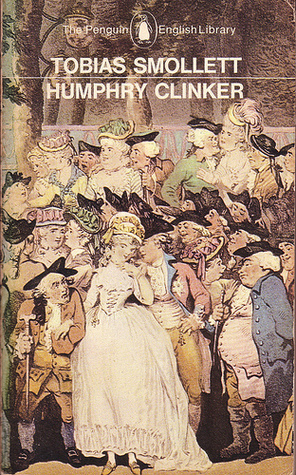
The Expedition of Humphry Clinker
1771
Tobias Smollett
Offers a picture of eighteenth-century society. This story describes Squire Bramble's tour of the Britain of George III.
William Shakespeare - Histories
2009
Critical essays discuss the plot, characters, and themes of Shakespeare's histories.
Joseph Andrews and Shamela
1742
Henry Fielding
Henry Fielding wrote both
Joseph Andrews
(1742) and
Shamela
(1741) in response to Samuel Richardson's book
Pamela
(1740), of which
Shamela
is a splendidly bawdy travesty. Joseph Andrews begins as a parody, too, but soon outgrows its origins, and its deepest roots lie in Cervantes and Marivaux. In both stories, Fielding demonstrates his concern for the corruption of contemporary society, politics, religion, morality, and taste. This revised and expanded edition follows the text of Joseph Andrews established by Martin C. Battestin for the definitive Wesleyan Edition of Fielding's works. The text of
Shamela
is based on the first edition, and two substantial appendices reprint the preliminary matter from the second edition of Richardson's
Pamela
and Conyers Middleton's
Life of Cicero
, which is also closely parodied in
Shamela
. This Oxford World's Classics edition also features a new introduction by Thomas Keymer which situates Fielding's works in their critical and historical contexts.
📚 Spring 26