Margins
Margins
Sign in
Margins
Subscribe to our newsletter
548 Market St PMB 65688, San Francisco California 94104-5401 USA
hello@margins.app
·
+1 (650) 223-5283
Privacy Policy
·
Terms of Use
© 2026 Paratext Inc. All rights reserved
📚 Spring
📚
Spring
The Enchanted April
1922
Elizabeth von Arnim
A recipe for happiness: four women, one medieval Italian castle, plenty of wisteria, and solitude as needed. The women at the center of The Enchanted April are alike only in their dissatisfaction with their everyday lives. They find each other—and the castle of their dreams—through a classified ad in a London newspaper one rainy February afternoon. The ladies expect a pleasant holiday, but they don’t anticipate that the month they spend in Portofino will reintroduce them to their true natures and reacquaint them with joy. Now, if the same transformation can be worked on their husbands and lovers, the enchantment will be complete. The Enchanted April was a best-seller in both England and the United States, where it was a Book-of-the-Month Club selection, and set off a craze for tourism to Portofino. More recently, the novel has been the inspiration for a major film and a Broadway play.
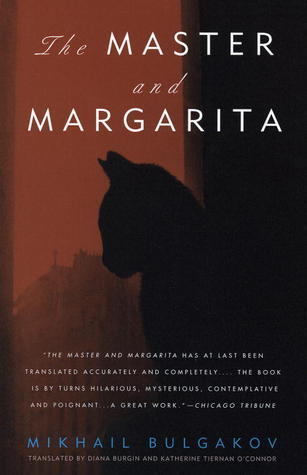
The Master and Margarita
1967
Mikhail Bulgakov
The first complete, annotated English Translation of Mikhail Bulgakov's comic masterpiece. An audacious revision of the stories of Faust and Pontius Pilate, The Master and Margarita is recognized as one of the essential classics of modern Russian literature. The novel's vision of Soviet life in the 1930s is so ferociously accurate that it could not be published during its author's lifetime and appeared only in a censored edition in the 1960s. Its truths are so enduring that its language has become part of the common Russian speech. One hot spring, the devil arrives in Moscow, accompanied by a retinue that includes a beautiful naked witch and an immense talking black cat with a fondness for chess and vodka. The visitors quickly wreak havoc in a city that refuses to believe in either God or Satan. But they also bring peace to two unhappy Muscovites: one is the Master, a writer pilloried for daring to write a novel about Christ and Pontius Pilate; the other is Margarita, who loves the Master so deeply that she is willing literally to go to hell for him. What ensues is a novel of inexhaustible energy, humor, and philosophical depth, a work whose nuances emerge for the first time in Diana Burgin's and Katherine Tiernan O'Connor's splendid English version.
El amor de Erika Ewald
1904
Stefan Zweig
Published in 1904, the novella "The Love of Erika Ewald" is one of the early works of Austrian author Stefan Zweig and is about an erotic When the young pianist Erika Ewald falls in love with a violin virtuoso, she is not quite sure of her feelings at first. With fatal Tired of the long wait, the violin virtuoso has turned to another woman. Overcome by feelings of revenge, the young woman reacts to this disappointment with a radical plan - her erotic self-destruction. Biography Stefan Zweig was a novelist, dramatist, journalist, and biographer who lived in Austria. During the 1920s and 1930s, when he was at the height of his literary career, he was one of the world's most translated and popular writers. Zweig was born and raised in Vienna, Austria-Hungary.