Margins




548 Market St PMB 65688, San Francisco California 94104-5401 USA
© 2026 Paratext Inc. All rights reserved
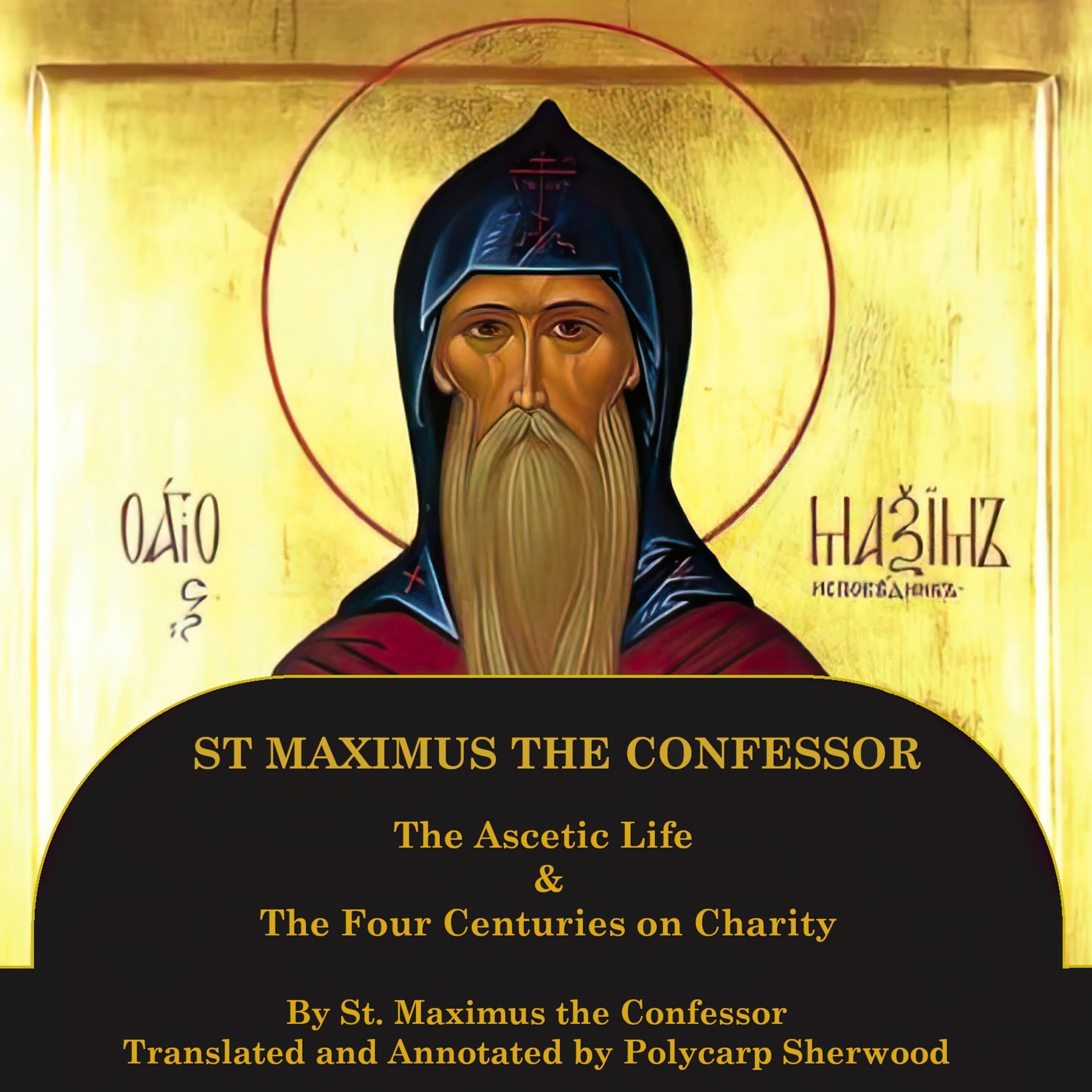
"St. Maximus the Confessor (1955) is a collection of theological works by the 1st-century monk St. Maximus, as well as interpretation by Polycarp Sherwood, an American Benedictine scholar from the 20th century. Including both The Ascetic Life and The Four Centuries on Charity by St. Maximus, as well as detailed research into the life and beliefs of the monk by Sherwood, this work includes both source material and commentary. The work begins with Life by Sherwood, a deep exploration into the life and theistic beliefs of St. Maximus. Born in 580 CE, Maximus enjoyed an education that prepared him for imperial service. He fulfilled this goal early in his career, serving as first secretary to the Byzantine emperor Heraclius. But he soon withdrew to monastic asceticism at Chrysopolis, seeking a routine of solitude and thought. Throughout his life, he traveled across the Byzantine Empire, including present-day Turkey, Crete, and parts of Africa, clarifying his position on important theological issues and writing his many works. Eventually, he was drawn into one of the great Christian controversies of the day-the nature of Christ's will. Maximus supported the Chalcedonian interpretation, which stated that Christ had both a human and a divine will. This was in contrast to the Monothelite position, accepted as canon at the time, which held that Christ had both a divine and human nature, but only a divine will. For this belief, Maximus was persecuted. Eventually, his tongue was cut out and his right hand cut off, so he could no longer speak or write his ""heresy."" He was then exiled to modern-day Georgia, where he died after just a few weeks. He was soon after vindicated and his position was upheld by the Third Council of Constantinople just 18 years after his death. It wasn't long before he was venerated as a saint. The next section, Doctrine, is also by Sherwood, and it explores St. Maximus' views on the nature of God as ""goodness itself,"" the nature of man as a composite of body and soul, and on the salvation and deification of man through the works of Christ and asceticism. Next, we reach the works of St. Maximus himself. The first, The Ascetic Life, is a question-and-answer book in which a young brother asks an old wise man about the Christian life and the nature of Christ. In the old man's simple words, ""...the purpose of the Lord's becoming man was our salvation."" The old man answers the young brother's questions about the nature of Christian love, forsaking attachment to the worldly, and how to devote oneself entirely to God. Finally, the book concludes with The Four Centuries on Charity, also by St. Maximus. This collection of aphorisms is organized into four separate ""centuries,"" or collections of one hundred. Kept short to aid in memorization and providing subjects for prayer, these sayings were presented to a Father Elpidius for his reading and benefit. The sayings range from the simple (""Happy is the man who is able to love all men equally"") to the more complex (""Of the passions, it happens that some belong to the irascible, some to the concupiscible part of the soul. But both are moved by means of the senses."") Through study and prayer, St. Maximus hoped that these aphorisms would help the reader to live a Christ-like charity and grow closer to God. "