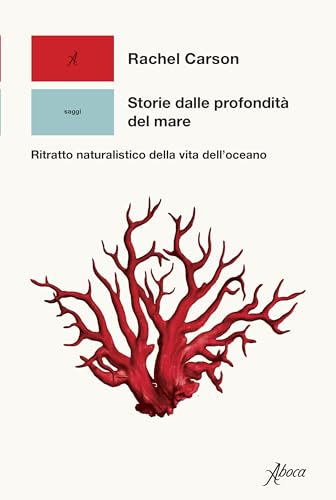



Non saremo mai in grado di vedere il mare e l’incessante lotta per la vita che lì si consuma meglio di come è riuscita a farceli vedere Rachel Carson con la sua abilità narrativa e la sua competenza scientifica. Storie dalle profondità del mare (orig. Under the sea-wind) è il primo libro di Rachel Carson e anche quello che lei ha amato di più. È una cronaca in presa diretta sulla vita delle innumerevoli creature marine che convivono sulla riva e sott’acqua, raccontato osservando da vicino le storie di tre abitanti dell’oceano, un piovanello, uno sgombro e un’anguilla, intrecciate drammaticamente nel continuo flusso e riflusso delle maree. La prima parte del libro descrive la vita della costa. Sulla riva dell’Atlantico Carson incontra Silverbar, un piovanello femmina, alla vigilia della migrazione. Ogni primavera, alcuni piovanelli viaggiano per circa tredicimila chilometri e al ritorno, in autunno, coprono la stessa distanza. Questi uccellini svernano a sud spingendosi fino in Patagonia, mentre in primavera migrano verso nord oltre il Circolo polare artico. La seconda parte è dedicata al mare aperto. Qui incontriamo un altro migratore sulle lunghe distanze, Scomber, uno sgombro. Carson ne racconta la storia dalla nascita (le uova vengono deposte in mare aperto e, quando si schiudono, le larve dovranno immediatamente contare solo sulle proprie risorse in un mondo di infiniti pericoli) fino a quando Scomber va a unirsi alla schiera dei predatori marini. Dopo aver trascorso l’estate in un porto protetto del New England, lui e altri giovani tornano a vagabondare in mare aperto dove trovano ad aspettarli nemici nuovi e più uccelli, pesci spada, tonni e pescatori… La terza parte si immerge nelle profondità più oscure dell’oceano per incontrare un’anguilla e seguirla nei luoghi più remoti e meravigliosi della Terra. La sua storia è iniziata nel lontano mar dei Sargassi per poi spostarsi, con un viaggio di oltre millecinquecento chilometri, sulla costa atlantica. Entrerà nelle baie, risalirà i fiumi, rimarrà lì per otto o anche dieci anni, fino al raggiungimento della maturità fisica, quando poi scomparirà per tornare da dove è venuta e andare a deporre le uova…
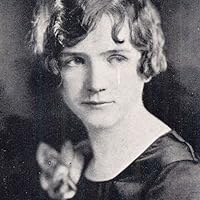
Author

Rachel Louise Carson (May 27, 1907 – April 14, 1964) was an American marine biologist and conservationist whose book Silent Spring and other writings are credited with advancing the global environmental movement. Carson began her career as an aquatic biologist in the U.S. Bureau of Fisheries, and became a full-time nature writer in the 1950s. Her widely praised 1951 bestseller The Sea Around Us won her a U.S. National Book Award, recognition as a gifted writer, and financial security. Her next book, The Edge of the Sea, and the reissued version of her first book, Under the Sea Wind, were also bestsellers. This sea trilogy explores the whole of ocean life from the shores to the depths. Late in the 1950s, Carson turned her attention to conservation, especially environmental problems that she believed were caused by synthetic pesticides. The result was Silent Spring (1962), which brought environmental concerns to an unprecedented share of the American people. Although Silent Spring was met with fierce opposition by chemical companies, it spurred a reversal in national pesticide policy, which led to a nationwide ban on DDT and other pesticides, and it inspired a grassroots environmental movement that led to the creation of the U.S. Environmental Protection Agency. Carson was posthumously awarded the Presidential Medal of Freedom. A variety of groups ranging from government institutions to environmental and conservation organizations to scholarly societies have celebrated Carson's life and work since her death. Perhaps most significantly, on June 9, 1980, Carson was awarded the Presidential Medal of Freedom, the highest civilian honor in the United States. A 17¢ Great Americans series postage stamp was issued in her honor the following year; several other countries have since issued Carson postage as well. Carson's birthplace and childhood home in Springdale, Pennsylvania—now known as the Rachel Carson Homestead—became a National Register of Historic Places site, and the nonprofit Rachel Carson Homestead Association was created in 1975 to manage it. Her home in Colesville, Maryland where she wrote Silent Spring was named a National Historic Landmark in 1991. Near Pittsburgh, a 35.7 miles (57 km) hiking trail, maintained by the Rachel Carson Trails Conservancy, was dedicated to Carson in 1975. A Pittsburgh bridge was also renamed in Carson's honor as the Rachel Carson Bridge. The Pennsylvania Department of Environmental Protection State Office Building in Harrisburg is named in her honor. Elementary schools in Gaithersburg, Montgomery County, Maryland, Sammamish, Washington and San Jose, California were named in her honor, as were middle schools in Beaverton, Oregon and Herndon, Virginia (Rachel Carson Middle School), and a high school in Brooklyn, New York. Between 1964 and 1990, 650 acres (3 km2) near Brookeville in Montgomery County, Maryland were acquired and set aside as the Rachel Carson Conservation Park, administered by the Maryland-National Capital Park and Planning Commission. In 1969, the Coastal Maine National Wildlife Refuge became the Rachel Carson National Wildlife Refuge; expansions will bring the size of the refuge to about 9,125 acres (37 km2). In 1985, North Carolina renamed one of its estuarine reserves in honor of Carson, in Beaufort. Carson is also a frequent namesake for prizes awarded by philanthropic, educational and scholarly institutions. The Rachel Carson Prize, founded in Stavanger, Norway in 1991, is awarded to women who have made a contribution in the field of environmental protection. The American Society for Environmental History has awarded the Rachel Carson Prize for Best Dissertation since 1993. Since 1998, the Society for Social Studies of Science has awarded an annual Rachel Carson Book Prize for "a book length work of social or political relevance in the area of science and technology studies." More: http://en.wikipedia.org/wiki/Rachel\_C...