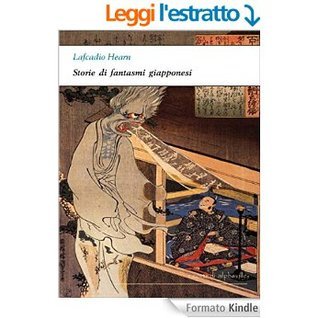



Nato nell’arcipelago delle isole Ionie da padre irlandese e madre greca, lo scrittore e giornalista Lafcadio Hearn (1850-1904), dopo aver peregrinato tra l’Irlanda, gli Stati Uniti e le Indie Occidentali, nel 1890 si stabilì in Giappone, assumendo in seguito la cittadinanza di questo paese (con il nome di Yakumo Koizumi) e sposandosi con una donna giapponese. Nella nazione del Sol Levante insegnò letteratura inglese all’Università imperiale di Tokyo e alla Waseda e scrisse svariati libri sul folklore e sulla cultura nipponica del periodo storico precedente all’apertura del Giappone all’Occidente avvenuta a metà Ottocento. I quattro racconti di spettri qui presentati, "La riconciliazione", "Una leggenda su Fugen-Bosatsu", "La fanciulla del paravento" e "La simpatia di Benten", rielaborazioni di storie ricavate da testi della letteratura giapponese dei periodi Edo e Muromachi (il primo dal Konséki-Monogatari, il secondo dal Jikkun-sho, gli ultimi due dall’Otogi-Hyaku-Monogatari), sono tratti dal volume di miscellanea intitolato "Shadowings" (1900).
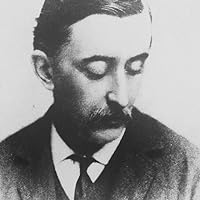
Author

Greek-born American writer Lafcadio Hearn spent 15 years in Japan; people note his collections of stories and essays, including Kokoro (1896), under pen name Koizumi Yakumo. Rosa Cassimati (Ρόζα Αντωνίου Κασιμάτη in Greek), a Greek woman, bore Patrick Lafcadio Hearn (Πατρίκιος Λευκάδιος Χερν in Greek or 小泉八雲 in Japanese), a son, to Charles Hearn, an army doctor from Ireland. After making remarkable works in America as a journalist, he went to Japan in 1890 as a journey report writer of a magazine. He arrived in Yokohama, but because of a dissatisfaction with the contract, he quickly quit the job. He afterward moved to Matsué as an English teacher of Shimané prefectural middle school. In Matsué, he got acquainted with Nishida Sentarô, a colleague teacher and his lifelong friend, and married Koizumi Setsu, a daughter of a samurai. In 1891, he moved to Kumamoto and taught at the fifth high school for three years. Kanô Jigorô, the president of the school of that time, spread judo to the world. Hearn worked as a journalist in Kôbé and afterward in 1896 got Japanese citizenship and a new name, Koizumi Yakumo. He took this name from "Kojiki," a Japanese ancient myth, which roughly translates as "the place where the clouds are born". On that year, he moved to Tôkyô and began to teach at the Imperial University of Tôkyô. He got respect of students, many of whom made a remarkable literary career. In addition, he wrote much reports of Japan and published in America. So many people read his works as an introduction of Japan. He quit the Imperial University in 1903 and began to teach at Waseda University on the year next. Nevertheless, after only a half year, he died of angina pectoris.