


Margins
Stories By Foreign Authors book cover
Stories By Foreign Authors
French
1898
First Published
3.50
Average Rating
178
Number of Pages

The Siege of Berlin By Alphonse Daudet The Juggler of Notre Dame By Anatole France Uncle and Nephew By Edmond About Another Gambler By Paul Bourget The Necklace By Guy de Maupassant The Black Pearl By Victorien Sardou
Avg Rating
3.50
Number of Ratings
4
5 STARS
0%
4 STARS
50%
3 STARS
50%
2 STARS
0%
1 STARS
0%
goodreads

Authors

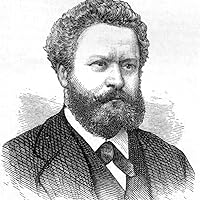
Edmond About
Edmond About
Author · 5 books
Edmond François Valentin About was a French novelist, publicist and journalist. His book on Greece, La Grèce contemporaine (1855) was an immediate success. In Tolla (1855), About was charged with drawing too freely on an earlier Italian novel, Vittoria Savelli (1841). This aroused prejudice against him, and he was the object of numerous attacks. The Lettres d'un Bon Jeune Homme, written to the Figaro under the signature of "Valentin de Quevilly", provoked more animosities. During the next few years, he wrote novels, stories, a play (which failed), a book-pamphlet on the Roman question, many pamphlets on other subjects of the day, innumerable newspaper articles, some art criticisms, rejoinders to the attacks of his enemies, and popular manuals of political economy, L'A B C du travailleur (1868), Le progrès (1864). His more serious novels include Madelon (1863), L'Infâme (1867), the three that form the trilogy of the Vieille Roche (1866), and Le roman d'un brave homme (1880) - a kind of counterblast to the view of the French workman presented in Zola's Assommoir. He is best remembered as a farceur, for the books Le nez d'un notaire (1862); Le roi des montagnes (1856); L'homme à l'oreille cassée (1862); Trente et quarante (1858); Le cas de M. Guérin (1862).
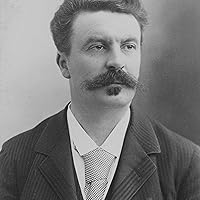
Guy de Maupassant
Guy de Maupassant
Author · 292 books
Henri René Albert Guy de Maupassant was a popular 19th-century French writer. He is one of the fathers of the modern short story. A protege of Flaubert, Maupassant's short stories are characterized by their economy of style and their efficient effortless dénouement. He also wrote six short novels. A number of his stories often denote the futility of war and the innocent civilians who get crushed in it - many are set during the Franco-Prussian War of the 1870s.
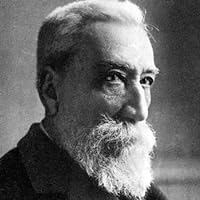
Anatole France
Anatole France
Author · 41 books

Awarded the Nobel Prize in Literature in 1921 "in recognition of his brilliant literary achievements, characterized as they are by a nobility of style, a profound human sympathy, grace, and a true Gallic temperament." Anatole France began his career as a poet and a journalist. In 1869, Le Parnasse Contemporain published one of his poems, La Part de Madeleine. In 1875, he sat on the committee which was in charge of the third Parnasse Contemporain compilation. He moved Paul Verlaine and Mallarmé aside of this Parnasse. As a journalist, from 1867, he wrote a lot of articles and notices. He became famous with the novel Le Crime de Sylvestre Bonnard (1881). Its protagonist, skeptical old scholar Sylvester Bonnard, embodied France's own personality. The novel was praised for its elegant prose and won him a prize from the French Academy. In La Rotisserie de la Reine Pedauque (1893) Anatole France ridiculed belief in the occult; and in Les Opinions de Jerome Coignard (1893), France captured the atmosphere of the fin de siècle. He was elected to the Académie française in 1896. France took an important part in the Dreyfus Affair. He signed Emile Zola's manifesto supporting Dreyfus, a Jewish army officer who had been falsely convicted of espionage. France wrote about the affair in his 1901 novel Monsieur Bergeret. France's later works include L'Île des Pingouins (1908) which satirizes human nature by depicting the transformation of penguins into humans - after the animals have been baptized in error by the nearsighted Abbot Mael. La Revolte des Anges (1914) is often considered France's most profound novel. It tells the story of Arcade, the guardian angel of Maurice d'Esparvieu. Arcade falls in love, joins the revolutionary movement of angels, and towards the end realizes that the overthrow of God is meaningless unless "in ourselves and in ourselves alone we attack and destroy Ialdabaoth." He was awarded the Nobel Prize in 1921. He died in 1924 and is buried in the Neuilly-sur-Seine community cemetery near Paris. In 1922, France's entire works were put on the Index Librorum Prohibitorum (Prohibited Books Index) of the Roman Catholic Church.[2:] This Index was abolished in 1966.

548 Market St PMB 65688, San Francisco California 94104-5401 USA
© 2026 Paratext Inc. All rights reserved