Margins




548 Market St PMB 65688, San Francisco California 94104-5401 USA
© 2026 Paratext Inc. All rights reserved
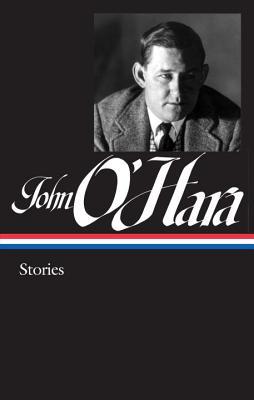
“He told the truth about his time,” reads the epitaph on John O’Hara’s gravestone. “He wrote honestly and well.” O’Hara sought in his fiction to capture experience without pretension or literary affectation. A modernist like his contemporaries Hemingway and Fitzgerald, he drew on the plainspoken directness of the American vernacular to fashion a sharp-edged, urbane mode of storytelling distinctly his own—forthright, attentive to the smallest detail, unsentimental but powerfully sympathetic. Offering a fresh perspective on O’Hara’s brilliance as a short-story writer, editor Charles McGrath has chosen sixty stories in a selection that spans the entire remarkable career of one of twentieth-century America’s greatest social chroniclers. The oldest son of a well-to-do Irish Catholic doctor, O’Hara was born and raised in Pottsville, the small city at the center of eastern Pennsylvania’s anthracite region. Renamed “Gibbsville” after his friend the writer Wolcott Gibbs, the city and surrounding countryside provided a rich storehouse of material for O’Hara’s fiction. Like William Faulkner and William Kennedy, he was keenly alert to the particularities of his home region and to the manifold ways that locale shapes human behavior. The Pennsylvania setting is the backdrop for one of his most enduring stories, “The Doctor’s Son”—a long tale with roots in O’Hara’s own childhood that stands, along with Katherine Anne Porter’s “Pale Horse, Pale Rider,” as one of the most powerful literary treatments of the devastating 1918 flu pandemic in America—as well as “Imagine Kissing Pete,” a novella that follows a tumultuous marriage through its surprising twists and turns, and the poignant story placed last in this volume, “Christmas Poem.” The Gibbsville stories included here are joined by sketches, tales, and novellas that unfold in more glittering settings: Manhattan in the years following the repeal of Prohibition, and Hollywood, where O’Hara worked fitfully as a screenwriter. Often conveying the follies and illusions of worldly sophisticates never very far from their next drink, these stories offer a larger, more searching picture of American life, a Balzacian account of people from every station struggling with thwarted hopes and unresolved disappointments. O’Hara’s own sense of himself as a literary outsider, despite his success, enabled him to dissect the intricacies of class in America with singular insight. As Charles McGrath writes: “He knew, probably better than any other American writer, about social class in this country: about all the subtle markers and distinctions used to indicate rungs in the hierarchy, and about how rigid and how fragile the system is, a maze of envy, snobbery, and insecurity.” This revelatory collection is accompanied, for the first time, by extensive notes clarifying O’Hara’s many allusions to music, movies, fashion, and topical events, as well as a concise chronology providing crucial biographical context for many of the stories.