Margins




548 Market St PMB 65688, San Francisco California 94104-5401 USA
© 2026 Paratext Inc. All rights reserved
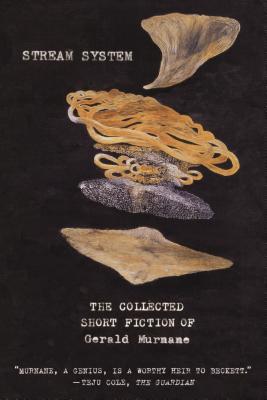
Stories from a mind-bending Australian master, "a genius on the level of Beckett" (Teju Cole) Never before available to readers in this hemisphere, these stories—originally published from 1985 to 2012—offer an irresistible compendium of the work of one of contemporary fiction's greatest magicians. While the Australian master Gerald Murnane's reputation rests largely on his longer works of fiction, his short stories stand among the most brilliant and idiosyncratic uses of the form since Borges, Beckett, and Nabokov. Brutal, comic, obscene, and crystalline, Stream System runs from the haunting "Land Deal," which imagines the colonization of Australia and the ultimate vengeance of its indigenous people as a series of nested dreams; to "Finger Web," which tells a quietly terrifying, fractal tale of the scars of war and the roots of misogyny; to "The Interior of Gaaldine," which finds its anxious protagonist stranded beyond the limits of fiction itself. No one else writes like Murnane, and there are few other authors alive still capable of changing how—and why—we read. Contents: When the mice failed to arrive—Stream system—Land deal—The only Adam—Stone quarry—Precious bane—Cotters come no more—There were some countries—Finger web—First love—Velvet waters—The white cattle of Uppington—In far fields—Pink lining—Boy blue—Emerald blue—The interior of Gaaldine—Invisible yet enduring lilacs—As it were a letter—The boy's name was David—Last letter to a niece.