Margins
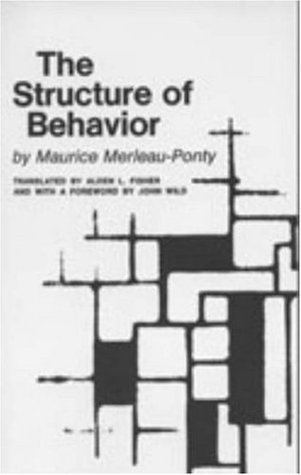
Structure of Behavior book cover
Structure of Behavior
1942
First Published
4.25
Average Rating
264
Number of Pages
" Notre but est de comprendre les rapports de la conscience et de la nature, organique, psychologique ou mme sociale. On entend ici par nature une multiplicit d'vnements extrieurs les uns aux autres et lis par des rapports de causalit. " Dans cet ouvrage publi en 1942, complt en 1945 par la Phnomnologie de la perception, " s'affirme pour la premire fois une philosophie existentielle o le mode d'tre ultime du pour-soi ne s'avre pas tre, en dpit des intentions et des descriptions contraires, celui d'une conscience-tmoin " (A. de Waelhens, Prface). La structure du comportement se place au niveau de l'exprience non pas naturelle mais scientifique et s'efforce de prouver que cette exprience, c'est—dire l'ensemble des faits qui constituent le comportement, n'est pas comprhensible dans les perspectives ontologiques que la science adopte spontanment.

Avg Rating
4.25
Number of Ratings
116
5 STARS
47%
4 STARS
34%
3 STARS
16%
2 STARS
3%
1 STARS
0%
goodreads

Author

Maurice Merleau-Ponty
Author · 22 books

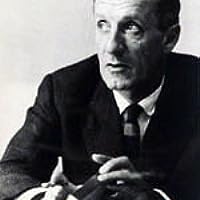
French phenomenological philosopher, strongly influenced by Edmund Husserl and Martin Heidegger in addition to being closely associated with Jean-Paul Sartre and Simone de Beauvoir. At the core of Merleau-Ponty's philosophy is a sustained argument for the foundational role that perception plays in understanding the world as well as engaging with the world. Like the other major phenomenologists Merleau-Ponty expressed his philosophical insights in writings on art, literature, and politics; however Merleau-Ponty was the only major phenomenologist of the first half of the Twentieth Century to engage extensively with the sciences, and especially with descriptive psychology. Because of this engagement, his writings have become influential with the recent project of naturalizing phenomenology in which phenomenologists utilize the results of psychology and cognitive science. Merleau-Ponty was born in Rochefort-sur-Mer, Charente-Maritime. His father was killed in World War 1 when Merleau-Ponty was 3. After secondary schooling at the lycée Louis-le-Grand in Paris, Maurice Merleau-Ponty became a student at the École Normale Supérieure, where he studied alongside Sartre, Simone de Beauvoir, and Simone Weil. He passed the agrégation in philosophy in 1930. Merleau-Ponty first taught at Chartres, then became a tutor at the École Normale Supérieure, where he was awarded his doctorate on the basis of two important books: La structure du comportement (1942) and Phénoménologie de la Perception (1945). After teaching at the University of Lyon from 1945 to 1948, Merleau-Ponty lectured on child psychology and education at the Sorbonne from 1949 to 1952. He was awarded the Chair of Philosophy at the Collège de France from 1952 until his death in 1961, making him the youngest person to have been elected to a Chair. Besides his teaching, Merleau-Ponty was also political editor for Les Temps Modernes from the founding of the journal in October 1945 until December 1952. Aged 53, he died suddenly of a stroke in 1961, apparently while preparing for a class on Descartes. He was buried in Le Père Lachaise Cemetery in Paris.

548 Market St PMB 65688, San Francisco California 94104-5401 USA
© 2026 Paratext Inc. All rights reserved