Studies in the Eighteenth Century and the Atlantic World
Series · 13
books · 1999-2020
Books in series

#3
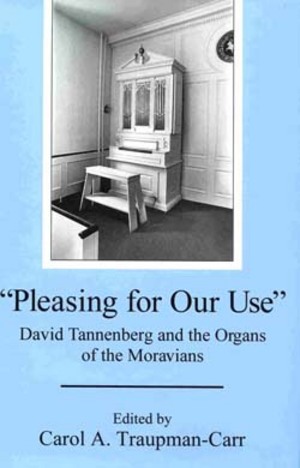
"Pleasing for Our Use"
David Tannenberg and the Organs of the Moravians
1999
This collection of essays forms an outstanding resource about the music of the Moravians, eighteenth-century America in general, and the organ-building trade. The bibliography includes additional related resources on American Moravian organs.

#4
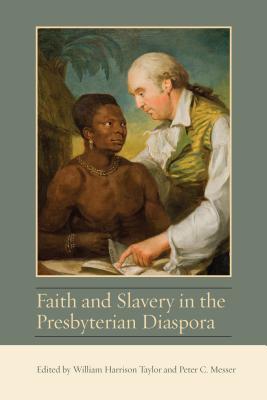
Faith and Slavery in the Presbyterian Diaspora
2016
Faith and Slavery in the Presbyterian Diaspora considers how, in areas as diverse as the New Hebrides, Scotland, the United States, and East Central Africa, men's and women's shared Presbyterian faith conditioned their interpretations of and interactions with the institution of chattel slavery.
The chapters highlight how Presbyterians reactions to slavery which ranged from abolitionism, to indifference, to support reflected their considered application of the principles of the Reformed Tradition to the institution. Consequently, this collection reveals how the particular ways in which Presbyterians framed the Reformed Tradition made slavery an especially problematic and fraught issue for adherents to the faith. Faith and Slavery, by situating slavery at the nexus of Presbyterian theology and practice, offers a fresh perspective on the relationship between religion and slavery. It reverses the all too common assumption that religion primarily served to buttress existing views on slavery, by illustrating how groups and individuals reactions to slavery emerged from their understanding of the Presbyterian faith.
The collection's geographic reach encompassing the experiences of people from Europe, Africa, America, and the Pacific filtered through the lens of Presbyterianism also highlights the global dimensions of slavery and the debates surrounding it. The institution and the challenges it presented, Faith and Slavery stresses, reflected less the peculiar conditions of a particular place and time, than the broader human condition as people attempt to understand and shape their world."

#6
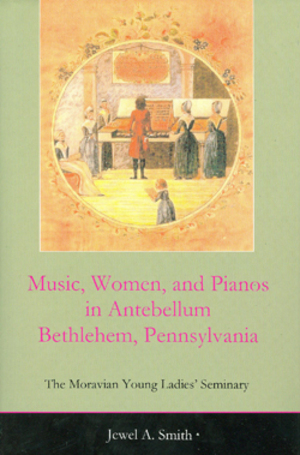
Music, Women, and Pianos in Antebellum Bethlehem, Pennsylvania
The Moravian Young Ladies' Seminary
2008
This volume documents not only the academic and music curricula offered at a distinguished seminary, but the importance of piano study from a sociological viewpoint, music making in a gendered environment, and performance opportunities available for nineteenth century women.

#7
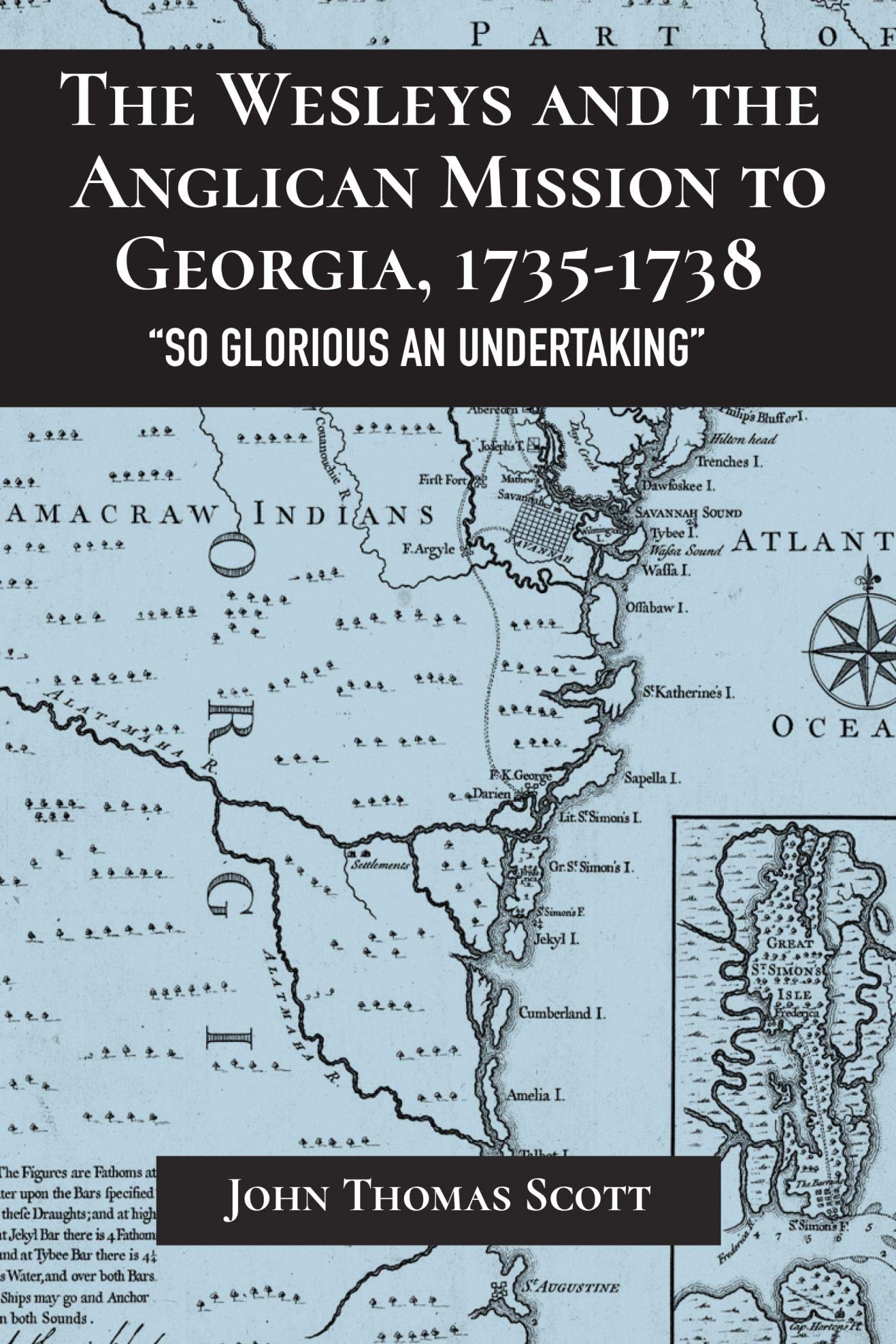
The Wesleys and the Anglican Mission to Georgia, 1735–1738
"So Glorious an Undertaking"
2020
The Wesleys and the Anglican Mission to Georgia, 1735-1738 considers the fascinating early history of a small group of men commissioned by trustees in England to spread Protestantism both to new settlers and indigenous people living in Georgia. Four minister-missionaries arrived in 1736, but after only two years these men detached themselves from the colonial enterprise, and the Mission effectively ended in 1738. Tracing the rise and fall of this endeavor, Scott’s study focuses on key figures in the history of the Mission including the layman, Charles Delamotte, and the ministers, John and Charles Wesley, Benjamin Ingham, and George Whitefield. In Scott’s innovative historical approach, neglected archival sources generate a detailed narrative account that reveals how these men’s personal experiences and personal networks had a significant impact on the inner-workings and trajectory of the Mission. The original group of missionaries who traveled to Georgia was composed of men already bound together by family relations, friendships, and shared lines of mentorship. Once in the colony, the missionaries’ prospects altered as they developed close ties with other missionaries (including a group of Moravians) and other settlers (John Wesley returned to England after his romantic relationship with Sophy Hopkey soured). Structures of imperialism, class, and race underlying colonial ideology informed the Anglican Mission in the era of trustee Georgia. The Wesleys and the Anglican Mission to Georgia enriches this historical picture by illuminating how a different set of intricacies, rooted in personal dynamics, was also integral to the events of this period. In Scott’s study, the history of the expansive eighteenth-century Atlantic world emerges as a riveting account of life unfolding on a local and individual level.

#8
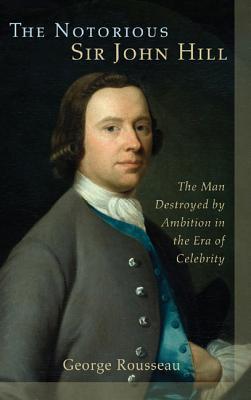
The Notorious Sir John Hill
The Man Destroyed by Ambition in the Era of Celebrity
2012
Sir John Hill (1714-1775) was one of Georgian England's most vilified men despite having contributed prolifically to its medicine, science and literature. Born into a humble Northamptonshire family, the son of an impecunious God-faring Anglican minister, he started out as an apothecary, went on to collect natural objects for the great Whig lords and became a botanist of distinction. But his scandalous behavior prevented his election to the Royal Society and entry to all other professions for which he was qualified. Today, we can understand his actions as the result of a personality disorder; then he was understood entirely in moral terms. When he saw the dye cast he turned to journalism and publication, and strove maniacally to succeed without patronage. As a writer he was also cut down in ferocious paper wars . Yet by the time he died, he had been knighted by the Swedish monarch and become a household name among scientists and writers throughout Britain and Europe. His life was a series of paradoxes without coherence, perhaps because he was above all a provocateur. In time he would also become a filter for the century in which he lived: its personalities great and small as well as the broad canvas of its culture, and for this reason any biography necessarily stretches beyond the man himself to those whose profiles he also illuminates."

#10
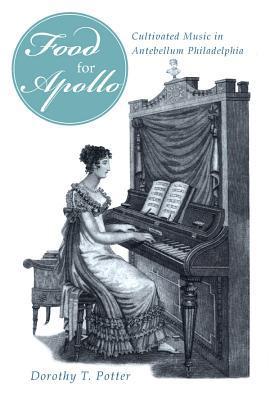
'Food for Apollo'
Cultivated Music in Antebellum Philadelphia
2010
'Food for Apollo': Cultivated Music in Antebellum Philadelphia details the evolution and significance in that city of what is often called 'classical' music. Performances in a variety of settings, from 'long rooms' in taverns to large theatres and concert halls, facilitated this process over approximately 100 years. Philadelphia's thriving music publishing trade, award-winning pianos, and its literary magazines helped supply the desire of America's middle and upper classes for culture and refinement. It was not uncommon in antebellum America to intersperse cultivated works with vernacular tunes, in concerts and even operas in English translation. While a number of European composers enjoyed substantial fame, Wolfgang Amadeus Mozart is the primary example in this study. He was chosen because of the adaptability of his music to domestic entertainments, and the public's fascination with his life as a prodigy and tragic genius.

#11
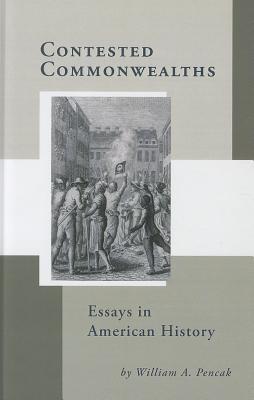
Contested Commonwealths
Essays in American History
2011
United States historian William Pencak here collects thirteen of his essays, written beginning in 1976. Some deal with colonial and revolutionary crowds and communities in Massachusetts—the impressment riot of 1747, the popular uprisings of the 1760s and 1770s, and Shays' Rebellion. Others discuss the popular ideology of the American Revolution as expressed in songs and almanacs, while several revisit revolutionary era statesmen George Washington, John Adams, Benjamin Franklin, and loyalist Peter Oliver. Interpretive essays argue that revolutionary economic thought turned smuggling from a vice into the "natural law" of free trade; and that focusing on the Civil War and the years 1861 to 1865, leads to a glorified conception of the national past that is better understood as shaped by "An Era of Racial Violence" that extended from 1854 to at least 1877.
Pencak's essays do not conform to standard interpretations of the revolutionary era that stress the importance of republican ideology or socio-economic conflict. Rather, he looks at colonial experiences of the French and Indian War as definitive in shaping dislike of Britain. He stresses that the popular thought expressed in songs and almanacs portray America as an open society, a land of plenty, threatened by British restrictions rather than a land where ancient Roman virtue or traditional British liberties flourished.
Moving to the early republic, Pencak looks at Shays' Rebellion from the point of view of those who suppressed it, and finds that they were genuinely concerned that Massachusetts' newly-formed republic was threatened by westerners. Westerners who presented themselves as an army and sought to restructure a constitution formed only six years before. George Washington was, in effect, the chief executive of the new nation from 1775 to 1797 and borrowed heavily from his wartime experiences to shape his presidency.

#12
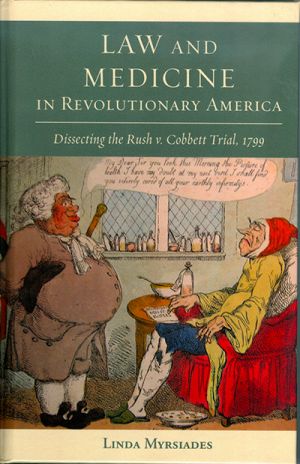
Law and Medicine in Revolutionary America
Dissecting the Rush v. Cobbett Trial, 1799
2012
This study focuses on two critical figures in late eighteenth-century America—the physician Benjamin Rush and the journalist William Cobbett—as they clashed in one of the most important trials of post-revolutionary America, a libel trial that pitted medicine against the press, republicanism against federalism, and privacy against the public welfare.

#13
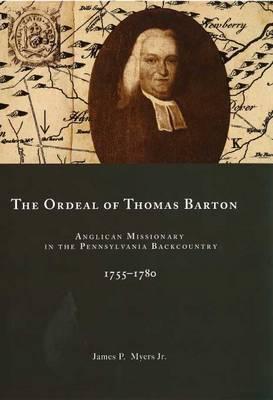
The Ordeal of Thomas Barton
Anglican Missionary in the Pennsylvania Backcountry, 1755-1780
2010
This study draws upon Thomas Barton's Forbes expedition journal, and a vast collection of manuscript letters, sermons, and other contemporary documents to illuminate his career and help readers appreciate the complex world of the pre-Revolutionary Pennsylvania frontier and more generally of the colonial American back country. As a missionary for the Church of England's Society for the Propagation of the Gospel in Foreign Parts in York, Cumberland, and Lancaster counties of Pennsylvania, Barton championed the interests of the Anglican church and the proprietary of William Penn's children in a turbulent borderland beset by both threats from the French and their Native American allies and challenges to English authority from a largely Scots-Irish Presbyterian population. After participating in General John Forbes' successful campaign against the French stronghold of Fort Duquense during the French and Indian War in 1758, Barton assumed the incumbency of St. James church in Lancaster. In that city's religiously turbulent and culturally diverse world, he advanced Enlightenment ideals and religious moderation. Targeted by extreme sectarian and political fanatics during the years leading up to the American colonies break with Great Britain, however, Loyalist Barton, ultimately deprived of his vocation and family, was evicted from Pennsylvania. After struggling against poor health and dire financial need in New York City for two years, he died in 1780, a self-defined martyr for his church and king.

#17
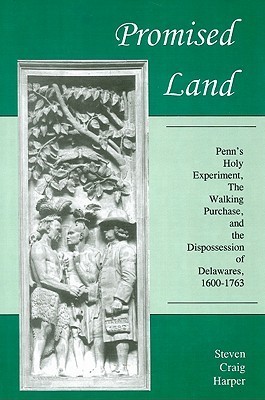
Promised Land
Penn's Holy Experiment, the Walking Purchase, and the Dispossession of Delawares
2008
The Walking Purchase of 1737 marked the end of negotiated boundaries in Pennsylvania, both geographical and cultural. Dispossessed by the fraudulent purchase and the conspiratorial diplomacy before and after it, Delawares chose variations on several responses, including migration, negotiation, conversion, and violent retribution. This book sensitively reconstructs their world from the time Europeans arrived on their shores to their geographical and ethnic annihilation from the Delaware Valley in the 1760s. Focusing on the Walking Purchase as the central event in this declension narrative, the book observes the transformation of a fragile if generally peaceful middle ground, habitable by Delawares and English on negotiable terms, to an English colony determined to possess a boundless landscape by fraud and force. Stephen C. Harper teaches at Brigham Young University.

#18
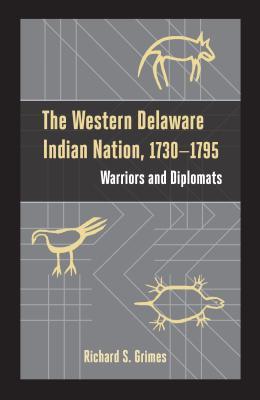
The Western Delaware Indian Nation, 1730 - 1795
Warriors and Diplomats
2017
During the early eighteenth century, three phratries or tribes (Turtle, Turkey, and Wolf) of Delaware Indians left their traditional homeland in the Delaware River watershed and moved west to the Allegheny Valley of western Pennsylvania and eventually across the Ohio River into the Muskingum River valley. As newcomers to the colonial American borderlands, these bands of Delawares detached themselves from their past in the east, developed a sense of common cause, and created for themselves a new regional identity in western Pennsylvania.
The Western Delaware Indian Nation, 1730 - 1795: Warriors and Diplomats is a case study of the western Delaware Indian experience, offering critical insight into the dynamics of Native American migrations to new environments and the process of reconstructing social and political systems to adjust to new circumstances. The Ohio backcountry brought to center stage the masculine activities of hunting, trade, war-making, diplomacy and was instrumental in the transformation of Delaware society and with that change, the advance of a western Delaware nation. This nation, however, was forged in a time of insecurity as it faced the turmoil of imperial conflict during the Seven Years' War and the backcountry racial violence brought about by the American Revolution. The stress of factionalism in the council house among Delaware leaders such as Tamaqua, White Eyes, Killbuck, and Captain Pipe constantly undermined the stability of a lasting political western Delaware nation.
This narrative of western Delaware nationhood is a story of the fight for independence and regional unity and the futile effort to create and maintain an enduring nation. In the end the western Delaware nation became fragmented and forced as in the past, to journey west in search of a new beginning. The Western Delaware Indian Nation, 1730 - 1795: Warriors and Diplomats is an account of an Indian people and their dramatic and arduous struggle for autonomy, identity, political union, and a permanent homeland.


#19
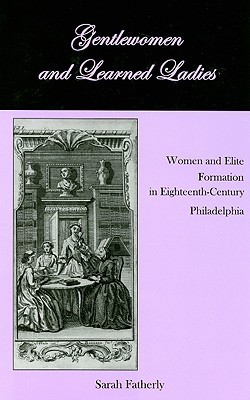
Gentlewomen and Learned Ladies
Women and Elite Formation in Eighteenth-Century Philadelphia
2008
Book by Fatherly, Sarah

#20
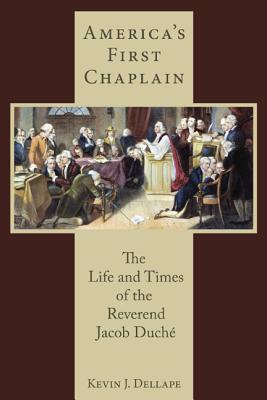
America's First Chaplain
The Life and Times of the Reverend Jacob Duché
2013
America's First Chaplain is a biography of the life of Philadelphia's Jacob Duche, the Anglican minister who offered the most famous prayer and wrote one of the most infamous letters of the American Revolution. For the prayer to open the First Continental Congress, Duche was declared a national hero and named the first chaplain to the newly independent American Congress. For the letter written to George Washington imploring the general to encourage Congress to rescind independence, he was accused of high treason and sent into exile. As a result of this apparently irreconcilable contradiction in the minister s behavior, many of his contemporaries and most historians have assumed he was weak, that in the moment of crisis his imprisonment by British authorities during their occupation of Philadelphia - he cut a deal with the British for his own safety. The evidence gathered from the life of Jacob Duche, however, points to a very different conclusion, one that reveals the immense complexity of the American Revolution and the havoc it wreaked on the lives of the people who experienced it. The story of this deeply religious rector of Christ Church and St. Peter s reveals the human side of the Revolution, a story that includes great accomplishment and great tragedy. It also provides insight into the complicated nature of Pennsylvania s democratic revolution, the unique difficulties faced by Anglican leaders during the revolution, and the weakness of simplistic categorizations such as patriot or loyalist. For more than two centuries two events a prayer and a letter - have obscured our view of the extraordinary life lying in the background. This biography attempts to reinterpret the prayer and the letter in light of the man behind them and in the process to uncover the real significance of both as well as to gain a glimpse into the complexity and contradictions of the American Revolution."