Margins
Sign in
Margins
548 Market St PMB 65688, San Francisco California 94104-5401 USA
hello@margins.app
·
+1 (650) 223-5283
Privacy Policy
·
Terms of Use
© 2026 Paratext Inc. All rights reserved
Studies in the History of Greece and Rome
Studies in the History of Greece and Rome
Series · 2 books · 2006-2017
By
Catalina Balmaceda
,
Robert Malcolm Errington
Books in series
#20
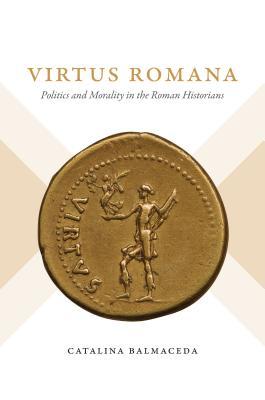
Virtus Romana
2017
The political transformation that took place at the end of the Roman Republic was a particularly rich area for analysis by the era's historians. Major narrators chronicled the crisis that saw the end of the Roman Republic and the changes that gave birth to a new political system. These writers drew significantly on the Roman idea of
virtus
as a way of interpreting and understanding their past. Tracing how
virtus
informed Roman thought over time, Catalina Balmaceda explores the concept and its manifestations in the narratives of four successive Latin historians who span the late Republic and early Principate: Sallust, Livy, Velleius, and Tacitus. Balmaceda demonstrates that
virtus
in these historical narratives served as a form of self-definition that fostered and propagated a new model of the ideal Roman more fitting to imperial times. As a crucial moral and political concept,
virtus
worked as a key idea in the complex system of Roman sociocultural values and norms that underpinned Roman attitudes about both present and past. This book offers a reappraisal of the historians as promoters of change and continuity in the political culture of both the Republic and the Empire.
#22
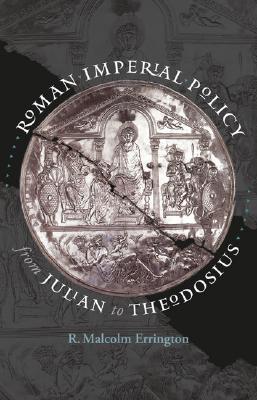
Roman Imperial Policy from Julian to Theodosius
2006
The division of the late Roman Empire into two theoretically cooperating parts by the brothers Valentinian and Valens in 364 deeply influenced many aspects of government in each of the divisions. Although the imperial policies during this well-documented and formative period are generally understood to have been driven by the religious and ideological aims of the emperors, R. Malcolm Errington argues that the emperors were actually much more pragmatic in their decision making than has previously been assumed. The division of responsibilities between the emperors inevitably encouraged separate developments and allowed locally varying and often changing imperial attitudes toward different forms of religious belief. Errington demonstrates that the main stimulus for action in this period nearly always came from below the level of the imperial government, and not from an imperial initiative. Extending the theory of Fergus Millar into the later empire, Errington argues that the emperors were fundamentally reactive to regionally supplied information, as Millar has asserted was the case for the High Empire. Thus, despite significant structural changes, the empire remained broadly traditional in its operations.
Authors
Catalina Balmaceda
Author · 3 books
Robert Malcolm Errington
Author · 1 book