Margins
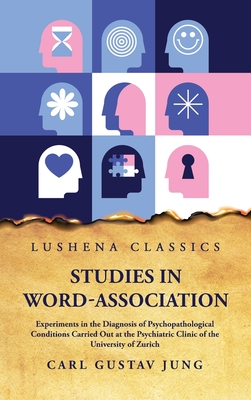
Studies in Word-Association Experiments in the Diagnosis of Psychopathological Conditions book cover
Studies in Word-Association Experiments in the Diagnosis of Psychopathological Conditions
2023
First Published
4.00
Average Rating
590
Number of Pages
This historic book may have numerous typos and missing text. Purchasers can usually download a free scanned copy of the original book (without typos) from the publisher. Not indexed. Not illustrated. 1919 edition. ...traversed by the psychological process. He found that the hysterical symptom is essentially a symbol for presentations (sexual in the ultimate analysis) which are not present in the conscious, but are repressed from the conscious by strong inhibitions. Repression arises from the critical presentations being so charged with pain (unpleasure) as to be insupportable to the conscious self. Inseparably bound up with this conception is the psycho 1 "Bnichstuck einer Hysterieanalyse," Monatssckrift fiir Psychiatrie u. Neurologie, 1905. Republished in Sammlung hleiner Schriften zur Neurosenlehre, zweite Folge. analytic method. It provides us with the knowledge of the repressed material of presentation that has become unconscious. If we ask patients directly as to the cause of their illness we always receive incorrect, or at least imperfect, information. If we did receive correct information as in other (physical) illnesses, we should have known long ago about the psychogenic nature of hysteria. But it is just the point of hysteria that it represses the real cause, the psychic trauma, forgets it and replaces it by superficial " cover causes." That is why hysterics ceaselessly tell us that their illness arose from a cold, from overwork, from real organic disorders. And many physicians thus allow themselves again and again to be deceived. Others go to the opposite extreme and maintain that all hysterics he. But that is because they completely misconceive the psychological conditionings of hysteria, which really consist in this, that presentations insupportable to the conscious ego are repressed and cannot be therefore reproduced. Freud's psycho-analytic methods circumvent the inhibitions which the conscious ego sets up towards...

Avg Rating
4.00
Number of Ratings
1
5 STARS
0%
4 STARS
100%
3 STARS
0%
2 STARS
0%
1 STARS
0%
goodreads

Author

Carl Jung
Carl Jung
Author · 129 books

Carl Gustav Jung (/jʊŋ/; German: [ˈkarl ˈɡʊstaf jʊŋ]), often referred to as C. G. Jung, was a Swiss psychiatrist and psychotherapist who founded analytical psychology. Jung proposed and developed the concepts of extraversion and introversion; archetypes, and the collective unconscious. His work has been influential in psychiatry and in the study of religion, philosophy, archeology, anthropology, literature, and related fields. He was a prolific writer, many of whose works were not published until after his death. The central concept of analytical psychology is individuation—the psychological process of integrating the opposites, including the conscious with the unconscious, while still maintaining their relative autonomy. Jung considered individuation to be the central process of human development. Jung created some of the best known psychological concepts, including the archetype, the collective unconscious, the complex, and synchronicity. The Myers-Briggs Type Indicator (MBTI), a popular psychometric instrument, has been developed from Jung's theory of psychological types. Though he was a practising clinician and considered himself to be a scientist, much of his life's work was spent exploring tangential areas such as Eastern and Western philosophy, alchemy, astrology, and sociology, as well as literature and the arts. Jung's interest in philosophy and the occult led many to view him as a mystic, although his ambition was to be seen as a man of science. His influence on popular psychology, the "psychologization of religion", spirituality and the New Age movement has been immense.

548 Market St PMB 65688, San Francisco California 94104-5401 USA
© 2026 Paratext Inc. All rights reserved