Margins
SUNY Series in Environmental Philosophy and Ethics book cover 1
SUNY Series in Environmental Philosophy and Ethics book cover 2
SUNY Series in Environmental Philosophy and Ethics book cover 3
SUNY Series in Environmental Philosophy and Ethics
Series · 17
books · 2002-2022

Books in series

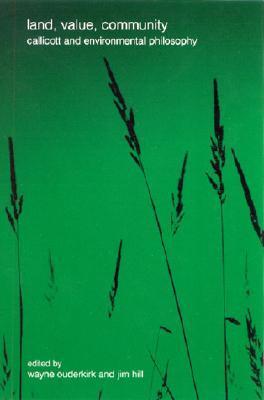
Land, Value, Community book cover
#1

Land, Value, Community

Callicott and Environmental Philosophy

2002

Land, Value, Community provides an in\-depth critical study of the theories of J. Baird Callicott, one of the world's foremost environmental philosophers. An international group of scholars representing philosophy, ecology, ecofeminism, Native American studies, political science, and religion studies critically assesses Callicott's contributions to environmental ethics and philosophy and presents alternative perspectives from their own work. Each section consists of several authors focusing on one aspect of Callicott's thought, raising questions not only for Callicott but also for anyone affected by environmental issues. A noteworthy feature of the book is Callicott's own response to his critics. This volume allows readers to explore multiple avenues in their search for answers to the significant philosophical questions raised by environmental problems.
Wild Diplomacy book cover
#2

Wild Diplomacy

Cohabiting with Wolves on a New Ontological Map

2016

Explores how humans and wildlife such as wolves can cohabit with mutual respect in the same territories.
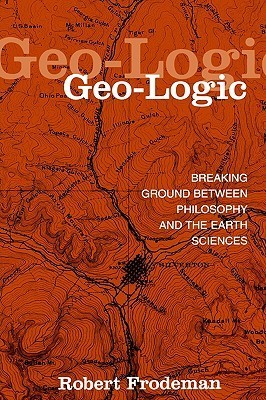
Geo-Logic book cover
#3

Geo-Logic

Breaking Ground Between Philosophy and the Earth Sciences

2003

Using a unified vision of geology, consisting of equal parts geo\-poetry, geo\-politics, geo\-theology, and geo\-science, Geo\-Logic redraws the boundaries between philosophy and the earth sciences. Although each discipline makes crucial contributions to contemporary environmental concerns, neither will fulfill its potential until it transforms itself by engaging the other. This book offers examples of how to relate environmental philosophy to science, public policy, and real world problems, and shows what is epistemologically distinctive about scientific work and how to respond to the cultural dynamics that are pulling these issues into the public sphere. Frodeman advocates humanizing the earth sciences and bringing philosophy into the field.
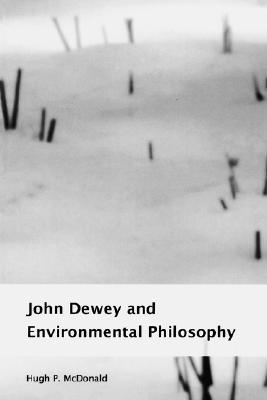
John Dewey and Environmental Philosophy book cover
#5

John Dewey and Environmental Philosophy

2003

Hugh P. McDonald's John Dewey and Environmental Philosophy breaks new ground by applying Dewey's insights to a new approach to philosophy of the environment; the concern for the rights of animals; the preservation of rare species, habitats, and landscapes; and the health of the whole ecology. The book summarizes much of the current literature on environmental ethics, concentrating on the writings of major figures in the movement: Tom Regan, J. Baird Callicott, Holmes Rolston, and Bryan Norton. The heart of the book consists of a detailed analysis of Dewey's ethics, his theory of intrinsic value, and his holistic approach to moral justification. Arguing against the idea that Dewey's philosophy is anthropocentric, McDonald makes a strong case that using Dewey's philosophy will result in a superior framework for environmental ethics.
Reinhabiting Reality book cover
#6

Reinhabiting Reality

Towards a Recovery of Culture

2005

In this sequel to For Love of Matter: A Contemporary Panpsychism, also published by SUNY Press, Freya Mathews argues that replacing the materialist premise of modern civilization with a panpsychist one transforms the entire fabric of culture in profound ways. She claims that the environmental crisis is a symptom of deeper issues facing modern civilization arising from the loss of the very meaning of culture. To come to grips with this crisis requires a change in the metaphysical premise of modernity deeper than any as yet envisaged even by the radical ecology movement. This is a change with profound implications for the full range of existential questions and not merely for questions regarding our relationship with nature. "
With Respect For Nature book cover
#7

With Respect For Nature

Living As Part Of The Natural World

2005

We eat, inevitably, at the expense of other living creatures. How can we take the lives of plants and animals while maintaining a proper respect for both ecosystems and the individuals who live in them\-\-including ourselves? In this book philosopher J. Claude Evans challenges much of the accepted wisdom in environmental ethics and argues that human participation in the natural cycles of life and death can have positive moral value. With a guide for the nonphilosophical reader, and set against the background of careful and penetrating critiques of Albert Schweitzer's principle of reverence for life and Paul Taylor's philosophy of respect for nature, Evans uses hunting and catch\-and\-release fishing as test cases in calling for a robust sense of membership in the natural world. The result is an approachable, existential philosophy that emphasizes the positive value of human involvement in natural processes in which life and death, giving and receiving, self and other are intertwined.
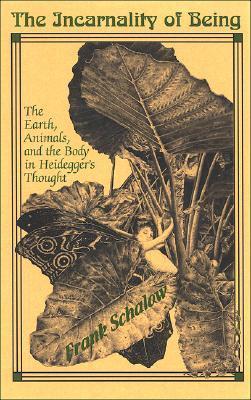
The Incarnality of Being book cover
#8

The Incarnality of Being

The Earth, Animals, And the Body in Heidegger's Thought

2006

The Incarnality of Being addresses Martin Heidegger's tendency to neglect the problem of the body, an omission that is further reflected in the field of Heidegger scholarship. By addressing the corporeal dimension of human existence, author Frank Schalow uncovers Heidegger's concern for the materiality of the world. This allows for the ecological implications of Heidegger's thought to emerge, specifically, the kinship between humans and animals and the mutual interest each has for preserving the environment and the earth. By advancing the theme of the "incarnality of being," Schalow brings Heidegger's thinking to bear on various provocative questions concerning contemporary philosophy: sexuality, the intersection of human and animal life, the precarious future of the earth we inhabit, and the significance that reclaiming our embodiment has upon ethics and politics.
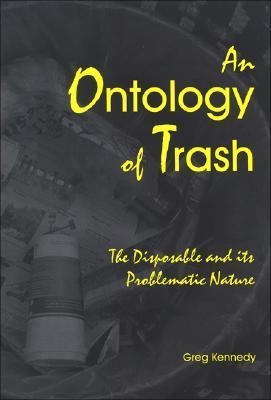
An Ontology of Trash book cover
#9

An Ontology of Trash

The Disposable and Its Problematic Nature

2007

Plastic bags, newspapers, pizza boxes, razors, watches, diapers, toothbrushes ... What makes a thing disposable? Which of its properties allows us to treat it as if it did not matter, or as if it actually lacked matter? Why do so many objects appear to us as nothing more than brief flashes between checkout\-line and landfill? In An Ontology of Trash, Greg Kennedy inquires into the meaning of disposable objects and explores the nature of our prodigious refuse. He takes trash as a real ontological problem resulting from our unsettled relation to nature. The metaphysical drive from immanence to transcendence leaves us in an alien world of objects drained of meaningful physical presence. Consequently, they become interpreted as beings that somehow essentially lack being, and exist in our technological world only to disappear. Kennedy explores this problematic nature and looks for possibilities of salutary change.
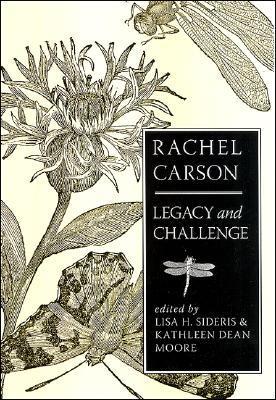
Rachel Carson book cover
#10

Rachel Carson

Legacy and Challenge

2008

Long before Rachel Carson would become synonymous with environmental activism, she was a nature and science writer, penning The Sense of Wonder for children, and three books about the ocean and its inhabitants\-\-including the bestselling The Sea around Us. Based solidly on science and written in beautiful prose, Carson's work issued a practical and moral challenge to her Can we find a way to live on earth with care and respect? In Rachel Carson, the first book to offer a sustained treatment of her work prior to Silent Spring, editors Lisa H. Sideris and Kathleen Dean Moore bring together seventeen writers, activists, and scholars from a range of disciplines to uncover the many sides of Rachel Carson. Exposing her enthusiasm for the natural world and the depth of her writings, the contributors examine her books, speeches, essays, and the letters she wrote as she prepared to die. A testament to Carson's continued influence on environmental thought, this volume is for everyone who cares about finding ways to live sustainably on earth.
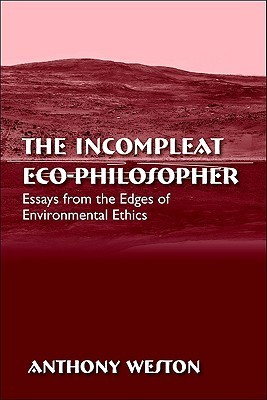
The Incompleat Eco-Philosopher book cover
#13

The Incompleat Eco-Philosopher

Essays from the Edges of Environmental Ethics

2009

This collection of germinal work in the field by Anthony Weston presents his pragmatic environmental philosophy, calling for reconstruction and imagination rather than deconstruction and analysis. It is a philosopher's invitation to environmental ethics in an unexpectedly inviting and down\-to\-earth key. On the pragmatic view advanced here, environmental values are thoroughly natural\-\-what else could they be?\-\-and are open\-ended and in flux. Rather than passing judgment on the world as it is, we are called to rediscover and remake the world as it might be. We require an environmental etiquette more than a formal ethic; an etiquette whose development must be an ongoing process; and a process in turn that is genuinely multicentric, challenging us to negotiate our place among the exuberant variety of living and other forms.
Elemental Philosophy book cover
#14

Elemental Philosophy

Earth, Air, Fire, and Water As Environmental Ideas

2010

Bachelard called them "the hormones of the imagination." Hegel observed that, "through the four elements we have the elevation of sensuous ideas into thought." Earth, air, fire, and water are explored as both philosophical ideas and environmental issues associated with their classical and perennial conceptions. David Macauley embarks upon a wide\-ranging discussion of their initial appearance in ancient Greek thought as mythic forces or scientific principles to their recent reemergence within contemporary continental philosophy as a means for understanding landscape and language, poetry and place, the body and the body politic. In so doing, he shows the importance of elemental thinking for comprehending and responding to ecological problems. In tracing changing views of the four elements through the history of ideas, Macauley generates a new vocabulary for and a fresh vision of the environment while engaging the elemental world directly with reflections on their various manifestations.
Hans Jonas’s Ethic of Responsibility book cover
#15

Hans Jonas’s Ethic of Responsibility

From Ontology to Ecology

2013

Articulates the fundamental importance of ontology to Hans Jonas’s environmental ethics. Despite his tremendous impact on the German Green Party and the influence of his work on contemporary debates about stem cell research in the United States, Hans Jonas’s (1903–1993\) philosophical contributions have remained partially obscured. In particular, the ontological grounding he gives his ethics, based on a phenomenological engagement with biology to bridge the “is\-ought” gap, has not been fully appreciated. Theresa Morris provides a comprehensive overview and analysis of Jonas’s philosophy that reveals the thread that runs through all of his thought, including his work on the philosophy of biology, ethics, the philosophy of technology, and bioethics. She places Jonas’s philosophy in context, comparing his ideas to those of other ethical and environmental philosophers and demonstrating the relevance of his thought for our current ethical and environmental problems. Crafting strong supporting arguments for Jonas’s insightful view of ethics as a matter of both reason and emotion, Morris convincingly lays out his account of the basis of our responsibilities not only to the biosphere but also to current and future generations of beings.
Emplotting Virtue book cover
#16

Emplotting Virtue

A Narrative Approach to Environmental Virtue Ethics

2014

A rich hermeneutic account of the way virtue is understood and developed.
Philosophizing AD Infinitum book cover
#17

Philosophizing AD Infinitum

Infinite Nature, Infinite Philosophy

2014

One of France's preeminent historians of philosophy, Marcel Conche has written and translated more than thirty\-five books and is recognized for his groundbreaking and authoritative work in Greek philosophy, as well as on Montaigne. In Philosophizing ad Infinitum, one of his most remarkable and daring books, Conche articulates a unique and powerful understanding of nature, inclusive of humanity, as infinite in time and space—ever self\-renewing, eternal, and beyond complete understanding or control. In today's world the notion of infinity is at the core of the crisis humanity faces understanding nature. For the last two hundred years economies have been running at full speed, fueled by the implicit belief that natural resources are infinite; however, it is clear that they are not and that humanity needs to radically rethink the foundations of environmental and economic systems. Conche seeks to begin this rethinking, illustrating along the way insightful and sometimes unorthodox ideas about Plato, Aristotle, Epicurus, Montaigne, Nietzsche, Bergson, and others.

Naturalizing Heidegger book cover
#18

Naturalizing Heidegger

His Confrontation with Nietzsche, His Contributions to Environmental Philosophy

2015

Explores the evolution of Heidegger’s thinking about nature and its relevance for environmental ethics. In Naturalizing Heidegger, David E. Storey proposes a new interpretation of Heidegger’s importance for environmental philosophy, finding in the development of his thought from the early 1920s to his later work in the 1940s the groundwork for a naturalistic ontology of life. Primarily drawing on Heidegger’s engagement with Nietzsche, but also on his readings of Aristotle and the biologist Jakob von Uexküll, Storey focuses on his critique of the nihilism at the heart of modernity, and his conception of the intentionality of organisms and their relation to their environments. From these ideas, a vision of nature emerges that recognizes the intrinsic value of all living things and their kinship with one another, and which anticipates later approaches in the philosophy of nature, such as Hans Jonas’s phenomenology of life and Evan Thompson’s contemporary attempt to naturalize phenomenology.
A World Not Made for Us book cover
#20

A World Not Made for Us

Topics in Critical Environmental Philosophy

2020

In A World Not Made for Us, Keith R. Peterson provides a broad reassessment of the field of environmental philosophy, taking a fresh and critical look at three classical problems of environmentalism: the intrinsic value of nature, the need for an ecological worldview, and a new conception of the place of humankind in nature. He makes the case that a genuinely critical environmental philosophy must adopt an ecological materialist conception of the human, a pluralistic value theory that emphasizes the need for value prioritization, and a stratified categorial ontology that affirms the basic principle of human asymmetrical dependence on more\-than\-human nature. Integrating environmental ethics with the latest work in political ecology, Peterson argues it is important to understand that the world is not made for us, and that coming to terms with this fact is a condition for survival in future human and more\-than\-human communities of liberation and solidarity.
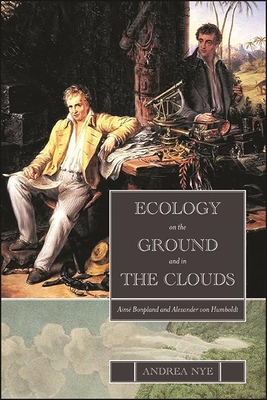
Ecology on the Ground and in the Clouds book cover
#21

Ecology on the Ground and in the Clouds

Aimé Bonpland and Alexander Von Humboldt

2022

In Ecology on the Ground and in the Clouds, Andrea Nye raises a question: In a time of climate change and environmental crisis, where should we look for inspiration? Is it to Alexander von Humboldt, the inventor of nature who viewed the cosmos from the lofty peak of Mount Chimborazo? Or is it to Humboldt's travel partner, the botanist Aimé Bonpland, who left Europe behind for forty years of conservation, agroforestry, and cooperative farming in the newly independent Republic of Argentina? For Bonpland, order and harmony are not unveiled with European reason and insight; they are made on the ground by intelligent, honorable, and diverse working men and women. Cosmos is not a hidden balance of nature; it is order in thought and action that ensures what we do is coherent and for the common good. It is fair and efficient government, just adjudication of disputes, and good management. It is loving attention to intricate cogs and wheels of natural processes at the same time as imagining new forms of beauty and stability in human communities and working landscapes.

Authors

Andrea Nye
Author · 5 books

Andrea Nye (born 1939) is a feminist philosopher and writer. Nye is a Professor Emerita at the University of Wisconsin–Whitewater for the Philosophy and Religious Studies Department and an active member of the Women's Studies Department. In 1992, Nye received the University of Wisconsin–Whitewater Award for Outstanding Research. Andrea Nye was born on October 22, 1939, in Philadelphia to attorney Hamilton Connor and home-maker Florence Deans. Nye received a B. A. in philosophy from Radcliffe College (Radcliffe Institute for Advanced Study) in 1961 and a Ph. D in Philosophy from the University of Oregon in 1977. Nye has been affiliated with the University of Wisconsin—Whitewater for decades; first as an assistant professor from 1978 to 1985, then as an associate professor from 1985–1990, followed by a position as a professor of philosophy from 1990–2002. Nye has been a professor emeritus for the philosophy and religious studies department since 2002. Andrea Nye is also a member of the Liberal Studies Division at the Boston Conservatory teaching interdisciplinary courses in the Humanities. Nye's early work in philosophy of language included a thesis on private language and a monograph on the history of logic from a feminist perspective. In subsequent work, Nye turned more specifically to issues related to gender in language, the place of women in the history of philosophy, and feminist theory. Reviving the work of neglected or misinterpreted women thinkers was of special interest in later work, including translations and commentary on the letters of Elisabeth of the Palatinate to René Descartes (The Princess and the Philosopher), the political thought of Rosa Luxemburg, Hannah Arendt, and Simone Weil (Philosophia) and most recently, Diotima’s teaching on erotic desire in Plato’s Symposium (hl)(Socrates and Diotima). (from Wikipedia)

548 Market St PMB 65688, San Francisco California 94104-5401 USA
© 2026 Paratext Inc. All rights reserved