Margins
SUNY Series in Gender Theory book cover 1
SUNY Series in Gender Theory book cover 2
SUNY Series in Gender Theory book cover 3
SUNY Series in Gender Theory
Series · 27
books · 2001-2021

Books in series

Engendering Rationalities book cover
#1

Engendering Rationalities

2001

Engendering Rationalities brings together theorists whose work has been foundational to the development of feminist investigations of reason, objectivity, and knowledge with the work of scholars who build up and extend their insights. Contributors not only question standard conceptions of truth, objectivity, and our realist conceptions of the relationships between human knowledge and the world, but also offer rich and exciting alternatives to traditional theories that both arise out of and are compatible with feminist concerns. The book provides more adequate models of rationality that include the epistemic significance of a variety of subjective factors such as our specific cultural and social locations including sex, race, ethnicity, class, etc., and our personal commitments, desires, and interests.
Corporeal Generosity book cover
#2

Corporeal Generosity

On Giving with Nietzsche, Merleau-Ponty, and Levinas

2002

Rosalyn Diprose is Senior Lecturer in Philosophy at the University of New South Wales, Sydney, Australia. She is the author of The Bodies of Ethics, Embodiment and Sexual Difference .
Women and Children First book cover
#4

Women and Children First

Feminism, Rhetoric, and Public Policy

2005

This diverse collection explores the rhetoric of a wide range of public policies that propose "to put women and children first," including homeland security, school violence, gun control, medical intervention of intersex infants, and policies that aim to distinguish "good" from "bad" mothers. Using various feminist philosophical analyses, the contributors uncover a logic of paternalistic treatment of women and children that purports to protect them but almost always also disempowers them and sometimes harms them. This logic is widespread in contemporary popular policy discourse and affects the way that people understand and respond to social and political issues. Contributors rethink basic philosophical assumptions concerning subjectivity, difference, and dualistic logic in order to read the rhetoric of contemporary public policy discourse and develop new ways of talking and acting in the policy domain.
Revolt, Affect, Collectivity book cover
#5

Revolt, Affect, Collectivity

The Unstable Boundaries of Kristeva's Polis

2005

Tina Chanter is Professor of Philosophy at DePaul University and author of several books, including Time, Death, and the Levinas with Heidegger . Ewa PÂonowska Ziarek is Julian Park Professor of Comparative Literature at the University at Buffalo, State University of New York and editor of Gombrowicz's Modernism, Gender, Nationality, also published by SUNY Press.
Copula book cover
#6

Copula

Sexual Technologies, Reproductive Powers

2006

How will the ability to manipulate human reproduction change our social world and the relationship between the sexes? Taking an explicitly interdisciplinary approach to gender and reproductive technology, Robyn Ferrell examines this question in the light of feminist theories of sexual equality and sexual difference, arguing that technology itself can be seen as a kind of reproduction. Invoking a concept of reproduction that understands it as generic, Ferrell asserts that in any reproduction, something is produced of a kind that was there before and yet that is also new. Technology is therefore generically reproductive, since it produces new matter of the same kind. In addition to key figures in French feminism, Ferrell draws from psychoanalysis and contemporary continental thinkers ranging from Heidegger to Haraway.
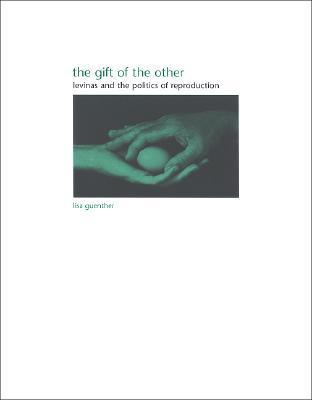
The Gift of the Other book cover
#7

The Gift of the Other

Levinas and the Politics of Reproduction

2006

The Gift of the Other brings together a philosophical analysis of time, embodiment, and ethical responsibility with a feminist critique of the way women's reproductive capacity has been theorized and represented in Western culture. Author Lisa Guenther develops the ethical and temporal implications of understanding birth as the gift of the Other, a gift which makes existence possible, and already orients this existence toward a radical responsibility for Others. Through an engagement with the work of Levinas, Beauvoir, Arendt, Irigaray, and Kristeva, the author outlines an ethics of maternity based on the givenness of existence and a feminist politics of motherhood which critiques the exploitation of maternal generosity.
Returning to Irigaray book cover
#8

Returning to Irigaray

Feminist Philosophy, Politics, and the Question of Unity

2006

Luce Irigaray is one of the most influential philosophers and theorists in the field of feminist thought, and her work is considered both revolutionary and controversial. This volume offers the first critical assessment of the relation between her early poetic writings to her later political applied philosophy. Contributors examine how the question of sexual difference has unfolded in a wealth of different directions in Irigaray's later work, focusing on the areas of nature and technology, social and political theory and praxis, ethics, psychoanalysis, and phenomenology. They also address whether there has been a radical conceptual "turn" in Irigaray's thought by exploring the idea of a "turn" as a return to themes that have concerned her all along. By considering each of her views in relation to the entirety of her work, readers will come to appreciate the richness of her thought.
Gender after Lyotard book cover
#9

Gender after Lyotard

2007

The revolutionary French thinker Jean-François Lyotard indicates in many of his writings that one of the most significant philosophical problems is the problem of gender. In spite of this, feminist thinkers in both the continental and Anglo-American traditions have largely ignored his work, perhaps because his approach to the question of gender is unsystematic, fluid, and difficult. This volume attempts to situate the central concerns of contemporary feminist theory—aesthetics, embodiment, performance, sexual difference, ethics, testimony—within Lyotard's writings, to show that these concerns have always been there. Contributors discuss film theory, body modification, feminist critiques of science, postholocaust art, the feminine sublime, and theater. As a whole, the book serves as a robust meditation on the nature of the political as understood by Lyotard, and demonstrates the many different ways in which feminist concerns are taken up in discussions regarding the nature of the political in contemporary continental thought. An afterword by James Williams—one of the world's leading Lyotard commentators—is included.
Living Attention book cover
#10

Living Attention

On Teresa Brennan

2007

As an internationally respected feminist philosopher, radical social and political theorist, and tireless activist, Teresa Brennan (1952–2003) was one of the most provocative thinkers of our time. Living Attention is a tribute to the significance of her thought and a testament to the transformative power of her life. This book demonstrates the scope of Brennan's thought as it continues to challenge academics, public intellectuals, and government leaders. Her concerns ranged from the implications of psychoanalytic theory to relations between men and women to the effects of globalization on our ecological system. The contributors to this volume—from a broad variety of disciplines, including philosophy, literature, government, literary and critical theory, and women's studies—take up Brennan's call to radical thinking and, by examining different aspects of Brennan's work, critically engage with her oeuvre.
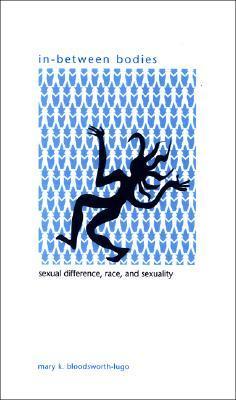
In-Between Bodies book cover
#11

In-Between Bodies

Sexual Difference, Race, and Sexuality

2007

Mary K. Bloodsworth-Lugo is Associate Professor of Philosophy at Washington State University.
Sarah Kofman's Corpus book cover
#12

Sarah Kofman's Corpus

2007

This groundbreaking collection sketches a portrait of Sarah Kofman (1934-1994), the brilliant French feminist philosopher and author of more than two dozen books on an impressive range of topics and figures in philosophy, literature, psychoanalysis, aesthetics, and feminism. Leading feminist philosophers examine the lessons that Kofman's rich body of work teaches us, among them that the work and life of a thinker are inextricably bound together. Each essay navigates the complex connections between work and life, thought and desire, the book and the body to explore the central themes that link together Kofman's interdisciplinary oeuvre—art, affirmation, laughter, the intolerable, Jewishness, and femininity.
The Signifying Body book cover
#13

The Signifying Body

Toward an Ethics of Sexual and Racial Difference

2008

The Signifying Body reads the work of Luce Irigaray and Frantz Fanon against Heidegger's theory of ontological becoming, arguing that each in their respective critiques of phallogocentrism and colonialism develops an ontology which not only allows for but presumes an ethical relation with an Other. The Signifying Body suggests that by attending to the materiality of sexual and racial difference, we can imagine ontologies that account for the lived experience of subjects that have traditionally served as the ground/object/thing for the white male humanist subject.
Imagining Law book cover
#14

Imagining Law

On Drucilla Cornell

2008

Drucilla Cornell's contribution to legal thought and philosophy is unique in its attention to diverse traditions and the possibilities of dialogue among them. Renée J. Heberle and Benjamin Pryor bring together scholars from a range of disciplines who reflect on Cornell's influence and importance to contemporary social and political theory and critically engage with ideas and arguments central to her published work. The final chapter is Cornell's own response to the contributors' views, establishing a record of a critical exchange among top scholars from across disciplines.
Convergences book cover
#16

Convergences

Black Feminism and Continental Philosophy

2010

A range of themes—race and gender, sexuality, otherness, sisterhood, and agency—run throughout this collection, and the chapters constitute a collective discourse at the intersection of Black feminist thought and continental philosophy, converging on a similar set of questions and concerns. These convergences are not random or forced, but are in many ways natural and necessary: the same issues of agency, identity, alienation, and power inevitably are addressed by both camps. Never before has a group of scholars worked together to examine the resources these two traditions can offer one another. By bringing the relationship between these two critical fields of thought to the forefront, the book will encourage scholars to engage in new dialogues about how each can inform the other. If contemporary philosophy is troubled by the fact that it can be too limited, too closed, too white, too male, then this groundbreaking book confronts and challenges these problems.
Feminist Readings of Antigone book cover
#17

Feminist Readings of Antigone

2010

Feminist Readings of Antigone collects the most interesting and provocative feminist work on the figure of Antigone, in particular looking at how she can figure into contemporary debates on the role of women in society. Contributors focus on female subjectivity and sexuality, feminist ethics and politics, questions of race and gender, psychoanalytic theory, kinship, embodiment, and tensions between the private and the public. This collection seeks to explore and spark debate about why Antigone has become such an important figure for feminist thinkers of our time, what we can learn from her, whether a feminist politics turning to this ancient heroine can be progressive or is bound to idealize the past, and why Antigone keeps entering the stage in times of political crisis and struggle in all corners of the world. Fanny Soderback has gathered classic work in this field alongside newly written pieces by some of the most important voices in contemporary feminist philosophy. The volume includes essays by Judith Butler, Adriana Cavarero, Tina Chanter, Luce Irigaray, and Julia Kristeva.
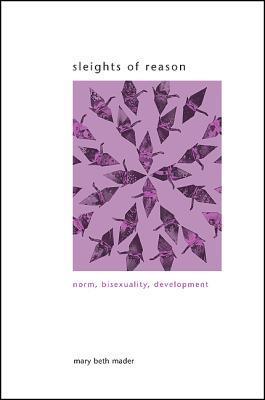
Sleights of Reason book cover
#18

Sleights of Reason

Norm, Bisexuality, Development

2011

Demonstrates the dramatic interplay of elements that comprise the concepts of norm, bisexuality, and development. A brilliant and original reimagining of sexuality, Sleights of Reason examines how concepts lend themselves to power/knowledge formations. Many contemporary French philosophers make incidental use of the notion of a ruse. Its names are “duplicity,” “concealment,” “forgetting,” and “subterfuge,” among others. Mary Beth Mader employs Gilles Deleuze’s philosophy of the concept to describe three specifically conceptual ruses, or sleights, that make up part of the conceptual support for the concept of sex. These are the sleights associated with the concepts of norm, bisexuality, and development. Mader argues that concepts can trick us, and shows how they can effect conceptual sleights, or what she calls sleights of reason. She concludes by offering a robust synthesis of insights from Foucault and Deleuze to extend those into a proposal for a conceptual next step for imagining the structures of sexuality as eros. “In addition to creating her own philosophical concept, Mary Beth Mader pulls off something no one else has even attempted, to my knowledge—namely, to bring Gilles Deleuze’s rigorous analyses of the nature of the concepts in What Is Philosophy? to bear on the concept of sexuality. The result is an injection of conceptual rigor into debates that hitherto have been more focused on historical considerations. This is a superb book.” — Daniel W. Smith, coeditor of Gilles Image and Text “Somewhere between mere errors and dialectical illusions, Mader’s ‘sleights of reason’ are biases that derive from the ability of concepts to refer to themselves. Tendentious concepts such as ‘norm,’ ‘bisexuality,’ and ‘development’ purport to refer to actual objects, but actually refer only to their own ability to structure experience. Like Jacquemarts, they hammer home a way of thinking, repeatedly striking us as self-evident features of the world. By showing in detail how the three sleights of her subtitle came to govern modern conceptions of sexuality, Mader frees us from their conceptual bell tower.” — Andrew Cutrofello, author of The Owl at A Sequel to Hegel’s Phenomenology of Spirit

Deleuze and Guattari's Immanent Ethics book cover
#19

Deleuze and Guattari's Immanent Ethics

Theory, Subjectivity, and Duration

2011

In Deleuze and Guattari's Immanent Ethics, Tamsin Lorraine focuses on the pragmatic implications of Deleuze and Guattari's work for human beings struggling to live ethical lives. Her bold alignment of Deleuze and Guattari's project with the feminist and phenomenological projects of grounding human action in lived experience provides an accessible introduction to their work. Lorraine characterizes Deleuze and Guattari's nonfoundational approach to ethics in terms of a notion of power that comes into skillful confluence with the multiple forces of life and an immanent principle of flourishing, while their conception of philosophical thought is portrayed as an intervention in the ongoing movement of life that she enacts in her own exploration of their ideas. She contends that Deleuze and Guattari advocate unfolding the potential of our becoming in ways that enhance our participation in the creative evolution of life, and she characterizes forms of subjectivity and cultural practice that could support such evolution. By means of her lucid reading taken through the lens of feminist philosophy, Lorraine is not only able to present clearly Deleuze and Guattari's project but also an intriguing elaboration of some of the project's practical implications for novel approaches to contemporary problems in philosophy, feminism, cultural theory, and human living.
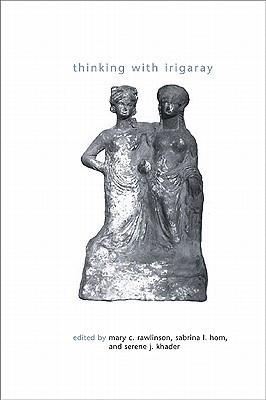
Thinking with Irigaray book cover
#20

Thinking with Irigaray

2011

Thinking with Irigaray takes up Irigaray's challenge to think beyond the androcentric, one-subject culture, identifying much that is useful and illuminative in Irigaray s work while also questioning some of her assumptions and claims. Some contributors reject outright her prescriptions for changing our culture, others suggest that her prescriptions are inconsistent with the basic ethical concerns of her project, and still others attempt to identify blind spots in her work. By confronting and challenging the mechanisms of masculine domination Irigaray has identified and applying these insights to a wide range of practical and contemporary concerns, including popular media representations of women s sexuality, feminist practice in the arts, political resistance, and yoga, the contributors demonstrate the unique potential of Irigaray s thought within feminist philosophy and gender studies."
Violence and the Philosophical Imaginary book cover
#21

Violence and the Philosophical Imaginary

2012

Images of violence enjoy a particular privilege in contemporary continental philosophy, one manifest in the ubiquity of violent metaphors and the prominence of a kind of rhetorical investment in violence as a motif. Such images have also informed, constrained, and motivated recent continental feminist theory. In Violence and the Philosophical Imaginary, Ann V. Murphy takes note of wide-ranging references to the themes of violence and vulnerability in contemporary theory. She considers the ethical and political implications of this language of violence with the aim of revealing other ways in which identity and the social bond might be imagined, and encourages some critical distance from the images of violence that pervade philosophical critique.
Luce Irigaray's Phenomenology of Feminine Being book cover
#22

Luce Irigaray's Phenomenology of Feminine Being

2014

A dynamic interpretation of feminine identity capable of resistance, change, and transformation. The reception of Luce Irigaray’s ideas about feminine identity has centered largely on questions of essentialism, whether criticizing this as a destructive flaw or interpreting it in strategic or pragmatic terms. Staking out an alternative approach, Virpi Lehtinen finds in the phenomenology of Husserl and Merleau-Ponty a framework for what she characterizes as dynamic essentialism, which seeks to account for the complex networks of lived embodied, affective, and spiritual relations to oneself, to others, and to the world. Rather than prescribing one norm to which all women should conform, Lehtinen argues, Irigaray’s work exemplifies how each individual woman in her own way contributes to a norm of femininity that is both unique and singular but also connected to the existential styles of past, present, and future others.
The Returns of Antigone book cover
#23

The Returns of Antigone

Interdisciplinary Essays

2014

Despite a venerable tradition of thinkers having declared the death of tragedy, Antigone lives on. Disguised in myriad national costumes, invited to a multiplicity of international venues, inspiring any number of political protests, Antigone transmits her energy through the ages and across the continents in an astoundingly diverse set of contexts. She continues to haunt dramatists, artists, performers, and political activists all over the world. This cutting-edge, interdisciplinary collection explores how and why, with essays ranging from philosophical, literary, and political investigations to queer theory, race theory, and artistic appropriations of the play. It also establishes an international scope for its considerations by including assessments of Latin American and African appropriations of the play alongside European receptions of the play.
Engaging the World book cover
#24

Engaging the World

Thinking after Irigaray

2016

Engaging the World explores Luce Irigaray's writings on sexual difference, deploying the resources of her work to rethink philosophical concepts and commitments and expose new possibilities of vitality in relationship to nature, others, and to one's self. The contributors present a range of perspectives from multiple disciplines such as philosophy, literature, education, evolutionary theory, sound technology, science and technology, anthropology, and psychoanalysis. They place Irigaray in conversation with thinkers as diverse as Charles Darwin, Claude Lèvi-Strauss, Gilles Deleuze, Rene Descartes, and Avital Ronell. While every essay challenges Irigaray's thought in some way, each one also reveals the transformative effects of her thought across multiple domains of contemporary life.
New Forms of Revolt book cover
#25

New Forms of Revolt

Essays on Kristeva's Intimate Politics

2017

Over the last twenty years, French philosopher, psychoanalyst, and novelist Julia Kristeva has explored how global crises threaten people's ability to revolt. In a context of widespread war, deepening poverty, environmental catastrophes, and rising fundamentalisms, she argues that a revival of inner psychic experience is necessary and empowering. "Intimate revolt" has become a central concept in Kristeva's critical repertoire, framing and permeating her understanding of power, meaning, and identity. New Forms of Revolt brings together ten essays on this aspect of Kristeva's work, addressing contemporary social and political issues like immigration and cross-cultural encounters, colonial and postcolonial imaginations, racism and artistic representation, healthcare and social justice, the spectacle of global capitalism, and new media.
Gender and the Abjection of Blackness book cover
#26

Gender and the Abjection of Blackness

2018

In Gender and the Abjection of Blackness, Sabine Broeck argues that gender studies as a mostly white field has taken insufficient account of Black contributions, and that more than being an ethnocentric limitation or blind spot, this has represented a structural anti-Blackness in the field. Engaging with the work of Black feminist authors Sylvia Wynter, Hortense Spillers, and Saidiya Hartman, Broeck critiques a selection of canonical white gender studies texts to make this case. The book discusses this problem at the core of gender theory as a practice which Broeck terms enslavism\—the ongoing abjection of Black life which Hartman has called the afterlife of slavery. This has become manifest in the repetitive employment of the "woman as slave" metaphor so central to gender theory, as well as in recent theoretical mutations of these anti-Black politics of analogy. It is the structural separation of Blackness from gender that has functioned over and again as the scaffold enabling white women's struggles for successful recognition of equality and subjectivity in the human world as we know it. This book challenges white readers to rethink their own untroubled identification with gender theory, and it provides all readers with a white feminist theorist's sophisticated theoretical and self-critical scholarly account of her own reckoning with and learning in dialogue from Black feminism's critique.
Earthly Encounters book cover
#27

Earthly Encounters

Sensation, Feminist Theory, and the Anthropocene

2019

Earthly Encounters develops a fuller account of the lived experience of racialized gender formation as it exists on this planet, earth. It analyzes the chill of winter, the warm embrace of the wind, the feeling of being immersed in water, and a stifling sense of containment. Through this analysis in settler colonial and colonial contexts, in twentieth-century North America and Africa, Stephanie D. Clare shows how sensation is unevenly distributed within social worlds and productive of racial, national, and gendered subjectivities. From revealing the relevance of phenomenology, especially in the writings of Maurice Merleau-Ponty and Frantz Fanon, to debates concerning new materialism and affect theory, Clare shows how the phenomenology of race and gender must consider both the production of the body-subject and the environment. She concludes by making a case for the continued significance of sensation in the context of the Anthropocene.
Thinking Life with Luce Irigaray book cover
#28

Thinking Life with Luce Irigaray

Language, Origin, Art, Love

2020

Featuring a highly accessible essay from Irigaray herself, this volume explores her philosophy of life and living. Life-thinking, an important contemporary trend in philosophy and in women's and gender studies, stands in contrast to philosophy's traditional grounding in death, exemplified in the work of philosophers such as Socrates, Plato, and Schopenhauer. The contributors to Thinking Life with Luce Irigaray consider Irigaray's criticisms of the traditional Western philosophy of death, including its either-or dualisms and binary logic, as well as some of Irigaray's "solutions" for cultivating life. The book is comprehensive in its analyses of Irigaray's relationship to classical and contemporary philosophers, writers, and artists, and produces extremely fruitful intersections between Irigaray and figures as diverse as Homer and Plato; Alexis Wright, the First-Nations novelist of Australia; and twentieth-century French philosophers like Sartre, Badiou, Deleuze, and Guattari. It also develops Irigaray's relationship to the arts, with essays on theater, poetry, architecture, sculpture, and film.
Antigone in the Americas book cover
#29

Antigone in the Americas

Democracy, Sexuality, and Death in the Settler Colonial Present

2021

Sophocles' classical tragedy, Antigone, is continually reinvented, particularly in the Americas. Theater practitioners and political theorists alike revisit the story to hold states accountable for their democratic exclusions, as Antigone did in disobeying the edict of her uncle, Creon, for refusing to bury her brother, Polynices. Antigone in the Americas not only analyzes the theoretical reception of Antigone, when resituated in the Americas, but further introduces decolonial rumination as a new interpretive methodology through which to approach classical texts. Traveling between modern present and ancient past, Andr�s Fabi�n Henao Castro focuses on metics (resident aliens) and slaves, rather than citizens, making the feminist politics of burial long associated with Antigone relevant for theorizing militant forms of mourning in the global south. Grounded in settler colonial critique, black and woman of color feminisms, and queer and trans of color critique, Antigone in the Americas offers a more radical interpretation of Antigone, one relevant to subjects situated under multiple and interlocking systems of oppression.

Authors

548 Market St PMB 65688, San Francisco California 94104-5401 USA
© 2025 Paratext Inc. All rights reserved
SUNY Series in Gender Theory