



Margins
Sur Spinoza book cover
Sur Spinoza
Cours novembre 1980 - mars 1981
2010
First Published
4.40
Average Rating
544
Number of Pages

Juste après la destruction de l’université de Vincennes en 1980, Deleuze consacre ses premiers cours dans les nouveaux locaux de Saint-Denis à l’Éthique de Spinoza. Ce n’est certainement pas un hasard, étant donné la place centrale chez Deleuze de cette œuvre immense, unique dans l’histoire de la philosophie, à laquelle il a consacré deux livres. Ce cours est constitué de quinze séances au cours desquelles Deleuze veut montrer l’importance, non pas théorique, mais profondément vitale de la philosophie de Spinoza. Dans cette traversée, sont abordées des questions fondamentales du spinozisme. Comment se défaire de la négativité des passions mauvaises (haine, ressentiment, envie) ? Comment en finir avec le jugement moral (bien et mal) pour lui substituer une éthique du bon et du mauvais ? Ces questions engagent chez Spinoza une nouvelle théorie des signes. Quels signes doivent guider les existences si elles veulent atteindre, au cours même de cette vie, une forme d’éternité ? Dès lors, quelle différence entre l’éternité – expérimentée ici et maintenant – et l’immortalité que philosophies et religions nous promettent ? De séance en séance, Deleuze montre comment Spinoza met fin à un monde fortement hiérarchisé dont Dieu était le sommet autoritaire et impénétrable, un monde où les individus étaient égarés par des signes sombres et équivoques, pour proposer un monde où règne la lumière de la raison, où Dieu se confond avec les puissances de la nature, où désormais les êtres sont tous à égalité, capables de posséder leur puissance de vie, pourvu qu’ils apprennent à en connaître la logique et la valeur.
Avg Rating
4.40
Number of Ratings
53
5 STARS
57%
4 STARS
28%
3 STARS
13%
2 STARS
2%
1 STARS
0%
goodreads

Author

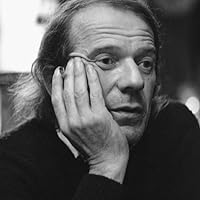
Gilles Deleuze
Gilles Deleuze
Author · 48 books

Deleuze is a key figure in poststructuralist French philosophy. Considering himself an empiricist and a vitalist, his body of work, which rests upon concepts such as multiplicity, constructivism, difference and desire, stands at a substantial remove from the main traditions of 20th century Continental thought. His thought locates him as an influential figure in present-day considerations of society, creativity and subjectivity. Notably, within his metaphysics he favored a Spinozian concept of a plane of immanence with everything a mode of one substance, and thus on the same level of existence. He argued, then, that there is no good and evil, but rather only relationships which are beneficial or harmful to the particular individuals. This ethics influences his approach to society and politics, especially as he was so politically active in struggles for rights and freedoms. Later in his career he wrote some of the more infamous texts of the period, in particular, Anti-Oedipus and A Thousand Plateaus. These texts are collaborative works with the radical psychoanalyst Félix Guattari, and they exhibit Deleuze’s social and political commitment. Gilles Deleuze began his career with a number of idiosyncratic yet rigorous historical studies of figures outside of the Continental tradition in vogue at the time. His first book, Empirisism and Subjectivity, is a study of Hume, interpreted by Deleuze to be a radical subjectivist. Deleuze became known for writing about other philosophers with new insights and different readings, interested as he was in liberating philosophical history from the hegemony of one perspective. He wrote on Spinoza, Nietzche, Kant, Leibniz and others, including literary authors and works, cinema, and art. Deleuze claimed that he did not write “about” art, literature, or cinema, but, rather, undertook philosophical “encounters” that led him to new concepts. As a constructivist, he was adamant that philosophers are creators, and that each reading of philosophy, or each philosophical encounter, ought to inspire new concepts. Additionally, according to Deleuze and his concepts of difference, there is no identity, and in repetition, nothing is ever the same. Rather, there is only difference: copies are something new, everything is constantly changing, and reality is a becoming, not a being. He often collaborated with philosophers and artists as Félix Guattari, Michel Foucault, Guy Hocquenghem, René Schérer, Carmelo Bene, François Châtelet, Olivier Revault d'Allonnes, Jean-François Lyotard, Georges Lapassade, Kateb Yacine and many others.

548 Market St PMB 65688, San Francisco California 94104-5401 USA
© 2026 Paratext Inc. All rights reserved