Margins
System of Nature book cover
System of Nature
1770
First Published
4.31
Average Rating
380
Number of Pages
"The source of Man's unhappiness is his ignorance of Nature."D'Holbach believed that the misery he saw in mankind around him was caused by religion and its superstitious beliefs - that there was a God who controlled destiny and would reward or punish individuals. The System of Nature was written to replace these delusions with a schema of understanding based solely on the physical workings of nature. "Let Man study this nature, let him learn her laws, contemplate her energies." For d'Holbach the soul is only the physical body, understood from a certain point of view, which dies when the body dies. All the events and the nature of the world can be understood in terms of the motion and properties of matter; even the tiniest causes contribute to huge events - a simple change in the diet of an Emperor (or some other such insignificant cause), he suggests might have been capable of "saving kingdoms." For him, nature's laws are fixed and necessary, and if Man wants to find happiness it is best to accept this - if governments want to rule wisely they should base themselves on this principle. Man's fear of death and desire for immortality should be resisted and those in power should not be allowed to play upon these passions.Clinamen Press has issued the book with a fully modernized text and a newly commissioned introduction by Michael Bush. Recently retired from Manchester University, where he was a reader in History, his previous works include the very successful What is Love? Richard Carlile's Philosophy of Sex for Verso (1998) and Pilgrimage of a Study of the Rebel Armies of October 1536 (1996). He is a keen collector of rare books, specializing in radical authors.

Avg Rating
4.31
Number of Ratings
65
5 STARS
48%
4 STARS
38%
3 STARS
11%
2 STARS
3%
1 STARS
0%
goodreads

Author

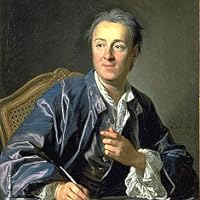
Denis Diderot
Denis Diderot
Author · 45 books

Work on the Encyclopédie (1751-1772), supreme accomplishment of French philosopher and writer Denis Diderot, epitomized the spirit of thought of Enlightenment; he also wrote novels, plays, critical essays, and brilliant letters to a wide circle of friends and colleagues. Jean le Rond d'Alembert contributed. This artistic prominent persona served as best known co-founder, chief editor, and contributor. He also contributed notably to literature with Jacques le fataliste et son maître (Jacques the Fatalist and his Master), which emulated Laurence Sterne in challenging conventions regarding structure and content, while also examining ideas about free will. Diderot also authored of the known dialogue, Le Neveu de Rameau (Rameau's Nephew), basis of many articles and sermons about consumer desire. His articles included many topics. Diderot speculated on free will, held a completely materialistic view of the universe, and suggested that heredity determines all human behavior. He therefore warned his fellows against an overemphasis on mathematics and against the blind optimism that sees in the growth of physical knowledge an automatic social and human progress. He rejected the idea of progress. His opinion doomed the aim of progressing through technology to fail. He founded on experiment and the study of probabilities. He wrote several articles and supplements concerning gambling, mortality rates, and inoculation against smallpox. He discreetly but firmly refuted technical errors and personal positions of d'Alembert on probability.

548 Market St PMB 65688, San Francisco California 94104-5401 USA
© 2026 Paratext Inc. All rights reserved