Margins
Margins
Sign in
Margins
Subscribe to our newsletter
548 Market St PMB 65688, San Francisco California 94104-5401 USA
hello@margins.app
·
+1 (650) 223-5283
Privacy Policy
·
Terms of Use
© 2026 Paratext Inc. All rights reserved
📚 Tbr Classics
📚
Tbr Classics
North and South
2020
Elizabeth Gaskell
When her father leaves the Church in a crisis of conscience, Margaret Hale is uprooted from her comfortable home in Hampshire to move with her family to the north of England. Initially repulsed by the ugliness of her new surroundings in the industrial town of Milton, Margaret becomes aware of the poverty and suffering of the local mill workers and develops a passionate sense of social justice. This is intensified by her tempestuous relationship with the mill-owner and self-made man, John Thornton, as their fierce opposition over his treatment of his employees masks a deeper attraction. In North and South, Elizabeth Gaskell skillfully fuses individual feeling with social concern, and in Margaret Hale creates one of the most original heroines of Victorian literature.
Anna Karenina
1878
Leo Tolstoy
Acclaimed by many as the world's greatest novel, Anna Karenina provides a vast panorama of contemporary life in Russia and of humanity in general. In it Tolstoy uses his intense imaginative insight to create some of the most memorable characters in all of literature. Anna is a sophisticated woman who abandons her empty existence as the wife of Karenin and turns to Count Vronsky to fulfil her passionate nature - with tragic consequences. Levin is a reflection of Tolstoy himself, often expressing the author's own views and convictions. Throughout, Tolstoy points no moral, merely inviting us not to judge but to watch. As Rosemary Edmonds comments, 'He leaves the shifting patterns of the kaleidoscope to bring home the meaning of the brooding words following the title, 'Vengeance is mine, and I will repay.
The Hunchback of Notre-Dame
1831
Victor Hugo
This extraordinary historical French gothic novel, set in Medieval Paris under the twin towers of its greatest structure and supreme symbol, the cathedral of Notre-Dame, is the haunting drama of Quasimodo, the disabled bell-ringer of Notre-Dame, as he struggles to stand up to his ableist guardian Claude Frollo, who also wants to commit genocide against Paris' Romani population. The novel has been described as a key text in French literature[1] and has been adapted for film over a dozen times, in addition to numerous television and stage adaptations, such as a 1923 silent film with Lon Chaney, a 1939 sound film with Charles Laughton, and a 1996 Disney animated film with Tom Hulce (both as Quasimodo). The novel sought to preserve values of French culture in a time period of great change, which resulted in the destruction of many French Gothic structures. The novel made Notre-Dame de Paris a national icon and served as a catalyst for renewed interest in the restoration of Gothic form.
Madonna in a Fur Coat
1943
Sabahattin Ali
The bestselling Turkish classic of love and longing in a changing world, available in English for the first time. 'It is, perhaps, easier to dismiss a man whose face gives no indication of an inner life. And what a pity that is: a dash of curiosity is all it takes to stumble upon treasures we never expected.' A shy young man leaves his home in rural Turkey to learn a trade in 1920s Berlin. The city's crowded streets, thriving arts scene, passionate politics and seedy cabarets provide the backdrop for a chance meeting with a woman, which will haunt him for the rest of his life. Emotionally powerful, intensely atmospheric and touchingly profound, Madonna in a Fur Coat is an unforgettable novel about new beginnings and the unfathomable nature of the human soul. 'Passionate but clear . . . Ali's success [is in ] his ability to describe the emergence of a feeling, seemingly straightforward from the outside but swinging back and forth between opposite extremes at its core, revealing the tensions that accompanies such rise and fall.' Atilla Özkirimli, writer and literary historian
The Count of Monte Cristo
1844
Alexandre Dumas
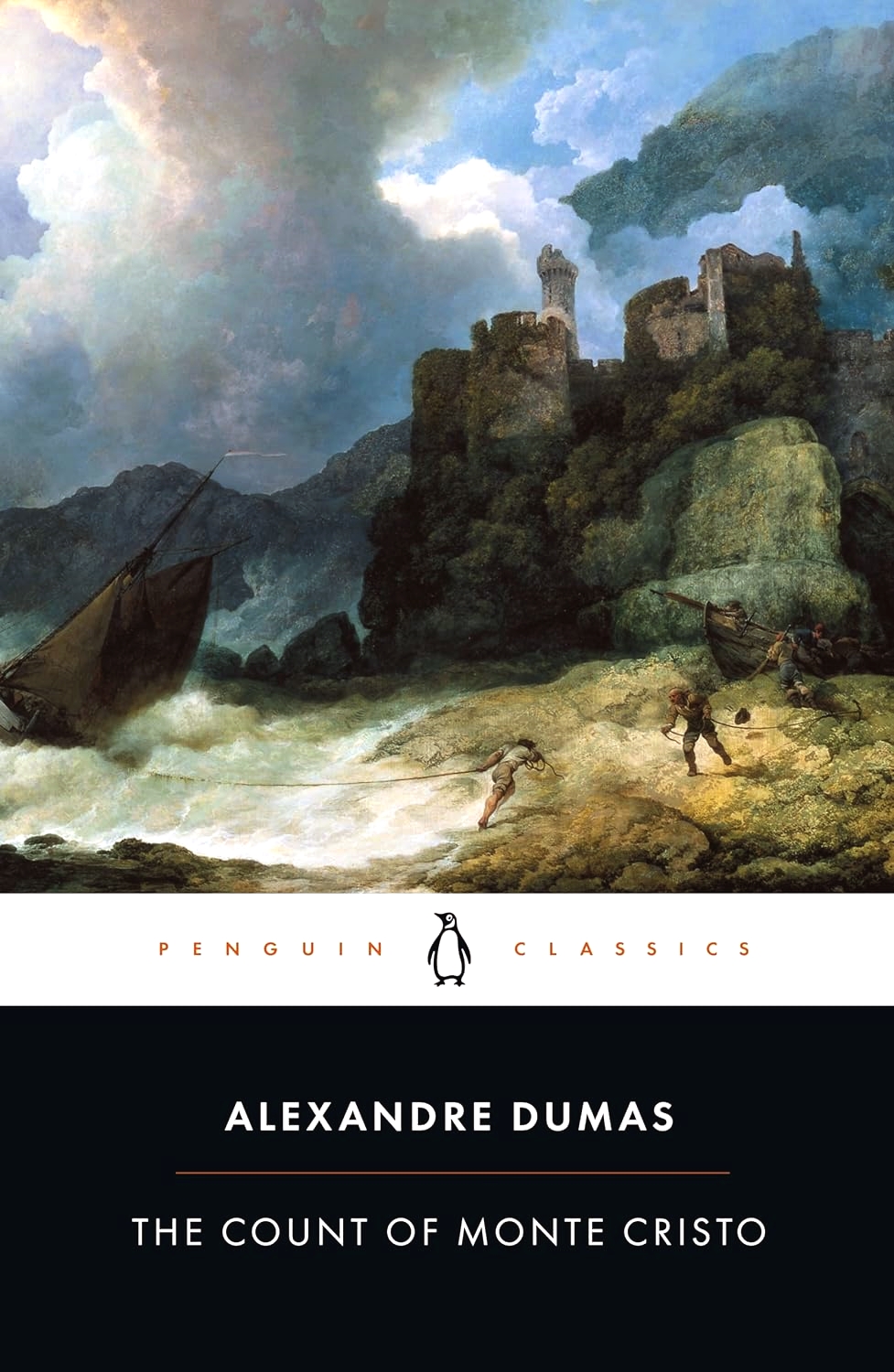
Thrown in prison for a crime he has not committed, Edmond Dantès is confined to the grim fortress of If. There he learns of a great hoard of treasure hidden on the Isle of Monte Cristo and he becomes determined not only to escape, but also to unearth the treasure and use it to plot the destruction of the three men responsible for his incarceration. Dumas’ epic tale of suffering and retribution, inspired by a real-life case of wrongful imprisonment, was a huge popular success when it was first serialized in the 1840s. Robin Buss’s lively English translation is complete and unabridged, and remains faithful to the style of Dumas’s original. This edition includes an introduction, explanatory notes and suggestions for further reading.
Hester
1883
Margaret Oliphant
Hester tells the story of the aging but powerful Catherine Vernon, and her conflict with the young and determined Hester, whose growing attachment to Edward, Catherine's favorite, spells disaster for all concerned. Catherine Vernon, jilted in her youth, has risen to power in a man's world as head of the family bank. She thinks she sees through everyone and rules over a family of dependents with knowing cynicism. But there are two people in Redborough who resist her. One is Hester, a young relation with a personality as strong as Catherine's, and as determined to find a role for herself. The other is Edward, who Catherine treats like a son. Conflict between the young and the old is inevitable, and in its depiction of the complex relationships that develop between the three principal characters, Hester is a masterpiece of psychological realism. In exploring the difficulty of understanding human nature, it is also a compulsive story of financial and sexual risk-taking that inevitably results in a searing climax. Margaret Oliphant is one of the great Victorian novelists, and this edition re-establishes her importance.
Wuthering Heights
1847
Emily Bronte
Another cover edition for this ISBN One of the most passionate and heartfelt novels ever written, Wuthering Heights tells of the relationship between Catherine Earnshaw and Heathcliff, the orphan boy her father adopted and brought to Wuthering Heights when they were children. While Catherine forms a deep attachment to Heathcliff, her brother Hindley despises him as a rival. Heathcliff becomes torn between love for Catherine and the rage and humiliation he suffers. Finally he can stand it no longer and, in the violence of a summer storm, leaves the Heights for three years. During his absence Catherine has married, but her tormented heart belongs eternally to Heathcliff who is now prepared to exact his tyrannical revenge. With its freedom from social convention and its unparalleled emotional intensity, Wuthering Heights is a highly original and deeply tragic work.
Jane Eyre
1847
Charlotte Bronte
Alternate editions can be found here and here. A gothic masterpiece of tempestuous passions and dark secrets, Charlotte Brontë's Jane Eyre is edited with an introduction and notes by Stevie Davis in Penguin Classics. Charlotte Brontë tells the story of orphaned Jane Eyre, who grows up in the home of her heartless aunt, enduring loneliness and cruelty. This troubled childhood strengthens Jane's natural independence and spirit - which prove necessary when she finds employment as a governess to the young ward of Byronic, brooding Mr Rochester. As her feelings for Rochester develop, Jane gradually uncovers Thornfield Hall's terrible secret, forcing her to make a choice. Should she stay with Rochester and live with the consequences, or follow her convictions - even if it means leaving the man she loves? A novel of intense power and intrigue, Jane Eyre dazzled readers with its passionate depiction of a woman's search for equality and freedom.
Lady Audley's Secret
1862
Mary Elizabeth Braddon
Weathering critical scorn, Lady Audley's Secret quickly established Mary Elizabeth Braddon as the leading light of Victorian 'sensation' fiction, sharing the honour only with Wilkie Collins. Addictive, cunningly plotted and certainly sensational, Lady Audley's Secret draws on contemporary theories of insanity to probe mid-Victorian anxieties about the rapid rise of consumer culture. What is the mystery surrounding the charming heroine? Lady Audley's secret is investigated by Robert Audley, aristocrat turned detective, in a novel that has lost none of its power to disturb and entertain.
Letters to a Young Poet
1929
Rainer Maria Rilke
In 1903, a student at a military academy sent some of his verses to a well-known Austrian poet, requesting an assessment of their value. The older artist, Rainer Maria Rilke (1875–1926), replied to the novice in this series of letters—an amazing archive of remarkable insights into the ideas behind Rilke's greatest poetry. The ten letters reproduced here were written during an important stage in Rilke's artistic development, and they contain many of the themes that later appeared in his best works. The poet himself afterwards stated that his letters contained part of his creative genius, making this volume essential reading for scholars, poetry lovers, and anyone with an interest in Rilke, German poetry, or the creative impulse.