Margins
Margins
Sign in
Margins
Subscribe to our newsletter
548 Market St PMB 65688, San Francisco California 94104-5401 USA
hello@margins.app
·
+1 (650) 223-5283
Privacy Policy
·
Terms of Use
© 2026 Paratext Inc. All rights reserved
📚 Tbr
📚
Tbr
The Cherry Orchard
1903
Anton Chekhov
Published to tie in with the world premiere at the Abbey Theatre, Dublin. In Chekhov's tragi-comedy - perhaps his most popular play - the Gayev family is torn by powerful forces, forces rooted deep in history, and in the society around them. Their estate is hopelessly in debt: urged to cut down their beautiful cherry orchard and sell the land for holiday cottages, they struggle to act decisively. Tom Murphy's fine vernacular version allows us to re-imagine the events of the play in the last days of Anglo-Irish colonialism. It gives this great play vivid new life within our own history and social consciousness.
Uncle Vanya
1897
Anton Chekhov
Famous play by the great Russian short story writer and playwright. His major plays are frequently revived in modern productions.
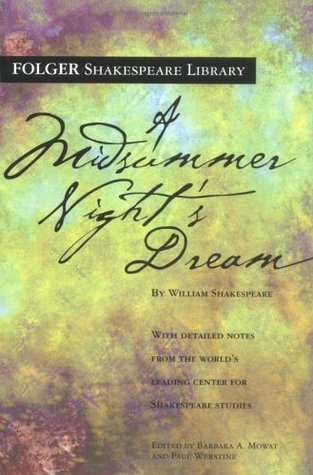
A Midsummer Night's Dream
1595
William Shakespeare
Shakespeare's intertwined love polygons begin to get complicated from the start—Demetrius and Lysander both want Hermia but she only has eyes for Lysander. Bad news is, Hermia's father wants Demetrius for a son-in-law. On the outside is Helena, whose unreturned love burns hot for Demetrius. Hermia and Lysander plan to flee from the city under cover of darkness but are pursued by an enraged Demetrius (who is himself pursued by an enraptured Helena). In the forest, unbeknownst to the mortals, Oberon and Titania (King and Queen of the faeries) are having a spat over a servant boy. The plot twists up when Oberon's head mischief-maker, Puck, runs loose with a flower which causes people to fall in love with the first thing they see upon waking. Throw in a group of labourers preparing a play for the Duke's wedding (one of whom is given a donkey's head and Titania for a lover by Puck) and the complications become fantastically funny.
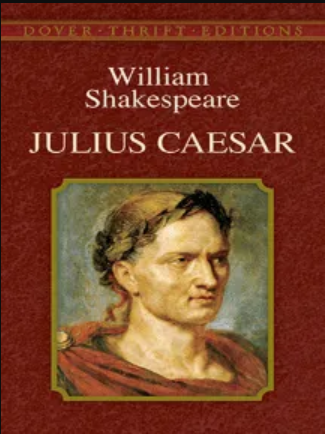
Julius Caesar
1599
William Shakespeare
The Oxford School Shakespeare has become the preferred introduction to the literary legacy of the greatest playwright in the English language. This exclusive collection of the Bard's best works has been designed specifically for readers new to Shakespeare's rich literary legacy. Each play is presented complete and unabridged, in large print. Every book is well illustrated, and starts with a commentary and character summary. Scene synopses and character summaries clarify confusing plots, while incisive essays explore the historical context and Shakespeare's sources. Each book ends with a complete list of Shakespeare's plays and a brief chronology of the Bard's life. The detailed explanatory notes are written clearly and positioned right next to the text—no more squinting at microscopic footnotes or flipping pages back and forth in search of endnotes! The new edition of the series features new covers and new illustrations, including both new drawings and photos from recent productions of Shakespeare's plays around the globe. In addition, the notes and the introductory material have been completely revised in line with new research and in order to make them clearer and more accessible. Finally, the entire text has been redesigned and reset to enhance readability. The new edition achieves the feat of unprecedented clarity of presentation without any cuts to the original text or the detailed explanations.
The Merchant of Venice
1596
William Shakespeare
In this lively comedy of love and money in sixteenth-century Venice, Bassanio wants to impress the wealthy heiress Portia but lacks the necessary funds. He turns to his merchant friend, Antonio, who is forced to borrow from Shylock, a Jewish moneylender. When Antonio's business falters, repayment becomes impossible—and by the terms of the loan agreement, Shylock is able to demand a pound of Antonio's flesh. Portia cleverly intervenes, and all ends well (except of course for Shylock).
Titus Andronicus
1594
William Shakespeare
Titus Andronicus is one of Shakespeare's earliest and bloodiest tragedies and was hugely successful in his lifetime. Subsequent generations have struggled with its bold confrontation of violence but in the 20th and 21st centuries the play has chimed with audiences again, perhaps because of its simultaneously shocking and playful approach to violent revenge and bodily mutilation. Jonathan Bate's original Arden edition was first published in 1995 and has had a significant influence on how the play has been performed and studied in the past 20 years. This revised edition includes a new 10,000 word introductory essay in which Bate reassess his views on the play's co-authorship with George Peele in the light of contemporary textual scholarship and updates his lively account of the play's performance history, on the international stage and screen. With detailed on-page commentary notes this will continue to be the edition of choice for students, scholars and theatre-makers.