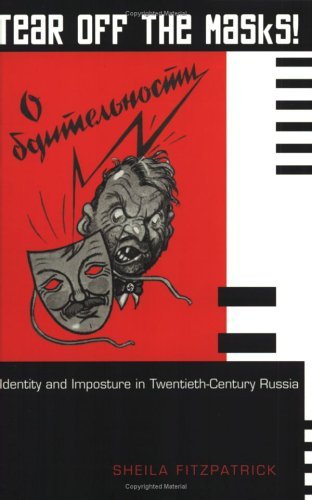
When revolutions happen, they change the rules of everyday life—both the codified rules concerning the social and legal classifications of citizens and the unwritten rules about how individuals present themselves to others. This occurred in Russia after the Bolshevik Revolution of 1917, which laid the foundations of the Soviet state, and again in 1991, when that state collapsed. Tear Off the Masks! is about the remaking of identities in these times of upheaval. Sheila Fitzpatrick here brings together in a single volume years of distinguished work on how individuals literally constructed their autobiographies, defended them under challenge, attempted to edit the "file-selves" created by bureaucratic identity documentation, and denounced others for "masking" their true social identities. Marxist class-identity labels—"worker," "peasant," "intelligentsia," "bourgeois"—were of crucial importance to the Soviet state in the 1920s and 1930s, but it turned out that the determination of a person's class was much more complicated than anyone expected. This in turn left considerable scope for individual creativity and manipulation. Outright imposters, both criminal and political, also make their appearance in this book. The final chapter describes how, after decades of struggle to construct good Soviet socialist personae, Russians had to struggle to make themselves fit for the new, post-Soviet world in the 1990s—by "de-Sovietizing" themselves. Engaging in style and replete with colorful detail and characters drawn from a wealth of sources, Tear Off the Masks! offers unique insight into the elusive forms of self-presentation, masking, and unmasking that made up Soviet citizenship and continue to resonate in the post-Soviet world.
Author
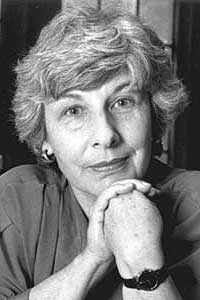
Sheila Fitzpatrick (born June 4, 1941, Melbourne) is an Australian-American historian. She teaches Soviet History at the University of Chicago. Fitzpatrick's research focuses on the social and cultural history of the Stalinist period, particularly on aspects of social identity and daily life. She is currently concentrating on the social and cultural changes in Soviet Russia of the 1950s and 1960s. In her early work, Sheila Fitzpatrick focused on the theme of social mobility, suggesting that the opportunity for the working class to rise socially and as a new elite had been instrumental in legitimizing the regime during the Stalinist period. Despite its brutality, Stalinism as a political culture would have achieved the goals of the democratic revolution. The center of attention was always focused on the victims of the purges rather than its beneficiaries, noted the historian. Yet as a consequence of the "Great Purge", thousands of workers and communists who had access to the technical colleges during the first five-year plan received promotions to positions in industry, government and the leadership of the Communist Party. According to Fitzpatrick, the "cultural revolution" of the late 1920 and the purges which shook the scientific, literary, artistic and the industrial communities is explained in part by a "class struggle" against executives and intellectual "bourgeois". The men who rose in the 1930s played an active role to get rid of former leaders who blocked their own promotion, and the "Great Turn" found its origins in initiatives from the bottom rather than the decisions of the summit. In this vision, Stalinist policy based on social forces and offered a response to popular radicalism, which allowed the existence of a partial consensus between the regime and society in the 1930s. Fitzpatrick was the leader of the second generation of "revisionist historians". She was the first to call the group of Sovietologists working on Stalinism in the 1980s "a new cohort of [revisionist] historians". Fitzpatrick called for a social history that did not address political issues, in other words that adhered strictly to a "from below" viewpoint. This was justified by the idea that the university had been strongly conditioned to see everything through the prism of the state: "the social processes unrelated to the intervention of the state is virtually absent from the literature." Fitzpatrick did not deny that the state's role in social change of the 1930s was huge. However, she defended the practice of social history "without politics". Most young "revisionists" did not want to separate the social history of the USSR from the evolution of the political system. Fitzpatrick explained in the 1980s, when the "totalitarian model" was still widely used, "it was very useful to show that the model had an inherent bias and it did not explain everything about Soviet society. Now, whereas a new generation of academics considers sometimes as self evident that the totalitarian model was completely erroneous and harmful, it is perhaps more useful to show than there were certain things about the Soviet company that it explained very well."