


Margins
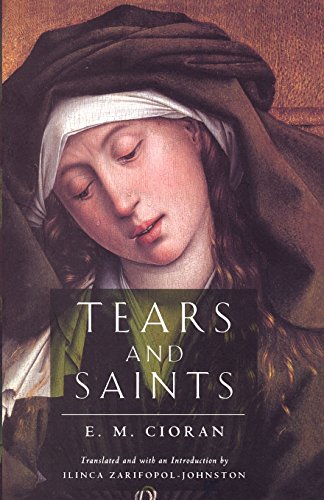
Tears and Saints book cover
Tears and Saints
1937
First Published
4.06
Average Rating
124
Number of Pages

By the mid-1930s, Emil Cioran was already known as a leader of a new generation of politically committed Romanian intellectuals. Researching another, more radical book, Cioran was spending hours in a library poring over the lives of saints. As a modern hagiographer, Cioran "dreamt" himself "the chronicler of these saints' falls between heaven and earth, the intimate knower of the ardors in their hearts, the historian of God's insomniacs." Inspired by Nietzsche's Beyond Good and Evil, Cioran "searched for the origin of tears." He asked himself if saints could be "the sources of tears' better light." "Who can tell?" he wrote in the first paragraph of this book, first published in Romania in 1937. "To be sure, tears are their trace. Tears did not enter the world through the saints; but without them we would never have known that we cry because we long for a lost paradise." By following in their traces, "wetting the soles of one's feet in their tears," Cioran hoped to understand how a human being can renounce being human. Written in Cioran's characteristic aphoristic style, this flamboyant, bold, and provocative book is one of his most important—and revelatory—works. Cioran focuses not on martyrs or heroes but on the mystics—primarily female—famous for their keening spirituality and intimate knowledge of God. Their Christianity was anti-theological, anti-institutional, and based solely on intuition and sentiment. Many, such as Catherine of Siena, Teresa of Avila, and Saint John of the Cross, have produced classic works of mystical literature; but Cioran celebrates many more minor and unusual figures as well. Following Nietzsche, he focuses explicitly on the political element hidden in saints' lives. In his hands, however, their charitable deeds are much less interesting than their thirst for pain and their equally powerful capacity to endure it. Behind their suffering and their uncanny ability to renounce everything through ascetic practices, Cioran detects a fanatical will to power. "Like Nietzsche, Cioran is an important religious thinker. His book intertwines God and music with passion and tears... [ Tears and Saints ] has a chillingly contemporary ring that makes this translation important here and now."— Booklist
Avg Rating
4.06
Number of Ratings
2,417
5 STARS
39%
4 STARS
36%
3 STARS
18%
2 STARS
5%
1 STARS
1%
goodreads

Author

Emil M. Cioran
Emil M. Cioran
Author · 37 books

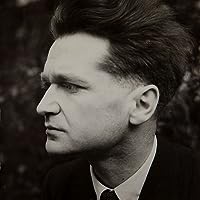
Born in 1911 in Rășinari, a small village in the Carpathian Mountains of Romania, raised under the rule of a father who was a Romanian Orthodox priest and a mother who was prone to depression, Emil Cioran wrote his first five books in Romanian. Some of these are collections of brief essays (one or two pages, on average); others are collections of aphorisms. Suffering from insomnia since his adolescent years in Sibiu, the young Cioran studied philosophy in the “little Paris” of Bucarest. A prolific publicist, he became a well-known figure, along with Mircea Eliade, Constantin Noïca, and his future close friend Eugene Ionesco (with whom he shared the Royal Foundation’s Young Writers Prize in 1934 for his first book, On the Heights of Despair). Influenced by the German romantics, by Schopenhauer, Nietzsche, and the Lebensphilosophie of Schelling and Bergson, by certain Russian writers, including Chestov, Rozanov, and Dostoyevsky, and by the Romanian poet Eminescu, Cioran wrote lyrical and expansive meditations that were often metaphysical in nature and whose recurrent themes were death, despair, solitude, history, music, saintliness and the mystics (cf. Tears and Saints, 1937) – all of which are themes that one finds again in his French writings. In his highly controversial book, The Transfiguration of Romania (1937), Cioran, who was at that time close to the Romanian fascists, violently criticized his country and his compatriots on the basis of a contrast between such “little nations” as Romania, which were contemptible from the perspective of universal history and great nations, such as France or Germany, which took their destiny into their own hands. After spending two years in Germany, Cioran arrived in Paris in 1936. He continued to write in Romanian until the early 1940s (he wrote his last article in Romanian in 1943, which is also the year in which he began writing in French). The break with Romanian became definitive in 1946, when, in the course of translating Mallarmé, he suddenly decided to give up his native tongue since no one spoke it in Paris. He then began writing in French a book that, thanks to numerous intensive revisions, would eventually become the impressive 'A Short History of Decay' (1949) — the first of a series of ten books in which Cioran would continue to explore his perennial obsessions, with a growing detachment that allies him equally with the Greek sophists, the French moralists, and the oriental sages. He wrote existential vituperations and other destructive reflections in a classical French style that he felt was diametrically opposed to the looseness of his native Romanian; he described it as being like a “straight-jacket” that required him to control his temperamental excesses and his lyrical flights. The books in which he expressed his radical disillusionment appeared, with decreasing frequency, over a period of more than three decades, during which time he shared his solitude with his companion Simone Boué in a miniscule garret in the center of Paris, where he lived as a spectator more and more turned in on himself and maintaining an ever greater distance from a world that he rejected as much on the historical level (History and Utopia, 1960) as on the ontological (The Fall into Time, 1964), raising his misanthropy to heights of subtlety (The Trouble with being Born, 1973), while also allowing to appear from time to time a humanism composed of irony, bitterness, and preciosity (Exercices d’admiration, 1986, and the posthumously published Notebooks). Denied the right to return to Romania during the years of the communist regime, and attracting international attention only late in his career, Cioran died in Paris in 1995. Nicolas Cavaillès Translated by Thomas Cousineau

548 Market St PMB 65688, San Francisco California 94104-5401 USA
© 2026 Paratext Inc. All rights reserved