Margins




548 Market St PMB 65688, San Francisco California 94104-5401 USA
© 2026 Paratext Inc. All rights reserved
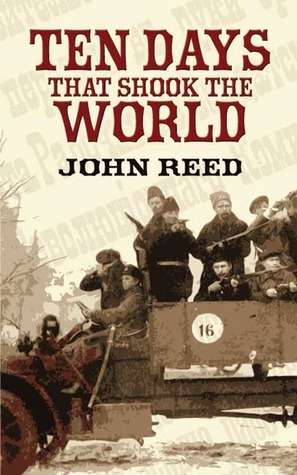
"Brilliant and entertaining." —The New York Times Book Review This first-person chronicle by John Reed, a legendary journalist who was present at the flash point of the Russian Revolution in 1917, provides an intense and informative eyewitness account of one of the greatest events of the twentieth century. Capturing the spirit of those heady days of excitement and idealism, Reed's true-to-life account follows many of the prominent Bolshevik leaders, as well as vividly capturing the mood of the masses. Verbatim reports of speeches by leaders, and comments of bystanders—set against an idealized backdrop of the proletariat united with soldiers, sailors, and peasants—are balanced by passionate narratives describing the fall of the provisional government, the assault on the Winter Palace, and Lenin's seizure of power. Accompanied by contemporaneous photographs, this gripping record by a western journalist has been acclaimed worldwide since its first publication in 1919. Endorsed by Lenin as a "truthful and most vivid exposition," the work was the basis for the Academy Award-winning 1981 film Reds.