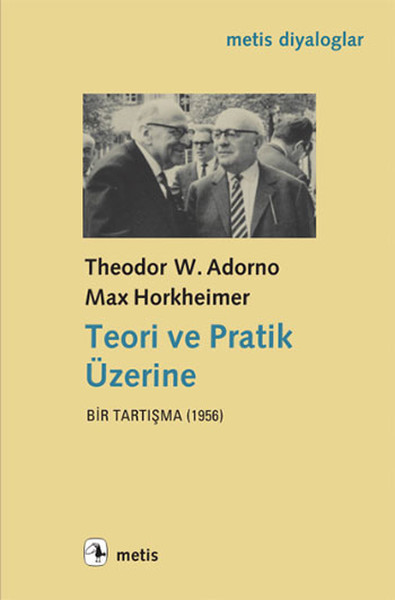



Adorno ile Horkheimer 1956 baharında üç hafta boyunca bir tartışma yaptılar ve bu tartışmayı Komünist Manifesto’nun güncel bir versiyonunu üretme niyetiyle teybe kaydettiler. İki filozof eserlerinin teori-pratik ilişkisi, emek, boş zaman, tahakküm, özgürlük gibi temel temaları üzerine, tutarlılık ve temellendirme kaygısı gözetmeksizin siyasi dozu yüksek serbest doğaçlamalar yapıyorlar. Soğuk Savaş’ın gemi azıya aldığı bir dönemde Eleştirel Teori eleştirelliğini ne ölçüde koruyabilmişti? Siyaseten etkisizliğin içselleştirilmesi düşünceye nasıl bir etkide bulunur? Teorik mülahazalar düzeyinden reel siyasetin dolambaçlarına “indiklerinde”, yüksek teori kozasından çıktıklarında, iki düşünür, dünyanın gidişatı hakkında ne ölçüde anlamlı fikirler üretebiliyorlar? Entelektüel bir keyifle, bazen üzüntüyle, yer yer de sinirlenerek okuyacağınız bu küçük kitap, bu sorular hakkında ciddi bir düşünmeye vesile oluyor.
Authors


Theodor Wiesengrund Adorno was one of the most important philosophers and social critics in Germany after World War II. Although less well known among anglophone philosophers than his contemporary Hans-Georg Gadamer, Adorno had even greater influence on scholars and intellectuals in postwar Germany. In the 1960s he was the most prominent challenger to both Sir Karl Popper's philosophy of science and Martin Heidegger's philosophy of existence. Jürgen Habermas, Germany's foremost social philosopher after 1970, was Adorno's student and assistant. The scope of Adorno's influence stems from the interdisciplinary character of his research and of the Frankfurt School to which he belonged. It also stems from the thoroughness with which he examined Western philosophical traditions, especially from Kant onward, and the radicalness to his critique of contemporary Western society. He was a seminal social philosopher and a leading member of the first generation of Critical Theory. Unreliable translations hampered the initial reception of Adorno's published work in English speaking countries. Since the 1990s, however, better translations have appeared, along with newly translated lectures and other posthumous works that are still being published. These materials not only facilitate an emerging assessment of his work in epistemology and ethics but also strengthen an already advanced reception of his work in aesthetics and cultural theory.