Margins
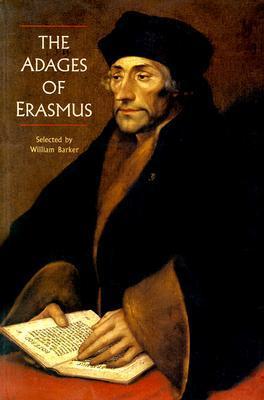
The Adages of Erasmus book cover
The Adages of Erasmus
1536
First Published
4.23
Average Rating
500
Number of Pages
Erasmus was fascinated by proverbs and prepared a collection of more than 4,000 of them, accompanying each with his comments, sometimes in a few lines and sometimes in full-scale essays. His massive compendium, characterized by his wit, his elegance, his bursts of satire alternating with serious views, was among the most learned and widely circulated of Renaissance books. This selection emphasizes Erasmus' skill in explaining the proverbs, shows how he made his book, and demonstrates the way in which many of the proverbs moved into the English language. The text is illustrated with images by Brueghel and D¦rer and examples of proverb use from emblem books. Over eighty proverb essays are presented here. Some are masterpieces of social criticism ('War is sweet to those who have never tried it'), others provide scholarly explanations of philosophical ideas or gestures and customs ('Thumbs up'). Many of the proverbs have passed into modern usage ('Know thyself', To give someone the finger' 'Well begun is half done'), some even retaining their Latin form ('Deus ex machina'). And a few, it turns out, were created by Erasmus himself through his occasional misinterpretation of the ancient languages ('Pandora's box', 'To call a spade a spade'). This edition replaces the pioneering work by Margaret Mann Phillips, providing more essays and more detailed source and background information for the texts. It is based on the translations and scholarship of the Collected Works of Erasmus - mostly that of Sir Roger Mynors but also the work of Phillips herself.
Avg Rating
4.23
Number of Ratings
62
5 STARS
50%
4 STARS
26%
3 STARS
21%
2 STARS
3%
1 STARS
0%
goodreads

Author

Erasmus
Erasmus
Author · 17 books

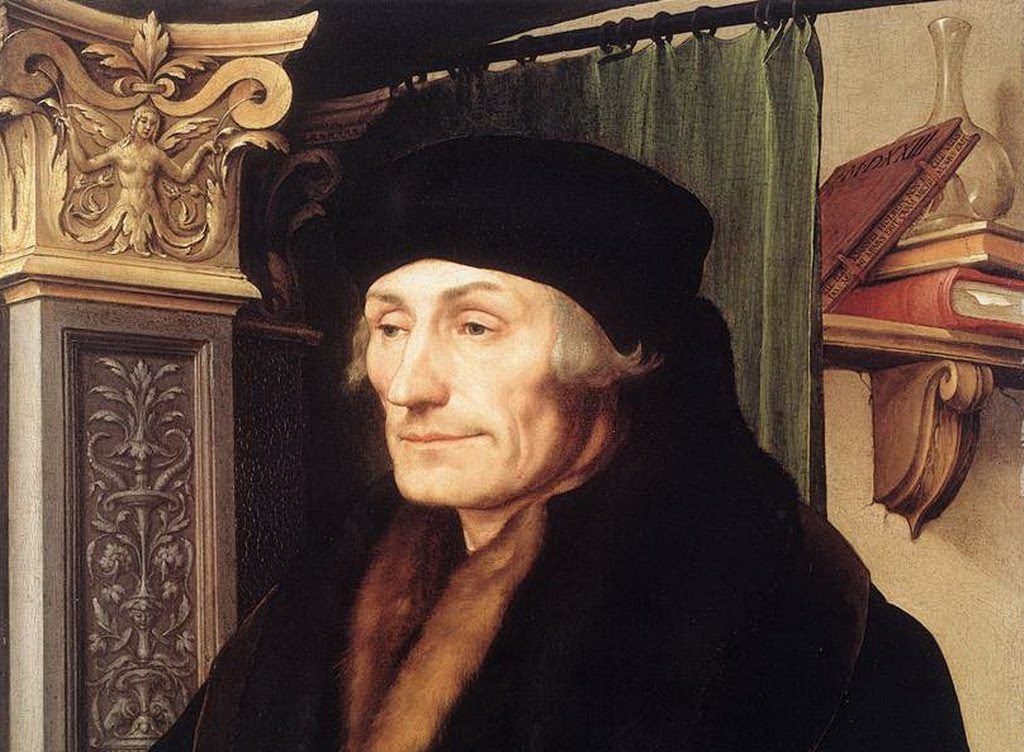
Desiderius Erasmus Roterodamus (28 October 1466 – 12 July 1536), known as Erasmus of Rotterdam, or simply Erasmus, was a Dutch Renaissance humanist, Catholic priest, social critic, teacher, and theologian. Erasmus was a classical scholar and wrote in a pure Latin style. Among humanists he enjoyed the sobriquet "Prince of the Humanists", and has been called "the crowning glory of the Christian humanists". Using humanist techniques for working on texts, he prepared important new Latin and Greek editions of the New Testament, which raised questions that would be influential in the Protestant Reformation and Catholic Counter-Reformation. He also wrote On Free Will, The Praise of Folly, Handbook of a Christian Knight, On Civility in Children, Copia: Foundations of the Abundant Style, Julius Exclusus, and many other works. Erasmus lived against the backdrop of the growing European religious Reformation, but while he was critical of the abuses within the Catholic Church and called for reform, he kept his distance from Luther and Melanchthon and continued to recognise the authority of the pope, emphasizing a middle way with a deep respect for traditional faith, piety and grace, rejecting Luther's emphasis on faith alone. Erasmus remained a member of the Roman Catholic Church all his life, remaining committed to reforming the Church and its clerics' abuses from within. He also held to the Catholic doctrine of free will, which some Reformers rejected in favor of the doctrine of predestination. His middle road approach disappointed and even angered scholars in both camps. Erasmus died suddenly in Basel in 1536 while preparing to return to Brabant, and was buried in the Basel Minster, the former cathedral of the city. A bronze statue of him was erected in his city of birth in 1622, replacing an earlier work in stone.


548 Market St PMB 65688, San Francisco California 94104-5401 USA
© 2026 Paratext Inc. All rights reserved