Margins




548 Market St PMB 65688, San Francisco California 94104-5401 USA
© 2026 Paratext Inc. All rights reserved
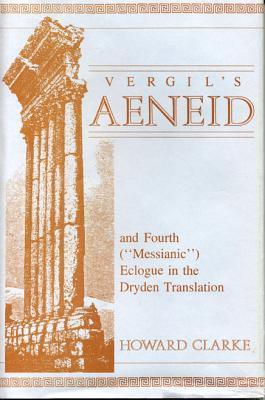
It seems to be a fact of literary history that Vergil's great Roman epic, the Aeneid (29-19 B.C.), is the most popular work of the imagination in the history of Western civilization, in the sense that it has probably been read by more people than have read any other literary work in the past two thousand years. Naturally, it has often been translated, but the most prestigious translation remains that by John Dryden (1697), which itself ranks as the third most popular translation in English literature, behind only the King James Bible and Pope's Iliad. Dryden's work is also the only long poem of merit in English literature between Milton and Pope. Yet it is almost impossible to find an annotated translation of the Aeneid, that is, a translation with the kind of introductory and explanatory material that would enable readers to understand and appreciate Vergil's achievement. Similarly, Dryden's translation has not been as available as it deserves. To meet these needs, Howard Clarke offers Vergil's story in Dryden's version, with the kind of information that would make the experience of reading these two classics both convenient and informative. A small bonus has been the addition of Vergil's "Fourth (or 'Messianic') Eclogue," the brief poem that predicted the birth of a wonderful child and thereby made Vergil seem something more than just a pagan poet. Since Dryden's translation was a product of its time, the late seventeenth century, when the conventions of translation were much looser than they are now, his work has sometimes been criticized for its liberties and inaccuracies. Both the Introduction and the Notes to this edition take account of these complaints and single those passages where Dryden has significantly deviated from Vergil's original. Also, Dryden's spelling and punctuation have been modernized to facilitate reading.