Margins




548 Market St PMB 65688, San Francisco California 94104-5401 USA
© 2026 Paratext Inc. All rights reserved
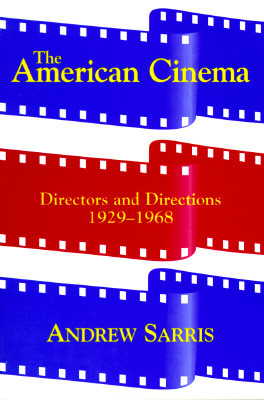
" The American Cinema is the Citizen Kane of film criticism, a brilliant book that elevated American directors from craftsmen to artists, launched the careers of numerous film critics, and shaped the aesthetics of a whole generation of viewers by providing new ways of looking at movies."—Emanuel Levy, author of George Cukor, Master of Elegance The auteur theory, of which film critic Andrew Sarris was the leading American proponent, holds that artistry in cinema can be largely attributed to film directors, who, while often working against the strictures of studios, producers, and scriptwriters, manage to infuse each film in their oeuvre with their personal style. Sarris' The American Cinema, the bible of auteur studies, is a history of American film in the form of a lively guide to the work of two hundred film directors, from Griffith, Chaplin, and von Sternberg to Mike Nichols, Stanley Kubrick, and Jerry Lewis. In addition, the book includes a chronology of the most important American films, an alphabetical list of over 6000 films with their directors and years of release, and the seminal essays "Toward a Theory of Film History" and "The Auteur Theory Revisited." Over twenty-five years after its initial publication, The American Cinema remains perhaps the most influential book ever written on the subject.