Margins
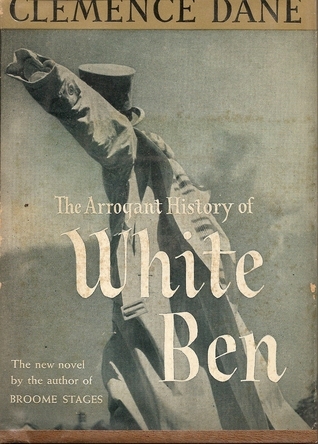
The Arrogant History of White Ben book cover
The Arrogant History of White Ben
1939
First Published
4.00
Average Rating
363
Number of Pages
It is an account of a dictator's career—a story no more fantastic than any of the daily newspaper headlinges today. The time is at the conclusion of the next war, in which nothing definite has been gained by either side. Europe and England are reduced to a state of chaos. Most of the wealthy have fled to America. One widow and her child, however, too poor to leave England take refuge in a cottage in the country not far from London. The gardener builds a scarecrow, a child puts a mandrake root in it and White Ben is created. Cunning and crafty men see in White Ben an opportunity to give the people a leader, at least in name, and through him, gain power for themselves. White Ben becomes dictator of England. The rest is a fascinating metaphor for the rise of Fascism in Europe duing the 1930's.

Avg Rating
4.00
Number of Ratings
1
5 STARS
0%
4 STARS
100%
3 STARS
0%
2 STARS
0%
1 STARS
0%
goodreads

Author

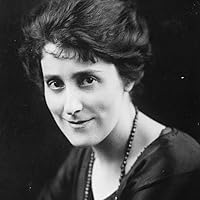
Clemence Dane
Clemence Dane
Author · 19 books

Clemence Dane was the pseudonym of Winifred Ashton. Clemence Dane (name for the London church, St Clement Danes) was the pseudonym of Winifred Ashton, an English novelist and playwright (1888-1965). Between World Wars I and II, she was arguably Britain’s most successful all-round writer, with a unique place in literary, stage and cinematic history. Dane won an Oscar for her screenplay “Vacation from Marriage,”. School teacher, novelist, playwright and magazine editor, Dane wrote at least 30 plays and 16 novels. One series she was famous for was The Babyons, by Clemence Dane. Four long stories strung together by a supernatural thread and chronicling the family history of the Babyons over a period of about 200 years. The ghostly thread is introduced in the first story, “Third Personal Singular,” a tale of 1750. James Babyon, engaged to marry his cousin Hariot, becomes suddenly averse from her and breaks the engagement within a month of the date set for the wedding. In a passionate scene in which the probable madness of Hariot is subtly suggested she pleads with him and, finding him adamant, cries that they are already married in soul and are inseparable. That his cousin actually is subject to fits of madness he does not learn until he is wedded to her companion Menella. He and Menella go to Europe to find everywhere that people have a curious fear of them; a fear which spreads to their servants and, when he learns that Hariot committed suicide, to Babyon himself. He regards himself directly responsible for her death, becomes obsessed with the belief that she haunts him, and the tragedy ends with his madness. The second story is dated 1775, the third 1820-1873, and the last 1902-1906. These stories are lighter than the first stark tragedy, and they end with peace at last given to the Babyons. Through them all runs the influence of Hariot, that strange, wildly passionate woman of 1750. Fine, dramatic work of large conception.—The Australian Woman's Mirror 29 May 1928.

548 Market St PMB 65688, San Francisco California 94104-5401 USA
© 2026 Paratext Inc. All rights reserved