Margins
The Beginning of Western Philosophy book cover
The Beginning of Western Philosophy
Interpretation of Anaximander and Parmenides
2015
First Published
4.03
Average Rating
276
Number of Pages
Volume 35 of Heidegger's Complete Works comprises a lecture course given at the University of Freiburg in 1932, five years after the publication of Being and Time. During this period, Heidegger was at the height of his creative powers, which are on full display in this clear and imaginative text. In it, Heidegger leads his students in a close reading of two of the earliest philosophical source documents, fragments by Greek thinkers Anaximander and Parmenides. Heidegger develops their common theme of Being and non-being and shows that the question of Being is indeed the origin of Western philosophy. His engagement with these Greek texts is as much of a return to beginnings as it is a potential reawakening of philosophical wonder and inquiry in the present.

Avg Rating
4.03
Number of Ratings
35
5 STARS
49%
4 STARS
17%
3 STARS
29%
2 STARS
0%
1 STARS
6%
goodreads

Author

Martin Heidegger
Martin Heidegger
Author · 91 books
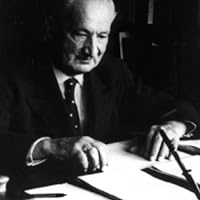
Martin Heidegger (1889-1976) was a German philosopher whose work is perhaps most readily associated with phenomenology and existentialism, although his thinking should be identified as part of such philosophical movements only with extreme care and qualification. His ideas have exerted a seminal influence on the development of contemporary European philosophy. They have also had an impact far beyond philosophy, for example in architectural theory (see e.g., Sharr 2007), literary criticism (see e.g., Ziarek 1989), theology (see e.g., Caputo 1993), psychotherapy (see e.g., Binswanger 1943/1964, Guignon 1993) and cognitive science (see e.g., Dreyfus 1992, 2008; Wheeler 2005; Kiverstein and Wheeler forthcoming).
548 Market St PMB 65688, San Francisco California 94104-5401 USA
© 2026 Paratext Inc. All rights reserved