Authors

Nathaniel Hawthorne was a 19th century American novelist and short story writer. He is seen as a key figure in the development of American literature for his tales of the nation's colonial history. Shortly after graduating from Bowdoin College, Hathorne changed his name to Hawthorne. Hawthorne anonymously published his first work, a novel titled Fanshawe, in 1828. In 1837, he published Twice-Told Tales and became engaged to painter and illustrator Sophia Peabody the next year. He worked at a Custom House and joined a Transcendentalist Utopian community, before marrying Peabody in 1842. The couple moved to The Old Manse in Concord, Massachusetts, later moving to Salem, the Berkshires, then to The Wayside in Concord. The Scarlet Letter was published in 1850, followed by a succession of other novels. A political appointment took Hawthorne and family to Europe before returning to The Wayside in 1860. Hawthorne died on May 19, 1864, leaving behind his wife and their three children. Much of Hawthorne's writing centers around New England and many feature moral allegories with a Puritan inspiration. His work is considered part of the Romantic movement and includes novels, short stories, and a biography of his friend, the United States President Franklin Pierce.

People remember American writer Washington Irving for the stories " Rip Van Winkle " and " The Legend of Sleepy Hollow ," contained in The Sketch Book (1820). This author, essayist, biographer and historian of the early 19th century wrote newspaper articles under the pseudonym Jonathan Oldstyle to begin his literary career at the age of nineteen years. In 1809, he published The History of New York under his most popular public persona, Diedrich Knickerbocker. Historical works of Irving include a five volume biography of George Washington (after whom he was named) as well as biographies of Oliver Goldsmith, Muhammad, and several histories, dealing with subjects, such as Christopher Columbus, the Moors, and the Alhambra, of 15th-century Spain. John Tyler, president, appointed Irving to serve as the first Spanish speaking United States minister to Spain from 1842 to 1846.


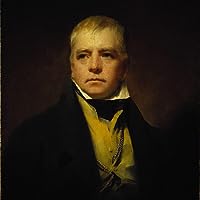
Librarian Note: There is more than one author in the GoodReads database with this name. British writer Sir Walter Scott popularized and refined a genre of ballads and historical novels; his works include Waverley (1814) and Ivanhoe (1819). Sir Walter Alva Scott created and called a series. Scott arranged the plots and characters so that the reader enters into the lives of great and ordinary persons, caught in violent, dramatic changes. Work of Scott shows the influence of the 18th century Enlightenment. He thought of every basically decent human, regardless of class, religion, politics, or ancestry. A major theme tolerates. They express his theory in the need for social progress that rejects not the traditions of the past. He first portrayed peasant characters sympathetically and realistically and equally justly portrayed merchants, soldiers, and even kings. In central themes, cultures conflict and oppose. Normans and Saxons warred. In The Talisman (1825), Christians and Muslims conflict. He deals with clashes between the new English and the old Scottish culture. Other great include Old Mortality (1816), The Heart of Midlothian (1819), and Saint Ronan's Well (1824). His series includes Rob Roy (1817), A Legend of Montrose (1819), and Quentin Durward (1823). Amiability, generosity, and modesty made Scott popular with his contemporaries. He also famously entertained on a grand scale at Abbotsford, his Scottish estate.

Wilhelm Hauff was a German poet and novelist best known for his fairy tales. Educated at the University of Tübingen, Hauff worked as a tutor and in 1827 became editor of J.F. Cotta’s newspaper Morgenblatt. Hauff had a narrative and inventive gift and sense of form; he wrote with ease, combining narrative themes of others with his own. His work shows a pleasant, often spirited, wit. There is a strong influence of E.T.A. Hoffmann in his fantasy Mitteilungen aus den Memoiren des Satans (1826–27; “Pronouncements from the Memoirs of Satan”). Hauff’s Lichtenstein (1826), a historical novel of 16th-century Württemberg, was one of the first imitations of Sir Walter Scott. He is also known for a number of fairy tales that were published in his Märchenalmanach auf das Jahr 1826 and had lasting popularity. Similar volumes followed in 1827 and 1828. His novellas, which were collected posthumously in Novellen, 3 vol. (1828), include Jud Süss (The Jew Suss; serialized 1827).