Margins




548 Market St PMB 65688, San Francisco California 94104-5401 USA
© 2026 Paratext Inc. All rights reserved
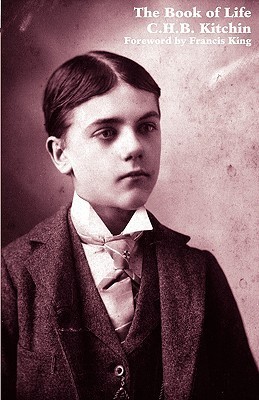
Set in the twilight of the Edwardian age, "The Book of Life" is the story of Francis Froxwell, an orphan caught between his mother's family, kind but common, and his father's family, the proud and wealthy Froxwells. Aged ten, Francis goes to live with the Froxwells and becomes fascinated with his grandfather's ledger, the 'Book of Life', in which each family member's prospective inheritance is recorded. Francis begins to dream of his future, when he will be a rich and powerful baronet ... As Francis comes to terms with his emerging adolescence and developing identity, he is drawn to two his kind Uncle Demetrius, the 'black sheep' of the family, and Jimmy Waring, an ex-schoolmaster dismissed for his inappropriate conduct with young boys. Francis will unwittingly get caught up in a chain of events involving sex, scandal, intrigue, and blackmail, and which will ultimately lead to tragedy . . . and the elimination of at least one name from the 'Book of Life'. By turns nostalgic, ironic, tragic, and darkly comical, "The Book of Life" is the crowning achievement of C.H.B. Kitchin (1895-1967). Although widely praised by critics on its initial release in 1960, "The Book of Life" disappointed Kitchin by failing to succeed commercially. Readers of this new edition, which features a new foreword by Kitchin's close friend and literary executor Francis King, will delight in rediscovering this lost masterpiece of 20th century British fiction. '[A] work of fine craftsmanship, smooth as silk and as subtle in its gradations of light and shade.... [A]n exciting story as well as an evocation of feeling, time, and place which completely fascinates. The author plays the reader with an expertise to which one can only surrender with the utmost pleasure.' - "Scotsman" One must admire the perfectly done thing, and this . . . is the best thing of its kind since L. P. Hartley's "The Go-Between."' - "Vogue"