


Margins
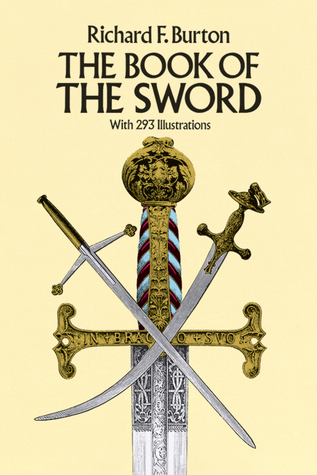
The Book of the Sword book cover
The Book of the Sword
1884
First Published
3.83
Average Rating
342
Number of Pages

"The history of the sword is the history of humanity." With these words, British author, Victorian scholar, and world traveler Richard Burton begins his eloquent and exceptionally erudite history of the "Queen of Weapons." Spanning the centuries and a wide range of cultures, Burton's rich and elegant prose illuminates the sword as both armament and potent symbol. For nearly all peoples of the world, the sword embodied the spirit of chivalry, symbolized justice and martyrdom and represented courage and freedom. In battle, it served universally as a deadly offensive weapon. Drawing on a wealth of literary, archaeological, anthropological, linguistic, and other sources, the author traces the sword's origins, from its birth as a charred and sharpened stick, through its diverse stages of development, to its full growth in the early Roman Empire. Recounting man's long association with this weapon, the author describes in brilliant detail: • The ages of wood, bone and born • The appearance of stone swords and exotic weapons such as the boomerang • The ages of copper and alloys such as bronze and brass—used in producing the long, narrow blades of rapiers • The Iron Age during which the Viking sword of carbonized iron took shape—a weapon whose form would set the standard for the next thousand years. Enhanced by nearly 300 excellent line drawings, the text provides an incredible wealth of detailed data about the sword and its variations: sabre, broadsword, cutlass, scimitar, rapier, foil, and a host of other arms, including dirks, daggers, throwing knives, flails, and much more. Military and social historians, scholars and students of weaponry, as well as armchair adventurers will find this volume a fascinating, abundantly illustrated and highly readable account of this potent symbol of power.
Avg Rating
3.83
Number of Ratings
213
5 STARS
29%
4 STARS
33%
3 STARS
31%
2 STARS
6%
1 STARS
1%
goodreads

Author

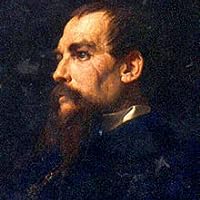
Richard Francis Burton
Author · 33 books

Captain Sir Richard Francis Burton KCMG FRGS was a British geographer, explorer, translator, writer, soldier, orientalist, cartographer, ethnologist, spy, linguist, poet, fencer and diplomat. He was known for his travels and explorations within Asia, Africa and the Americas as well as his extraordinary knowledge of languages and cultures. According to one count, he spoke 29 European, Asian, and African languages. Burton's best-known achievements include travelling in disguise to Mecca, an unexpurgated translation of One Thousand and One Nights (also commonly called The Arabian Nights in English after Andrew Lang's adaptation), bringing the Kama Sutra to publication in English, and journeying with John Hanning Speke as the first Europeans led by Africa's greatest explorer guide, Sidi Mubarak Bombay, utilizing route information by Indian and Omani merchants who traded in the region, to visit the Great Lakes of Africa in search of the source of the Nile. Burton extensively criticized colonial policies (to the detriment of his career) in his works and letters. He was a prolific and erudite author and wrote numerous books and scholarly articles about subjects including human behaviour, travel, falconry, fencing, sexual practices, and ethnography. A unique feature of his books is the copious footnotes and appendices containing remarkable observations and unexpurgated information. He was a captain in the army of the East India Company serving in India (and later, briefly, in the Crimean War). Following this he was engaged by the Royal Geographical Society to explore the east coast of Africa and led an expedition guided by the locals and was the first European to see Lake Tanganyika. In later life he served as British consul in Fernando Po, Santos, Damascus and, finally, Trieste. He was a Fellow of the Royal Geographical Society and was awarded a knighthood (KCMG) in 1886.

548 Market St PMB 65688, San Francisco California 94104-5401 USA
© 2026 Paratext Inc. All rights reserved